
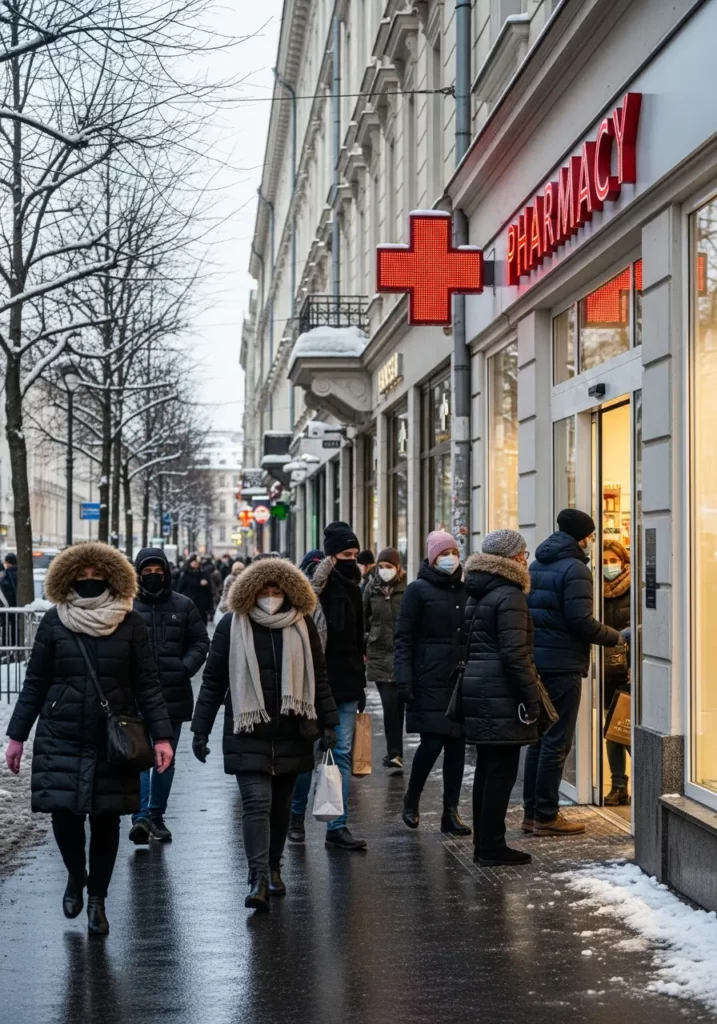
In winter, we more often encounter ARVI, influenza, and exacerbations of chronic diseases. The reason is not the “cold itself,” but a combination of factors: enclosed spaces, dry air, less sunlight, vitamin D deficiency, stress, sleep disturbances. This article examines physiological and behavioral factors of winter morbidity, the role of vaccination, nutrition, physical activity, and nutraceuticals — focusing on practical advice on how to strengthen winter immunity for doctors and pharmacists.

Why ARVI Incidence Increases in Winter
-
Enclosed spaces and crowding (kindergartens, schools, offices, malls) — make it easier for viruses to spread via airborne droplets.
-
Dry air during the heating season dries out mucous membranes, reducing the barrier function of the respiratory epithelium.
-
Less sun — less vitamin D, which is associated with an increased risk of respiratory infections and exacerbations of chronic diseases.
-
Changes in routine, stress, sleep deprivation, overeating — an additional blow to the immune system.
Table title: Main winter factors that weaken mucosal defenses
| Factor | Effect on the body |
|---|---|
| Dry air | drying of mucous membranes, microcracks in the epithelium |
| Temperature fluctuations | mucosal vessel spasm, reduced local protection |
| Enclosed spaces | higher concentration of viruses in the air |
| Lack of light | reduced vitamin D synthesis |
| Stress, sleep deprivation | reduced activity of immune cells |
Role of Vitamin D, Sleep, and Physical Activity
Vitamin D
Meta-analyses show that adequate vitamin D levels are associated with a reduced risk of acute respiratory infections, especially in individuals with baseline deficiency.
-
In winter, most residents of temperate climates do not get sufficient sunlight exposure.
-
It is advisable to discuss with the patient:
-
screening of 25(OH)D levels (for risk groups);
-
preventive doses (according to national/international guidelines).
-

Sleep
Chronic sleep deprivation is associated with an increased risk of ARVI and slower recovery, as it affects cytokine production and NK cell function.
Physical Activity
Moderate regular exercise supports an anti-inflammatory profile, whereas extremes (sedentary lifestyle or excessive exertion) increase the risk of infections.
Table title: Risk groups during the winter period
| Patient group | Considerations |
|---|---|
| Children attending kindergarten/school | frequent contacts, “classic” viral histories |
| People 60+ | weaker immunity, comorbidities |
| Patients with COPD, bronchial asthma | high risk of exacerbations |
| Patients with vitamin D deficiency | increased risk of ARVI and complications |
| Healthcare, education, and service workers | constant contact with large numbers of people |
Practical Recommendations for Doctors and Pharmacists
-
Emphasize that ARVI is an infection, not a “cold from the cold”.
-
Discuss influenza and COVID-19 vaccination for risk groups.
-
Recommend air humidification (40–60%) and regular ventilation.
-
Remind about hand hygiene, cough etiquette, masks during outbreaks.
-
Discuss nutraceuticals wisely: vitamin D, C, zinc, omega-3 — without “miraculous” promises.

Questions and Answers About Winter Immunity
Is it true that we get sick more often in winter because of the cold?
The key is not the air temperature but the conditions we live in: enclosed spaces, low humidity, crowding.
Should everyone take vitamin D in winter?
For most adults in our region, preventive doses are justified, but the specific regimen depends on age, body weight, comorbidities, and, if possible, 25(OH)D level.
Can nutraceuticals replace vaccination?
No. They can provide additional support but cannot replace specific winter immunity.
How long should winter prophylaxis last?
It is usually recommended from late autumn to early spring; details depend on the specific product and instructions.
Conclusions
-
Seasonality of ARVI is the result of a combination of physical, behavioral, and social factors.
-
Vitamin D, sleep, physical activity, and microclimate control play a real role in reducing the risk of infections.
-
The role of doctors and pharmacists is to shift the conversation from “I caught a cold” to manageable factors: vaccination, lifestyle, nutritional support, and competent symptomatic therapy.
Previously, we wrote about How to prepare immunity for autumn and Vitamin A as the key to strong immunity.
References
-
Moriyama M. et al. Seasonality of Respiratory Viral Infections. Annual Review of Virology. 2020.
-
Martineau A.R. et al. Vitamin D supplementation to prevent acute respiratory infections. BMJ. 2017.
-
CDC. Seasonal Flu and Prevention. 2024.
-
Irwin M.R. Sleep and immunity. Nat Rev Immunol. 2019.
-
WHO. Maintaining essential health services during winter respiratory seasons. 2023.
About the Author