
Screens have become an extension of our bodies: smartphones, laptops, tablets, smartwatches — all of these create continuous informational pressure. The average Ukrainian spends over 6–8 hours a day in front of screens, while digital professionals spend 10–12 hours. The result is a phenomenon called digital fatigue: a combination of visual overload, stress, cognitive exhaustion, decreased concentration, and sleep disruption. Articles on this topic are multiplying, but we need concrete, scientifically based explanations and practical solutions.
What digital fatigue is and how it manifests
This is a state when the visual system, brain, and nervous system cannot recover due to constant exposure to near focus, screen flicker, blue light, and multitasking.
Main symptoms
-
Sensation of “sand” or burning in the eyes;
-
Headaches, focusing spasms;
-
Reduced concentration and slower information processing;
-
Difficulty switching between tasks;
-
Emotional exhaustion, irritability;
-
Sleep disruption due to blue light and late smartphone use;
-
“Tunnel” thinking — the brain stops seeing large conceptual blocks.
How gadgets affect the brain and vision: mechanisms
Effects on the eyes
-
Accommodation overload. The gaze constantly focuses on near distance → ciliary muscle spasm → blurred vision.
-
Reduced blinking rate. Normally 15–20 times/min. On screens — 4–8 → dryness and risk of keratitis.
-
Blue light (400–490 nm). Excess affects melatonin, disrupts circadian rhythms, increases oxidative stress in the retina.
Effects on the brain
-
Information overload. The brain constantly activates “task-solving” mode, even on social media.
-
Dopamine dependence. Notifications → micro dopamine bursts → forming short-cycle behaviors and attention “ripples.”
-
Chronic stress. Cortisol rises with multitasking and endless switching.
-
Memory impairment. Fatigue slows the hippocampus → new information is harder to retain.
Table 1. Main manifestations of digital fatigue and their explanations
| Symptom | What happens | Physiological mechanism |
|---|---|---|
| Dry, burning eyes | Blinking becomes infrequent | Tear film disruption, corneal irritation |
| Shifting focus, blurred vision | Accommodation spasm | Ciliary muscle overload |
| Fatigue, “cotton head” | Cognitive resource depletion | Information overload, cortisol |
| Sleep disturbances | Melatonin deficit | Excess blue light, disrupted circadian rhythms |
| Decreased concentration | Dopamine “swings” | Notification dependence, digital attention patterns |

Prevention strategies: how to relieve eye and brain strain
1. Screen use rules
-
20-20-20. Every 20 minutes — focus for 20 seconds at 20 feet (6 meters).
-
Monitor position. Slightly below eye level, at arm’s length.
-
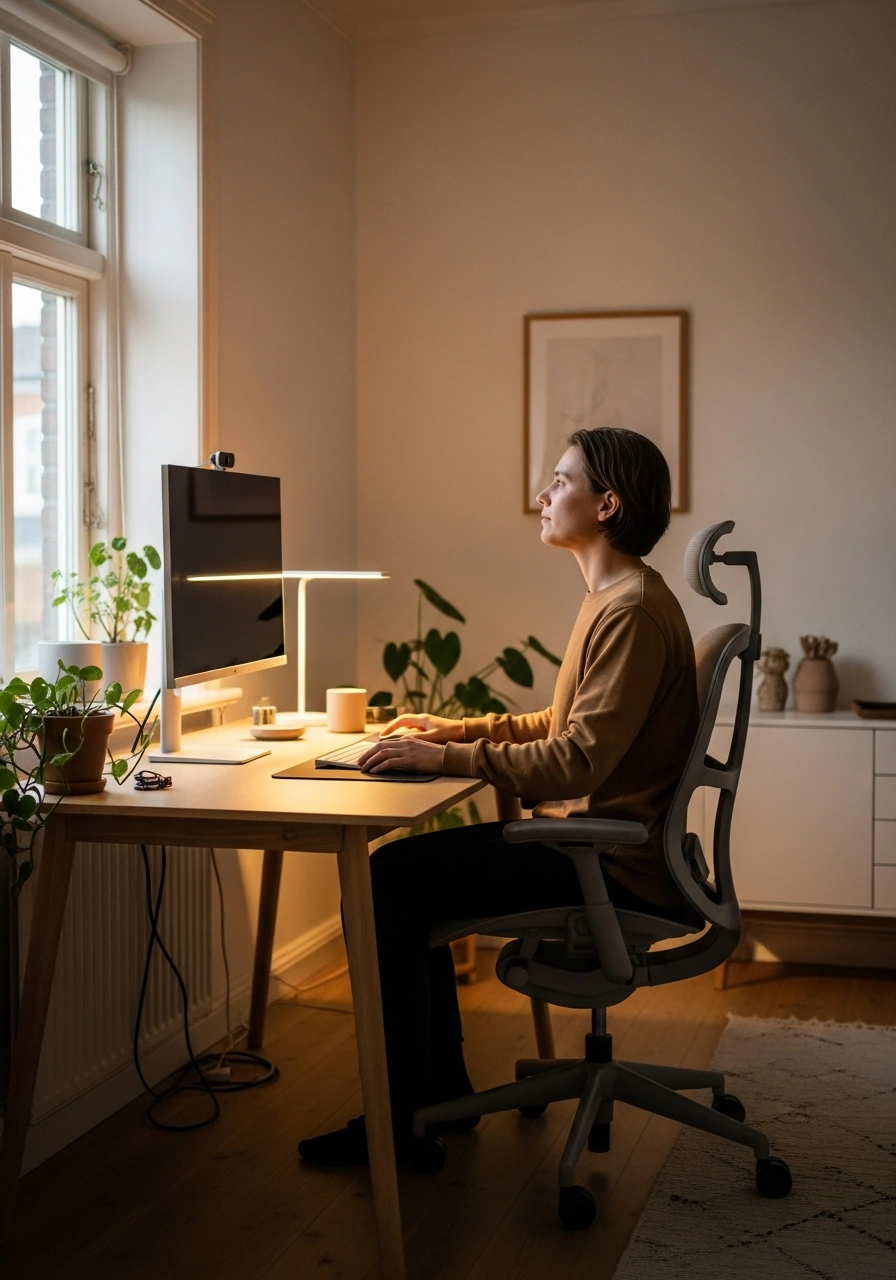
Lighting. A lamp behind the monitor minimizes contrast.
-
Anti-glare filters and blue-light glasses (optional).
2. Brain strategies
-
Clear work intervals: 45/10 or 50/5.
-
Turn off unnecessary notifications.
-
“Deep” focus blocks — without switching tasks.
-
Quick relief practices:
-
4–7–8 breathing,
-
Short micro-breaks,
-
2–3 minutes of stretching.
-
3. Sleep hygiene
-
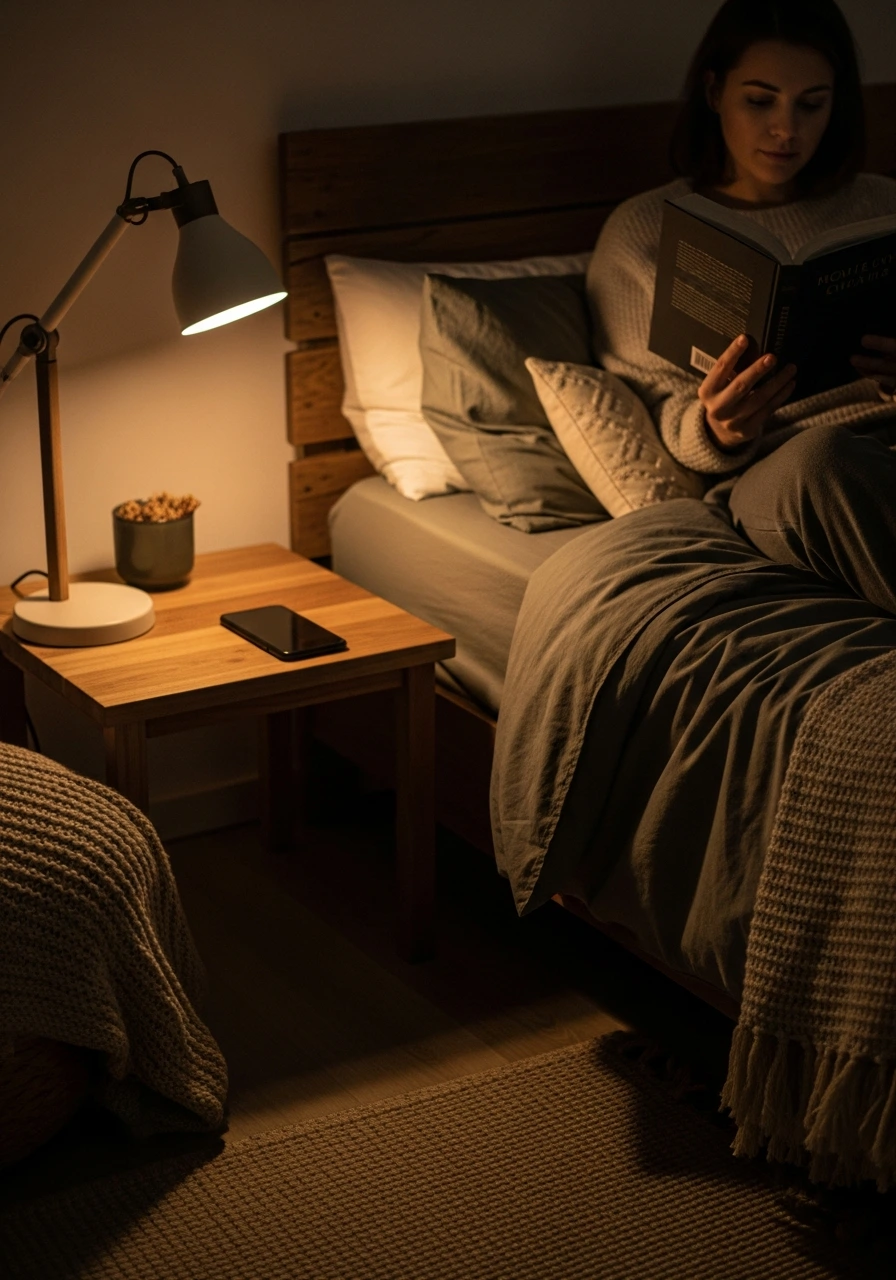
At least 2 hours before bed — minimize screen use.
-
Use warm light spectrums after 9:00 PM.
-
Brain shutdown rituals: reading, warm shower, magnesium.
Role of nutraceuticals in digital fatigue
Digital fatigue is a mix of oxidative stress, neurotransmitter depletion, and visual function impairment. Certain nutrients can support the eyes, cognitive functions, and nervous system.
Nutrients with evidence-based effects
-
Lutein and zeaxanthin. Filter blue light, support the retina.
-
Omega-3 (DHA). Key component of retinal and brain cell membranes.
-
B vitamins. Support the nervous system, improve signal transmission.
-
Magnesium. Reduces anxiety, improves sleep, decreases muscle spasms.
-
L-theanine. Supports concentration without stimulation. In the article “L-theanine and magnesium: a formula for calm without drowsiness” we discussed these two ingredients, popular among professionals and consumers.
-
Antioxidants (vitamins C, E, polyphenols). Reduce oxidative stress.
-
Probiotics. Via the gut–brain axis, they affect anxiety levels and stress resilience. Look for quality nutraceuticals at medizine.ua.
Table 2. Nutraceuticals, mechanism of action, and target users
| Nutrient | Mechanism of action | Beneficial for |
|---|---|---|
| Lutein, zeaxanthin | Blue light filtration, antioxidant protection of the retina | People with high screen exposure |
| DHA (omega-3) | Supports neuron and photoreceptor membranes | IT specialists, students, office workers |
| Magnesium | Anti-stress, sleep improvement, relaxation | For anxiety, sleep disturbances, muscle tension |
| B-complex vitamins | Neuroprotection, energy metabolism | For fatigue, reduced concentration |
| Theanine | Focus without stimulants | When working with large amounts of information |
| Antioxidants | Reduce oxidative stress | During prolonged screen exposure |
Research: what science says
-
Lutein and zeaxanthin reduce oxidative stress in the retina and improve visual acuity when working with screens (Nutrients, 2020).
-
DHA enhances neural transmission speed and supports cognitive functions (Frontiers in Aging Neuroscience, 2022).
-
Sleep deprivation + blue light → 20–35% decrease in memory and productivity (Sleep Medicine Reviews, 2021).
-
Prolonged multitasking increases cortisol levels and reduces gray matter volume in the anterior cingulate cortex (PNAS, 2020).
-
Probiotics via the gut–brain axis improve emotional resilience (Psychiatry Research, 2021).
Conclusion
Digital fatigue is not a whim but a biological reality of the modern pace of life. Gadgets affect the eyes, nervous system, neurotransmitters, sleep, and productivity.
We cannot give up screens, but we can
-
optimize our work schedule,
-
protect our eyes,
-
minimize stress and blue light exposure,
-
support the brain with nutrients that have evidence-based effectiveness.
This is a long-term strategy: more energy, focus, healthy eyes, and stable cognitive functions.
References
-
Hammond BR. Lutein and zeaxanthin in visual performance. Nutrients.
-
Chew EY et al. Carotenoids and eye health. JAMA Ophthalmology.
-
Parletta N. Omega-3 and cognitive performance. FAN, 2022.
-
PNAS. Multitasking and cortical structure.
-
Sleep Medicine Reviews. Blue light and cognitive decline.
-
Psychiatry Research. Probiotics and mood regulation.
About the Author