
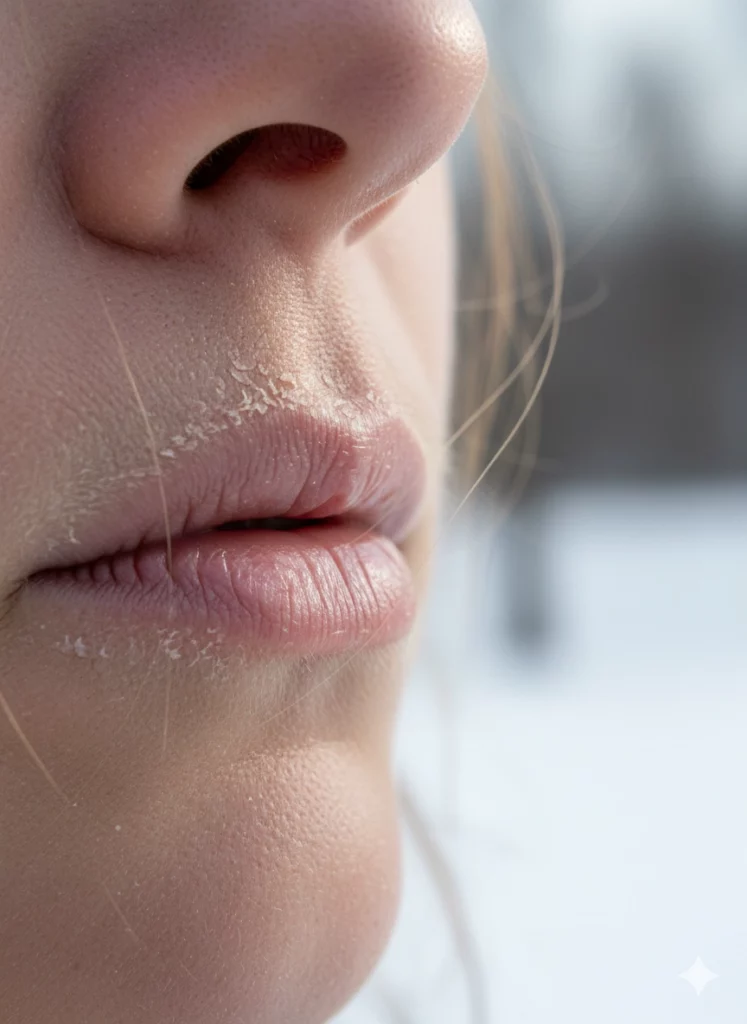
Winter skin care is key to maintaining its health and barrier function during the cold season. Frost, wind, and dry air can deplete the skin, so proper prevention and daily care help avoid dryness, flaking, and redness.
How cold and wind affect the skin
Lipid barrier disruption and dryness
The skin is not just a “covering,” but a complex multi-layered protective system. The main role is played by the lipid barrier — a layer of ceramides, cholesterol, and fatty acids that retain moisture and prevent the penetration of aggressive factors. In winter skin care, it is important to include products that support this barrier and reduce moisture loss. You can also learn more about skin care in the article “The Impact of Seasonal Changes on the Skin Microbiome“.
At temperatures below 0°C:
-
sebaceous gland activity decreases
-
epidermal lipid synthesis decreases
-
transepidermal water loss increases
As a result, dryness, microcracks, and increased sensitivity may occur.
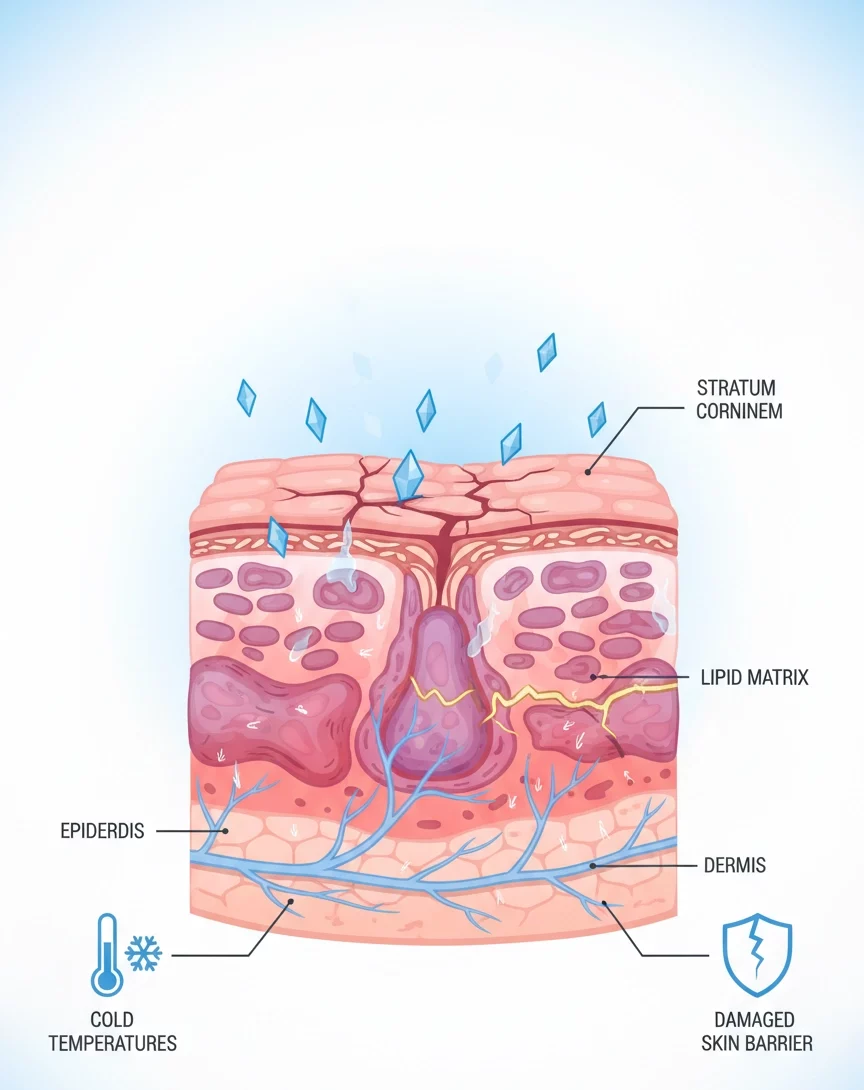
The impact of frost, wind, and dry air
Wind enhances moisture evaporation from the skin surface. Dry air (both outdoors and in heated indoor environments) further weakens the barrier function. Therefore, winter skin care includes regular application of protective creams and proper moisturization.
Especially vulnerable areas:
-
facial skin
-
lips
-
hands
Symptoms of skin damage in winter
| Symptom | Mechanism | More common in |
|---|---|---|
| Dryness and tightness | Increased water loss | All skin types |
| Flaking | Stratum corneum damage | Dry, atopic skin |
| Redness | Vascular reaction to cold | Sensitive skin |
| Cracks | Lipid barrier disruption | Hands, lips |
Daily care and dryness prevention
Winter creams and healthy habits
-
Use creams with ceramides, cholesterol, and fatty acids, which form the basis of winter skin care.
-
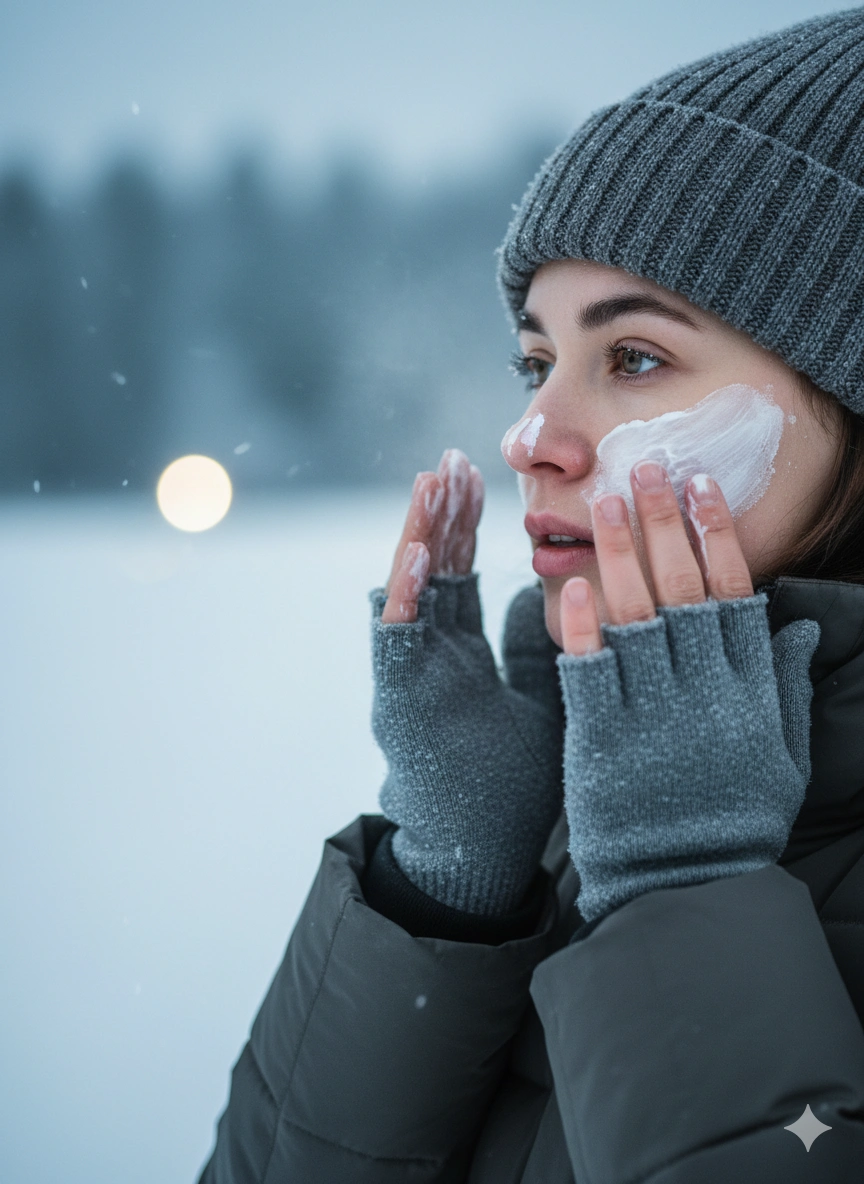
Apply a protective cream 20–30 minutes before going out into the cold.
-
Avoid harsh cleansing products.
-
Use a humidifier at home.
Ingredients for skin restoration and protection
| Ingredient | Action | Suitable for |
|---|---|---|
| Ceramides | Barrier restoration | All skin types |
| Glycerin | Moisturization | Dry skin |
| Panthenol | Soothing effect | Sensitive skin |
| Niacinamide | Barrier strengthening | Combination skin |
Questions and answers
Are special winter creams necessary?
Yes, during the cold season it is advisable to use richer textures with restorative lipids as part of winter skin care.
How can you protect your facial skin in the cold?
Apply a protective cream in advance, avoid washing your face immediately before going outside, and protect the skin with a scarf.
When should you see a dermatologist?
If cracks, severe flaking, or signs of dermatitis or eczema appear.
Conclusions
The winter period is a serious challenge for the skin barrier. Regular protection, proper care adjustments, and preventive measures within winter skin care help avoid complications and maintain healthy skin until spring.
References
-
Proksch E. et al. Skin barrier function. Dermatology Research and Practice.
-
Elias P.M. Stratum corneum barrier function. Journal of Investigative Dermatology.
-
WHO. Effects of cold exposure on skin physiology.
About the Author