

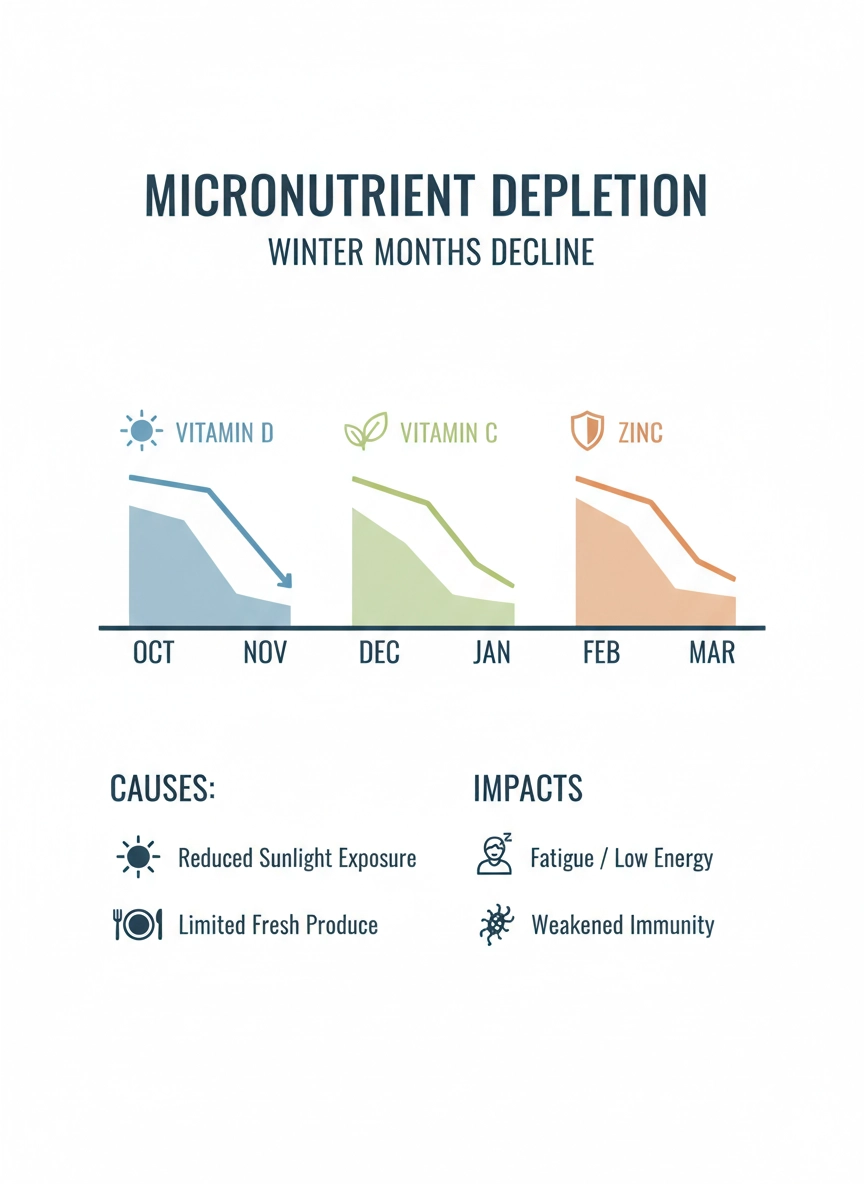
Seasonal Micronutrient Deficiency at the end of winter often manifests as fatigue, reduced immune protection, and decreased concentration. The most vulnerable are stores of vitamin D, iron, magnesium, B vitamins, and omega-3 fatty acids.
Rational correction of such a deficiency requires laboratory assessment and an individualized approach to diet and supplements.
Most Common Deficiencies During the Winter Period
Vitamins and Minerals
Seasonal deficiency develops due to:
-
reduced ultraviolet exposure
-
limited intake of fresh foods
-
frequent infectious diseases
-
chronic stress

Key Micronutrients at Risk
| Micronutrient | Physiological Role | Mechanism of Seasonal Decline |
|---|---|---|
| Vitamin D | Immune regulation, calcium metabolism | Low sunlight exposure |
| Iron | Hematopoiesis, oxygen transport | Dietary imbalance |
| Magnesium | Neuromuscular regulation | Increased consumption under stress |
| Vitamin B12 | Methylation, nervous system | Limited intake of animal protein |
| Omega-3 | Anti-inflammatory effects | Low fish consumption |
Their Impact on Well-Being
Subclinical deficiencies may present as:
-
asthenic syndrome
-
reduced cognitive function
-
frequent respiratory infections
-
emotional lability
Vitamin D deficiency is associated with impaired innate and adaptive immunity. Low ferritin levels may lead to latent iron-deficiency anemia even before hemoglobin changes occur.
Main Symptoms of Micronutrient Shortage
| Symptom | Likely Deficiency | Recommended Marker |
|---|---|---|
| Chronic fatigue | Iron, B12 | Ferritin, B12 |
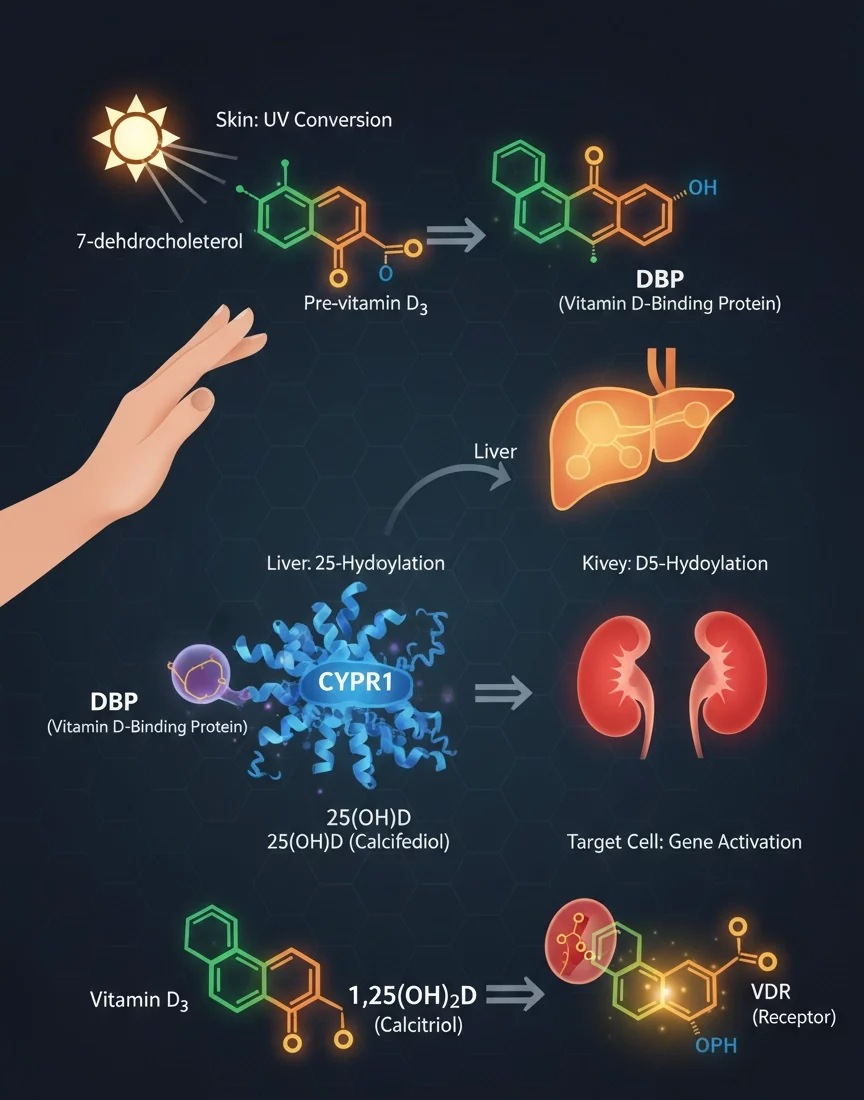
| Frequent infections | Vitamin D | 25(OH)D |
| Cramps, anxiety | Magnesium | Serum Mg |
| Reduced concentration | Omega-3, B-complex | Lipid profile, B12 |
It is important to remember: clinical symptoms do not always correlate with significant laboratory changes.
How to Safely Correct Deficiencies
-
Conduct laboratory diagnostics (as indicated).
-
Determine target levels of micronutrients.
-
Select dosages according to international guidelines.
-
Monitor progress after 8–12 weeks.
Self-administration of high doses of fat-soluble vitamins can lead to hypervitaminosis. Learn more about deficiency symptoms and safe correction in the article: “Vitamin Deficiency at the End of Winter: How to Recognize and Safely Adjust Intake”.

Questions & Answers
Which tests are advisable?
25(OH)D, ferritin, complete blood count, B12, magnesium if needed.
Is diet enough to cover needs?
With a balanced diet — partially. However, under low sunlight conditions, vitamin D often requires additional supplementation.
Is vitamin excess dangerous?
Yes. Especially vitamins A and D, which accumulate in the body.
Conclusions
Seasonal micronutrient imbalance at the end of winter is a predictable physiological phenomenon. Timely laboratory assessment and individualized correction reduce the risks of asthenia, infectious diseases, and cognitive decline.
References
-
Holick M.F. Vitamin D deficiency. N Engl J Med.
-
WHO Micronutrient Deficiency Guidelines.
-
EFSA Dietary Reference Values.
-
Camaschella C. Iron deficiency. Lancet.
About the Author