
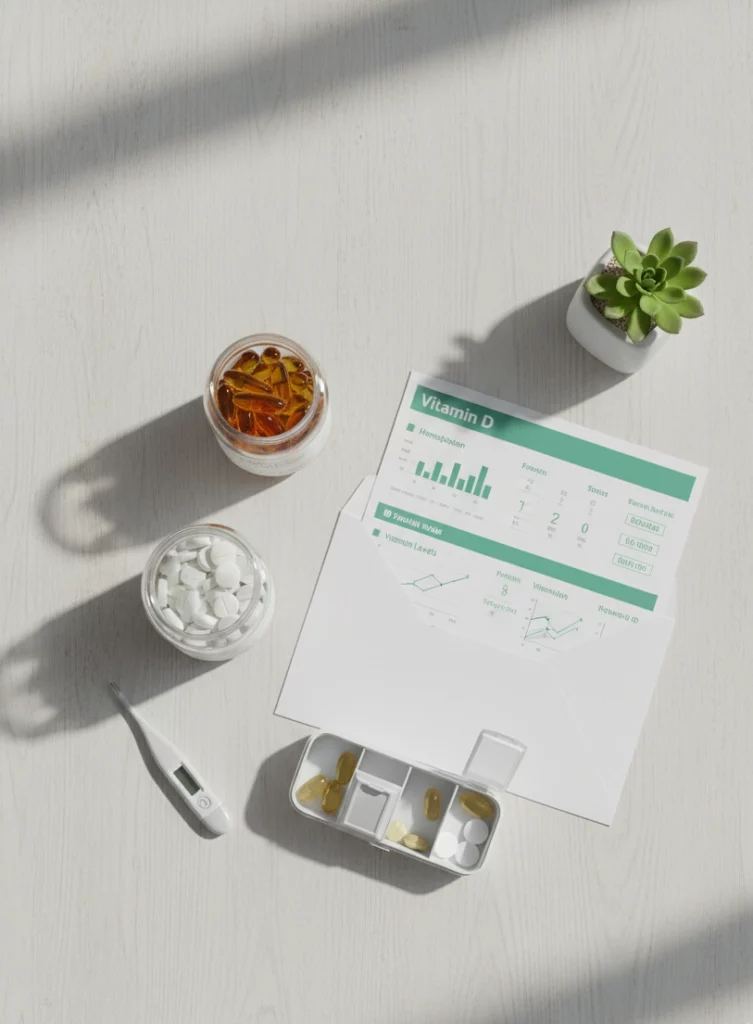
Vitamin Deficiency at the End of Winter — a common issue caused by the depletion of micronutrient stores, reduced sun exposure, and seasonal dietary changes. During this period, the deficit accumulated over winter can become noticeable: fatigue appears, concentration drops, and infections become more frequent. At the same time, taking supplements independently without supervision is not always safe and requires a thoughtful approach.

Why Vitamin Deficiency Occurs at the End of Winter
Signs of a Possible Deficiency
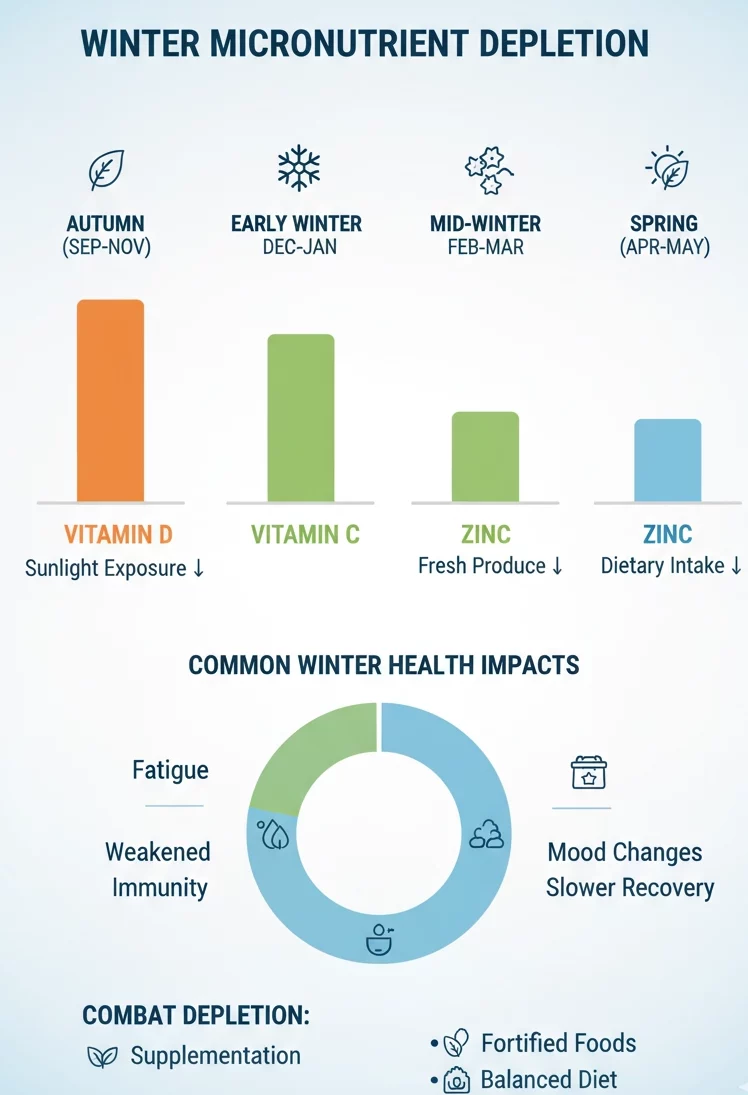
During winter, consumption of fresh fruits and vegetables decreases, sun exposure is reduced, and infections become more frequent. All of this gradually depletes the body’s reserves.
Most commonly, the stores of:
The end of winter is when the accumulated deficiency becomes clinically noticeable.
Which Vitamins and Minerals Are Most Often Depleted
Vitamins and Minerals
| Nutrient | Why It’s Important | Signs of Possible Deficiency |
|---|---|---|
| Vitamin D | Immune regulation, bone health | Fatigue, frequent colds |
| Iron | Oxygen transport | Weakness, paleness |
| Magnesium | Nervous system function | Irritability, cramps |
| B Vitamins | Energy metabolism | Reduced concentration |
Correction should be based on clinical assessment and, whenever possible, laboratory diagnostics. In practice, decisions about vitamin intake are made individually, considering age, lifestyle, chronic conditions, and lab results.
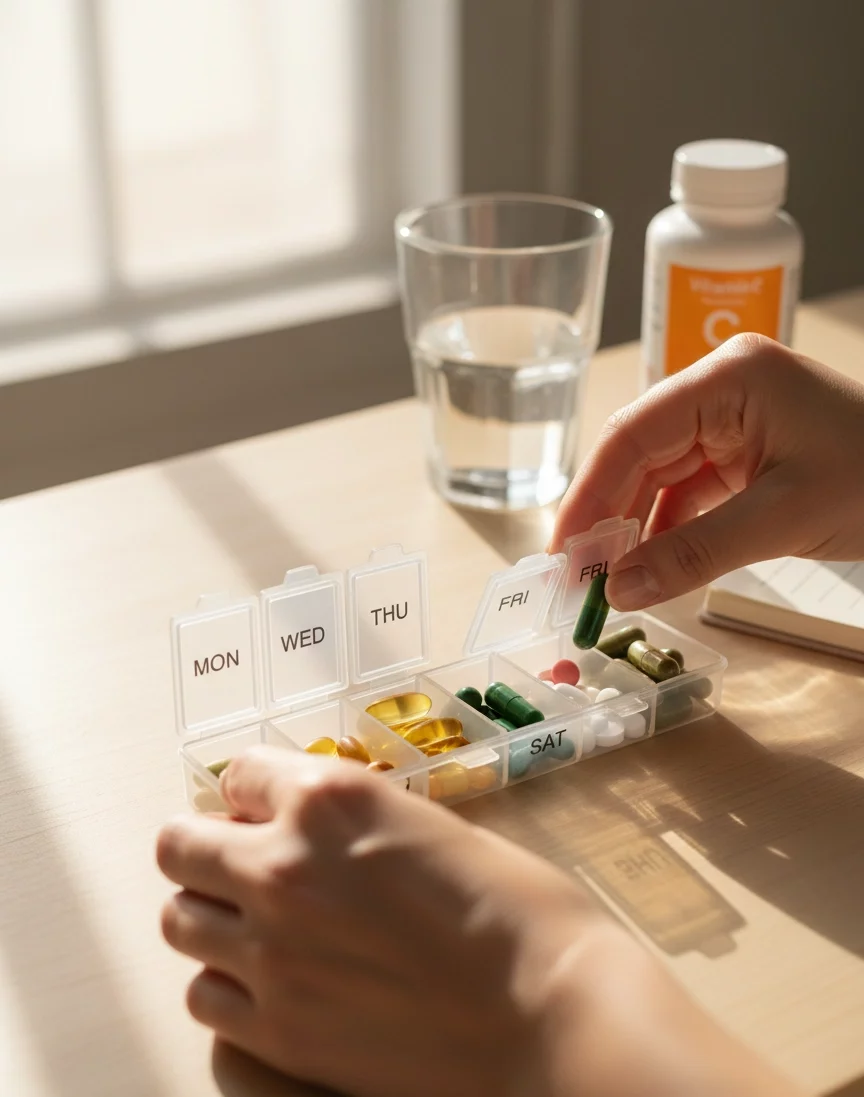
Risks of Self-Supplementation
Uncontrolled intake may lead to:
-
Overdose of fat-soluble vitamins
-
Mineral imbalance
-
Masking of underlying diseases
More is not always better — especially when it comes to micronutrients.
When to Get Tests and Review Your Supplement Plan
| Situation | Why It Matters |
|---|---|
| New symptoms appear | Possible deficiency |
| Frequent infections | Weakened immunity |
| Chronic fatigue | Disrupted energy metabolism |
| Lifestyle changes | Different body needs |
At the end of winter, it is useful to assess your wellbeing and, if needed, get basic lab tests.
Questions & Answers
Can I take vitamins without tests?
Minimal preventive doses are possible, but long-term or high-dose intake requires supervision. If deficiency symptoms are present, it is best to follow lab results.
Does everyone need supplements?
No. The need for vitamin supplements depends on lifestyle, diet, age, physical activity, and health status. In many cases, a balanced diet is sufficient.
When should I stop taking vitamins?
After lab results normalize or as advised by a doctor. Long-term uncontrolled intake can lead to excess of certain micronutrients.
Conclusions
Vitamin deficiency at the end of winter gradually develops during the cold season and becomes noticeable by late winter or early spring. It manifests as fatigue, reduced immunity, and decreased concentration. The end of winter is a good time to reassess your supplement plan based on individual needs and lifestyle.
A rational approach helps prevent both deficiency and excess of micronutrients.
This information is for educational purposes and does not replace medical advice. Vitamin intake adjustments should be based on clinical assessment and lab results.
References
-
Michael F. Holick. Vitamin D deficiency. New England Journal of Medicine.
-
World Health Organization. Micronutrient Guidelines.
-
European Food Safety Authority. Scientific Opinion on Dietary Reference Values.
About the Author