
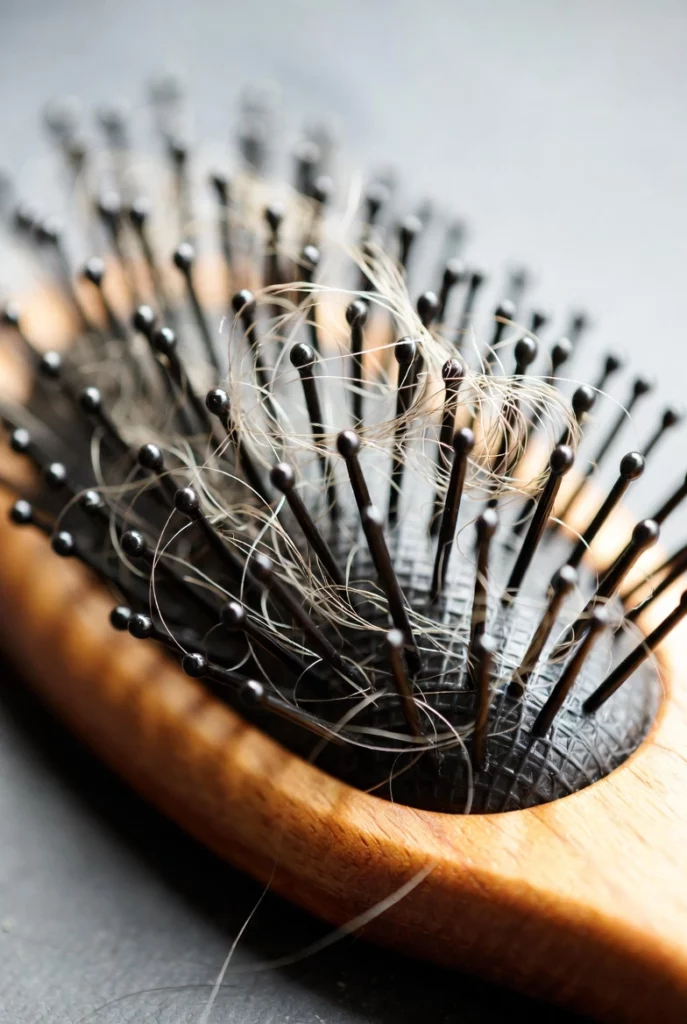
Hair loss in spring is not a myth and not “that’s it, I’m going bald.” According to dermatological associations (American Academy of Dermatology, British Association of Dermatologists), it can be a variant of the physiological norm related to the hair growth cycle. After winter, the body readjusts, and some hair shifts into the shedding phase. In most cases, this is temporary and usually does not require specific treatment. But there are nuances that help distinguish normal from problematic.
Spring is when you wash your hair and think: “Okay… is this actually normal?”
Spoiler: often — yes.

Main causes of hair loss in spring
Stress and hormonal changes
Our hair follows its own cycle:
- growth phase
- transition phase
- shedding phase
And this cycle is sensitive to everything: stress, sleep, hormones.
In spring, the body exits “winter mode,” and hormonal balance changes, including levels of:
- melatonin
- cortisol
This can trigger telogen effluvium — a condition in which more hair enters the shedding phase.
And importantly: this is not hair damage, but a redistribution of phases.

Vitamin and micronutrient deficiencies
After winter, the diet is often not ideal.
Possible deficiencies:
- iron
- zinc
- vitamin D
- protein
And here is the key point: hair is not a priority for the body. If resources are limited, the body “saves” on it.
Table 1. Main causes of hair loss
| Factor | Mechanism | Result |
|---|---|---|
| Stress | Change in growth cycle | Hair loss |
| Hormones | Shift to telogen | Thinning |
| Deficiencies | Lack of resources | Weakened hair |
| Seasonality | Physiological adaptation | Temporary shedding |

Symptoms and how to understand it’s a normal spring change
Temporary hair thinning
Most often it looks like this:
- hair seems slightly less dense
- thinner ponytail
- more hair on the brush
But without sudden bald patches or clearly defined areas of hair loss.
That’s an important distinction.
Mild increase in shedding during washing or brushing
A lot of anxiety here comes simply from the visual effect.
You see more hair — it feels like a disaster.
But:
it is often considered normal to lose up to ~100 hairs per day
and in spring this number may increase slightly.
If the shedding is even and without other symptoms — it is most likely seasonal.
After winter, the body readjusts, and some hair shifts into the shedding phase. You can read more about seasonal changes in the body in spring in a separate article.
Table 2. Normal vs reason for concern
| Sign | Normal | Needs attention |
|---|---|---|
| Hair loss | Moderate | Sudden |
| Distribution | Even | Patches |
| Duration | Up to 2–3 months | Longer |
| Scalp condition | Normal | Itching, flaking |

What you can safely do to support your hair
Balanced nutrition and vitamins
Not magic, just basics:
- enough protein
- vegetables, fats, micronutrients
- normal iron levels
And yes, sometimes supplements may be appropriate after assessment, but not “blindly”.
If you suspect a deficiency — it’s better to check.
Gentle care without aggressive procedures
The worst thing you can do is start “saving your hair” aggressively.
Better:
- mild shampoos
- minimal heat styling
- no harsh procedures
Spring shedding does not require “heavy artillery”.
Questions and answers
Is it normal to lose more hair in spring?
Yes, hair loss in spring is common. It may be linked to natural changes in the hair growth cycle and in most cases is temporary.
How long does hair loss in spring last?
Seasonal hair shedding usually lasts from 1 to 3 months. In most cases, hair growth gradually recovers.
Should you take vitamins immediately if hair is falling out?
Not necessarily. First, it’s important to assess your diet and overall health. If needed, a doctor may recommend additional tests and correction of deficiencies.
When should you see a doctor for hair loss?
A consultation may be appropriate if:
- hair loss lasts longer than 2–3 months
- patches or bald spots appear
- there is itching, pain, or flaking of the scalp
- hair loss becomes suddenly more intense
Conclusions
Spring hair loss is not a catastrophe, but an adaptation.
In most cases, the body “restarts” the growth cycle on its own.
The goal is not to interfere and to support it a little:
balanced nutrition, gentle care, and a bit of patience.
And yes, in most cases hair growth recovers over time. In this sense, it is very disciplined.
The information is for reference only and does not replace a doctor’s consultation.
References
- American Academy of Dermatology. Hair loss overview
- National Institutes of Health. Telogen effluvium
- Mayo Clinic. Hair loss causes
- British Association of Dermatologists. Hair shedding
- Cleveland Clinic. Seasonal hair loss
About the Author