
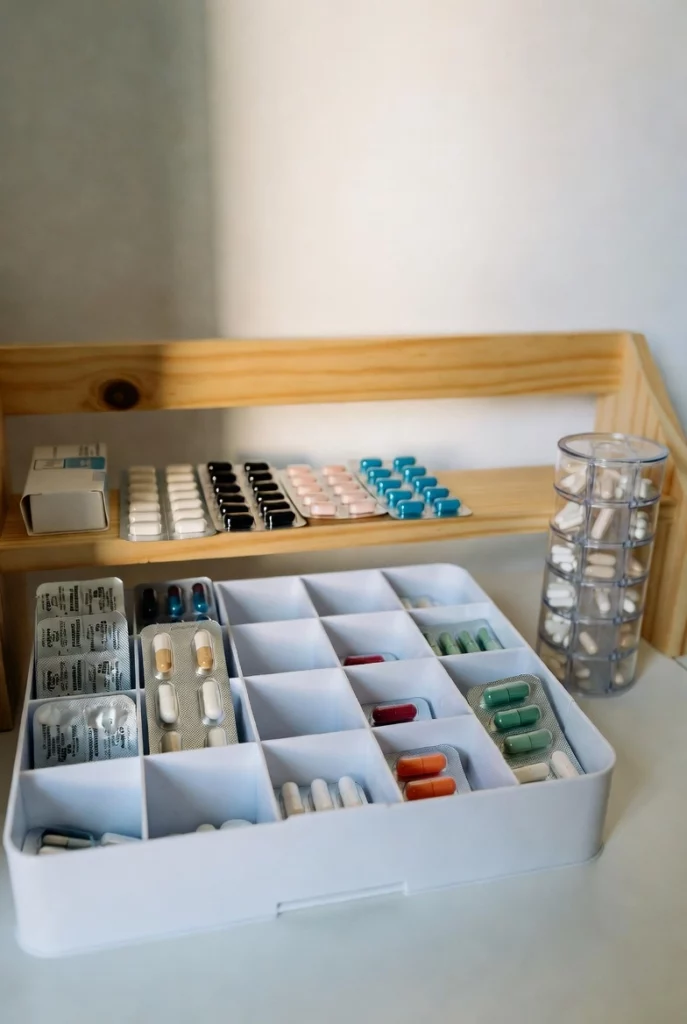
Many people transfer pills into small containers, organizers, or jars “for convenience.” Especially when traveling, at work, or when the packaging takes up too much space. However, not all medications tolerate contact with air, moisture, and light well.
In addition, people often lose information about dosage, expiration dates, or the treatment schedule. In some cases, this significantly increases the risk of errors.
Why the Idea of Changing Packaging Arises
Convenience and Compactness
Original packaging is not always convenient in everyday life. Blister packs take up space, boxes get torn in bags, and carrying several medications at once can turn a backpack into a small pharmacy.
Therefore, people often:
- transfer pills into organizers;
- carry a few doses in small containers;
- mix different medications in one jar;
- throw away instructions and boxes to “declutter space.”
For a short trip, this might seem like a trifle. But packaging exists for a reason.
Typical Everyday Situations
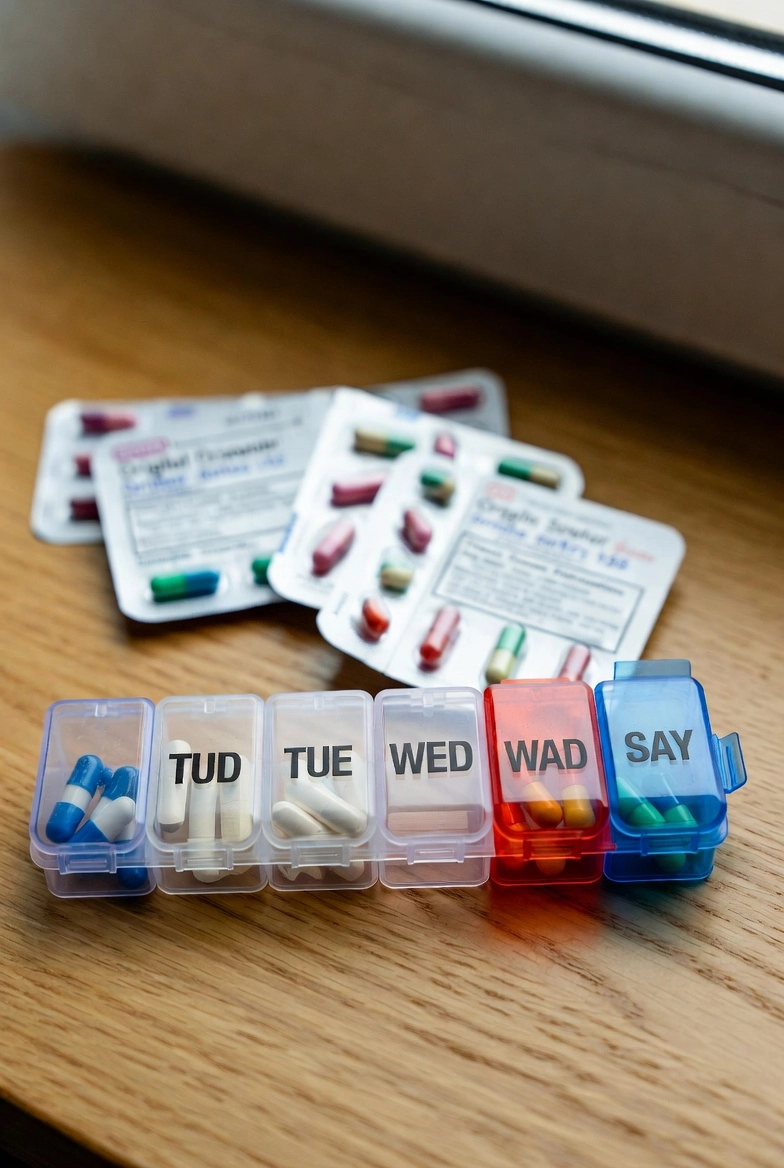
Most often, pills are transferred in the following cases:
| Situation | What People Usually Do |
|---|---|
| Travel or business trip | Take a few pills without the box |
| Daily intake of several medications | Use weekly organizers |
| Space saving | Transfer to compact jars |
| Elderly people | Prepare medications in advance |
| Work or studies | Carry a “spare dose” with them |
Some of these solutions can indeed be convenient. The question is how to do it safely.
What Risks This Creates
Impact of Air and Moisture
Some medications are sensitive to the environment. After opening the package, pills can come into contact with:
- moisture;
- heat;
- sunlight;
- atmospheric oxygen.
Because of this, the drug sometimes gradually loses stability. Especially if the pills are kept in a bathroom, a car, or near a heat source.
Blister packs and original vials are designed to protect against such factors. Some packaging even contains special desiccants (moisture absorbers).
Loss of Information About the Medication
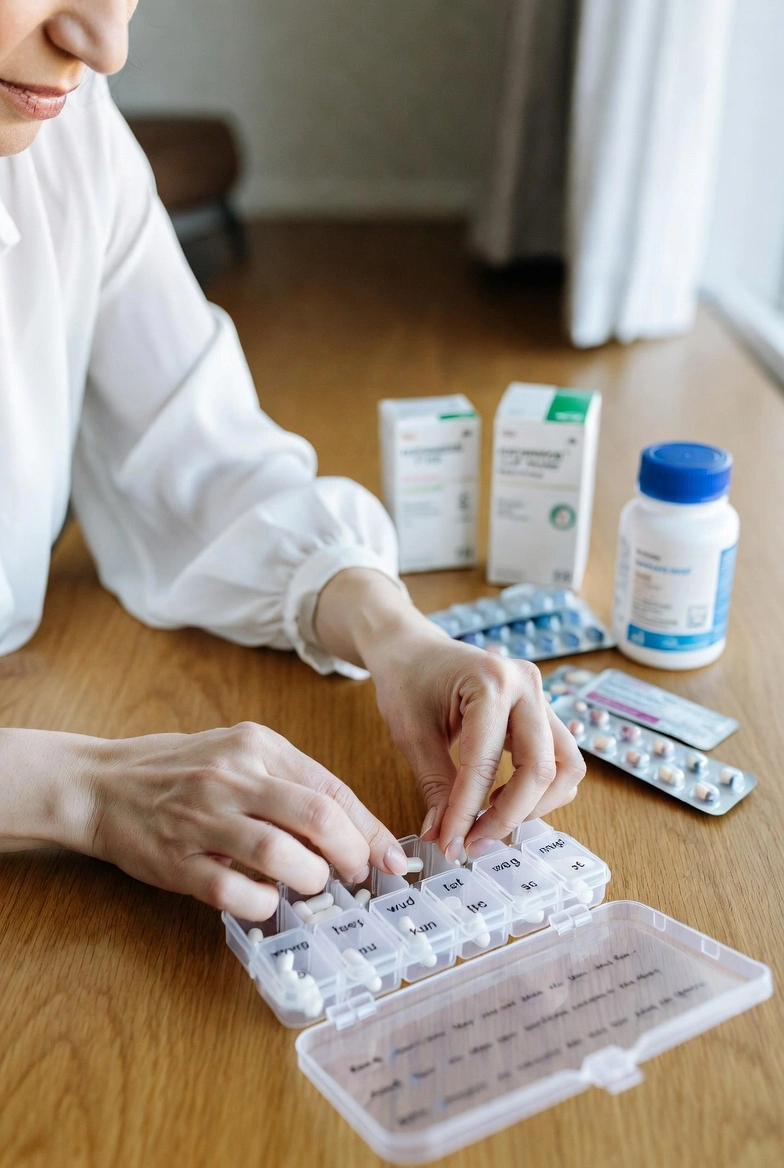
Another problem that is often forgotten is confusion.
Without the original packaging, a person may lose:
- the name of the medication;
- the dosage;
- the expiration date;
- the instructions;
- information on how to take it.
Pills of many medications look very similar. A white round pill without packaging says almost nothing even to a pharmacist.
It is especially risky to mix several different medications in one container. This increases the chance of an error during intake.
When Transferring Should Be Avoided
Medications Sensitive to the Environment
There are medications for which storage conditions are of particular importance.
These may include:
- modified-release tablets;
- effervescent tablets;
- moisture-sensitive medications;
- certain hormonal drugs;
- specific antibiotics;
- soft-shell capsules.
In such cases, original packaging helps maintain the stability of the drug throughout its stated shelf life.
Complex Dosing Schedules
Caution is also needed when a person takes many medications simultaneously or has a complex schedule.
For example:
| Situation | Possible Risk |
|---|---|
| Several drugs with different dosages | Medication error |
| Changing treatment regimen | Confusion with days and doses |
| “As needed” medication | Repeat intake due to forgetfulness |
| Medications for elderly people | Higher risk of accidental substitution |
In such situations, it is better to use special organizers with labels or keep part of the information along with the medication.
Questions and Answers
Can I use a pill organizer?
Yes, many people use pillboxes daily. It is important not to mix unknown pills and not to store them there for months.
Can I transfer pills into a glass jar?
Not all medications tolerate contact with air and light well. A glass jar without tight protection is not always suitable.
Why is there sometimes a small packet inside the package?
This is a desiccant. It helps reduce the impact of moisture on the medication.
Can I throw away the box and instructions?
It is better to keep at least part of the information: name, dosage, and expiration date.
Conclusions
Transferring pills into other containers is sometimes convenient, especially when traveling or taking medications regularly. However, original packaging protects the drug from moisture, light, and dosing errors. The greatest risk arises when pills are mixed together or information about the drug is completely lost. If you must use organizers, do it carefully and without the “pharmaceutical quest” of unknown white pills.
References
- World Health Organization. Guidelines for the storage of essential medicines.
- U.S. Food and Drug Administration (FDA). Safe Use of Medicines.
- European Medicines Agency (EMA). Stability testing guidelines for medicinal products.
- National Health Service (NHS). Medicines storage advice.
- United States Pharmacopeia (USP). Pharmaceutical storage and handling standards.
About the Author