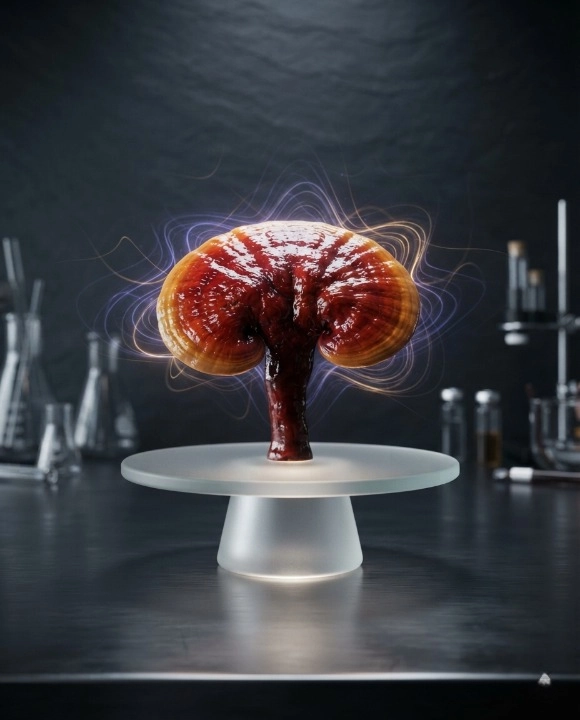
“Lingzhi” (China) or “Reishi” (Japan) are common names for the polypore mushroom Ganoderma lucidum, which has been utilized in Eastern traditional medicine for over two thousand years primarily as a “calming” remedy — to alleviate restlessness, insomnia, and systemic exhaustion (this specific “An-Shen”, or spirit-calming, effect was documented as early as the classic treatise “Shennong Bencao Jing”). Modern scientific interest in Reishi as an adaptogen is based on the discovery that its bioactive molecules modulate the stress axis, inhibitory neurotransmitters, and sleep architecture. This positions the mushroom as one of the most promising natural candidates for supporting stress resilience, restorative sleep, and recovery.
Active Molecules and Potential Mechanisms of Action
Reishi contains two primary groups of bioactive compounds, both of which are intimately involved in physiological pathways relevant to stress, sleep, and recovery.
Triterpenoids (Ganoderic Acids)
Triterpenoids comprise over 150 distinct ganoderic acid derivatives; they are responsible for the characteristically bitter, “calming” profile of Reishi. They are linked to adaptogenic activity through the modulation of the hypothalamic–pituitary–adrenal (HPA) axis, the central regulator of the physiological stress response. When evening cortisol (the primary stress hormone) levels remain chronically elevated, individuals experience a “tired but wired” state; triterpenes are believed to help restore cortisol to baseline nocturnal levels, dampening physiological hyperarousal and facilitating a smooth transition into restful sleep. Triterpenoids are also credited with antioxidant and anti-inflammatory properties, theoretically supporting post-exertional recovery (Wang S et al, 2024).
Potential Mechanisms (currently predominantly preclinical and actively investigated). Contemporary laboratory studies outline several distinct pathways through which Reishi may regulate cortisol:
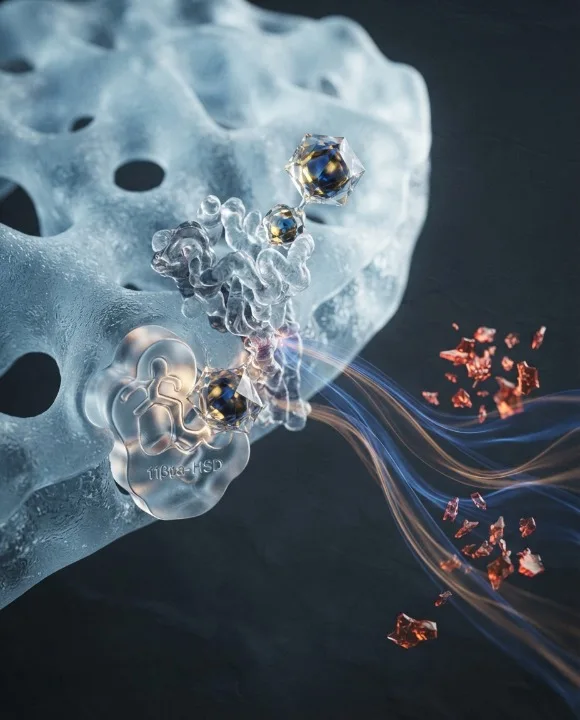
- “Local” downregulation of active cortisol via 11β-HSD enzymes (11β-hydroxysteroid dehydrogenase). In peripheral tissues, the balance between active cortisol and inactive cortisone is controlled by 11β-HSD1 (which converts cortisone to active cortisol) and 11β-HSD2 (which catalyzes the reverse reaction). In cell models, Reishi extract acted as an inhibitor of cortisone-to-cortisol conversion, and its constituent ganoderic acid A mitigated the deleterious effects of chronic cortisol excess — indicating that the mushroom may reduce active hormone availability within tissues rather than merely suppressing total systemic production (Hayashi S et al, 2025).
- Upstream action on the stress axis. In cellular assays, Reishi attenuated the signaling effects of corticotropin-releasing hormone (CRH) — the primary trigger of the entire HPA cascade — reducing stress-induced cellular senescence and downregulating phosphorylation within the MAPK (mitogen-activated protein kinase) pathway (Lee S et al, 2024).
Polysaccharides (β-Glucans)
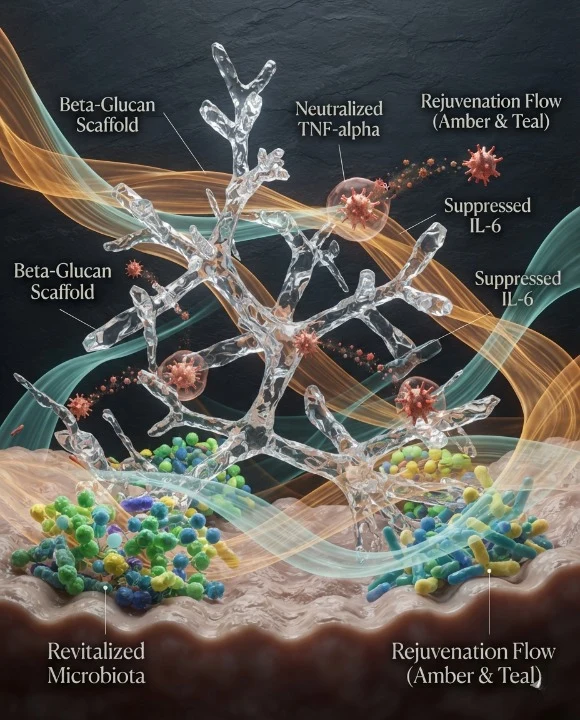
The second major group consists of β-glucans (β-(1→3)-D-glucans with (1→6)-branching; fungal cell wall polysaccharides). While their classic role is immunomodulation (Ren L et al, 2021), in the context of stress and sleep, another dimension is crucial: they reduce systemic low-grade inflammation (by downregulating pro-inflammatory cytokines such as tumor necrosis factor-α, TNF-α, and interleukin-6, IL-6) and nourish beneficial gut microbiota. Via the gut-brain axis, this indirectly influences central neurotransmitters governing mood regulation and sleep quality. Chronic low-grade inflammation is a recognized driver of poor sleep efficiency and persistent fatigue; thus, anti-inflammatory activity is regarded as a key pathway in Reishi’s restorative efficacy (Jafari A et al, 2025).
GABAergic and Serotonergic Sleep Pathways
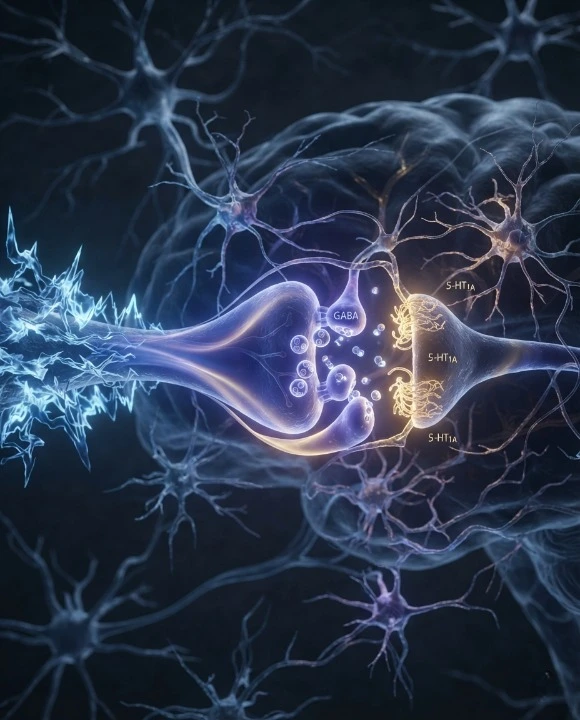
The hypnotic mechanisms of Reishi have been most comprehensively elucidated in animal models. Reishi extract significantly prolonged pentobarbital-induced sleep duration via a GABAergic mechanism (γ-aminobutyric acid, GABA, is the brain’s principal inhibitory neurotransmitter, functioning as an internal “brake”; Chu QP et al, 2007). In a 2021 study, the acidic fraction of mycelial extract shortened sleep onset latency and extended sleep duration in mice by increasing serotonin (5-HT, 5-hydroxytryptamine) levels in the hypothalamus and upregulating serotonergic pathway genes — an effect that disappeared when gut microbiota were experimentally depleted (Yao C et al, 2021). This integrates GABA, serotonin, and the gut-brain axis into a cohesive biological model of how Reishi promotes tranquility and restorative sleep.
| Bioactive Group | Molecular Target / Mechanism | Physiological Outcome for Stress & Sleep |
|---|---|---|
| Triterpenoids (Ganoderic Acids) | HPA axis modulation, 11β-HSD1 inhibition (cortisone-to-cortisol conversion), reduction of CRH/MAPK signaling | Normalization of evening cortisol levels, relief of psychophysiological hyperarousal |
| Polysaccharides (β-Glucans) | Suppression of TNF-α and IL-6 cytokines, prebiotic modulation of beneficial gut microbiota, immune regulation (NK cells) | Reduction of systemic inflammation, alleviation of fatigue via the gut-brain axis |
| Acidic Mycelial Fraction & Nucleosides | Potentiation of GABAergic neurotransmission, upregulation of hypothalamic serotonin (5-HT) | Reduction of sleep latency, extension of restorative slow-wave sleep duration |
Clinical Evidence: Fatigue, Sleep, and Recovery
| Study | Participants / Design | Protocol / Formulation | Key Documented Clinical Finding |
|---|---|---|---|
| Zhao et al. (2012) | 48 patients with chronic fatigue (RCT) | Spore powder 1000 mg tid, 4 weeks | Significant reduction in fatigue and anxiety/depression (HADS), reduction in TNF-α and IL-6 cytokines |
| Tang et al. (2005) | 132 patients with neurasthenia (RCT) | Ganopoly extract 1800 mg tid, 8 weeks | Significant reduction in clinical fatigue severity (CGI), enhanced subjective well-being |
| Chu et al. (2023) | Meta-analysis in primary insomnia | Clinical trials of G. lucidum | Statistically significant improvement in subjective sleep quality and total sleep duration |
| Jin et al. (2016) | Cochrane Systematic Review | G. lucidum β-glucans (adjuvant) | Augmentation of immune effector function: elevated NK cell cytotoxicity and lymphocyte subsets |
Fatigue and Recovery — Pilot RCT (Zhao H et al, 2012)
The most compelling clinical evidence regarding physical recovery comes from a pilot randomized controlled trial (RCT): 48 patients experiencing significant treatment-related fatigue received Reishi spore powder (1000 mg three times daily) for 4 weeks. Statistically significant improvements were recorded in physical well-being and fatigue subscales (FACT-F), anxiety and depression scores decreased (HADS, Hospital Anxiety and Depression Scale), and overall quality of life improved (EORTC QLQ-C30). Circulating biomarkers supported the underlying mechanism: serum levels of pro-inflammatory cytokines TNF-α and IL-6 significantly declined, consistent with the “cytokine hypothesis” of fatigue. No severe adverse effects were observed. While a small pilot study, it provides an encouraging signal for further clinical investigation.
Neurasthenia, Stress, and Well-being — RCT (Tang W et al, 2005)
In an RCT involving 132 patients diagnosed with neurasthenia (a clinical syndrome of chronic exhaustion, irritability, and sleep disturbance), the polysaccharide extract Ganopoly (1800 mg three times daily) administered against placebo for 8 weeks yielded significantly greater reductions in Clinical Global Impression (CGI) severity scores and subjective fatigue, alongside marked improvements in overall well-being. This stands as one of the few rigorously controlled clinical trials directly addressing stress-associated exhaustion.
Sleep — Meta-Analysis (Chu Y et al, 2023)
The most recent synthesizing evidence specifically evaluating sleep is a systematic review and meta-analysis of clinical trials in primary insomnia (Chu Y et al, 2023), which concluded that G. lucidum significantly enhances subjective sleep quality. Combined with preclinical mechanistic evidence (GABAergic and serotonergic signaling pathways, Section 1.3), this establishes sleep support as the most promising clinical application of Reishi, although large-scale, high-quality RCTs in primary insomnia remain a scientific priority.
Immunological Context
Outside the domains of stress and sleep, Reishi is most extensively characterized as an immunomodulator: in clinical populations, its β-glucans upregulated the cytotoxic activity of natural killer (NK) cells and specific lymphocyte subsets, and in oncology, it is widely investigated as an adjuvant to standard therapies (Cochrane Review, Jin X et al, 2016). In the context of post-stress recovery, this demonstrates that Reishi acts systemically — reinforcing immune homeostasis — rather than exerting isolated neurological effects.
Future Research Directions
- Sleep Architecture in Primary Insomnia. The dependence of hypnotic efficacy on gut microbiota diversity, serotonin kinetics, and GABA receptor density represents a high-priority target for large-scale RCTs in individuals with clinical insomnia.
- Diurnal Cortisol Kinetics and Stress Resilience. Direct monitoring of circadian salivary cortisol profiles and acute stress biomarkers during Reishi supplementation in healthy cohorts undergoing physiological stress remains to be systematically verified.
- Recovery and Inflammatory Dynamics. Downregulation of circulating pro-inflammatory cytokines (TNF-α, IL-6) as an anti-fatigue mechanism warrants confirmation in larger, non-clinical athletic and occupational cohorts.
- Metabolic Regulation (Including Glycemic Control). Preclinical and preliminary clinical findings hint at potential blood glucose-lowering and metabolic-enhancing effects, though current results remain heterogeneous — representing a separate avenue requiring standardized clinical trials.
- Standardization of Formulations. Commercial preparations (fruiting body vs. spore powder vs. concentrated extract) exhibit distinct chemical profiles; future research demands products with precisely quantified β-glucan and triterpene concentrations.
Historical Context and Modern Applications
In traditional East Asian medicine, Reishi (“Lingzhi”) has been revered for over two millennia: it was celebrated as the “mushroom of immortality” and the “herb of spiritual potency,” prized for its capacity to “calm the spirit” (An-Shen), foster longevity, and, due to its historical rarity, was often reserved for nobility. The earliest recorded pharmacological description appears in the classic herbal compendium “Shennong Bencao Jing” (Plosca MP et al, 2025).
In Western wellness culture, Reishi gained prominence relatively recently, rapidly establishing itself at the forefront of the functional mushroom and adaptogen movement. Today, it is among the most widely consumed supplements on the market (capsules, powders, liquid extracts, evening functional beverages), positioned primarily as the “mushroom of calm” — designed to support stress resilience and restorative sleep, in contrast to stimulating fungi (such as Cordyceps or Lion’s Mane) (El Sheikha AF, 2022). Practical enthusiasm within biohacking, athletic, and preventative health communities substantially outpaces formal academic literature and remains largely empirical: it draws upon historical tradition, preclinical mechanisms (GABA, cortisol, serotonin, gut-brain axis), and anecdotal self-reports rather than vast clinical trials in healthy cohorts. Consequently, real-world usage should be regarded as a collection of working hypotheses awaiting clinical validation rather than a definitive medical protocol.
Safety Profile
Precautions and Drug Interactions: Reishi is generally well-tolerated; β-glucan derived from G. lucidum holds Generally Recognized as Safe (GRAS) status under FDA regulatory criteria. The most commonly reported side effects are mild gastrointestinal disturbances (abdominal discomfort, nausea, dry mouth), and occasionally mild headaches (Thuy NHL et al, 2023). Clinicians should be aware of a rare but clinically significant risk of toxic hepatitis, primarily associated with crude powdered forms, polypharmacy, and concurrent alcohol consumption (isolated cases of transient liver enzyme elevations have been documented, resolving upon discontinuation) (NIDDK, 2024). Clinically meaningful drug interactions include: anticoagulants/antiplatelet agents (potential additive bleeding risk — caution with warfarin, aspirin, and discontinuation ≈2 weeks prior to scheduled surgery); immunosuppressive therapy (due to immune-stimulatory actions); and hypoglycemic or antihypertensive medications (potential additive hypotensive or glucose-lowering effects) (Memorial Sloan Kettering Cancer Center). Data regarding safety during pregnancy and lactation remain insufficient — usage should be avoided. Preference should always be given to standardized extracts with verified quality control.
Conclusion
Reishi (Ganoderma lucidum) represents a highly promising natural nutraceutical for enhancing stress resilience, promoting restorative sleep, and supporting systemic recovery. Its biological actions are grounded in plausible physiological mechanisms: triterpenoids (ganoderic acids) modulate the HPA axis and cortisol metabolism, β-glucans downregulate systemic inflammation (TNF-α, IL-6) via the gut-brain axis, and GABAergic and serotonergic pathways drive its hypnotic efficacy. Clinical trials support reductions in fatigue (Zhao H et al, 2012) and stress-associated exhaustion symptoms (Tang W et al, 2005), while meta-analytic data (Chu Y et al, 2023) substantiate improvements in subjective sleep quality. Metabolic properties (including potential glucose regulation) and direct diurnal cortisol kinetics remain key avenues for future exploration. The practical experience of biohackers outpaces academic timelines and outlines hypotheses for ongoing study. Reishi’s safety profile is favorable when rare hepatic risks are respected. As research advances, larger standardized RCTs will further delineate its definitive role in stress modulation, sleep support, and systemic recovery.
🍄 Explore Other Articles in Our Medicinal Mushroom Series:
Discover the mechanisms of action, clinical evidence, and practical applications of other foundational adaptogenic mushrooms:
- 🧠 Brain & Memory: Lion’s Mane (Hericium erinaceus) — stimulation of neurogenesis, nerve growth factor (NGF), and cognitive support.
- 😴 Stress, Cortisol & Sleep: Reishi (Ganoderma lucidum) — HPA axis regulation, evening cortisol reduction, and restorative sleep quality.
- ⚡ Energy & Endurance: Cordyceps (Cordyceps) — AMPK cellular energy sensor activation, mitochondrial biogenesis, and aerobic stamina.
- 🛡️ Immunity & Microbiome: Turkey Tail (Trametes versicolor) — the concept of trained immunity, PSK/PSP fractions, and prebiotic support.
- ✨ Anti-Aging & Skin Health: Chaga (Inonotus obliquus) — record-high ORAC antioxidant score, collagen preservation, and cellular longevity.
References
- Chu QP, Wang LE, Cui XY, Fu HZ, Lin ZB, Lin SQ, Zhang YH. Extract of Ganoderma lucidum potentiates pentobarbital-induced sleep via a GABAergic mechanism. Pharmacol Biochem Behav. 2007 Apr;86(4):693-8. doi: 10.1016/j.pbb.2007.02.015.
- Chu Y, Chen Y, Wang Y, Hu X, Wang P, Zeng Z, Zhang Z. Ganoderma lucidum improves sleep quality in patients with primary insomnia: A systematic review and meta-analysis. Front Pharmacol. 2023;14:1120021. doi: 10.3389/fphar.2023.1120021.
- El Sheikha AF. Nutritional Profile and Health Benefits of Ganoderma lucidum “Lingzhi, Reishi, or Mannentake” as Functional Foods: Current Scenario and Future Perspectives. Foods. 2022 Apr 1;11(7):1030. doi: 10.3390/foods11071030.
- Hayashi S, et al. Ganoderma lucidum Extract Improves Chronic Stress-Induced Impairment in Skin Barrier Function. Appl Cosmetic Sci Tech. 2025;1(1):74-81.
- Jafari A, Mardani H, Mirzaei Fashtali Z, Arghavan B. The Nutritional Significance of Ganoderma lucidum on Human Health: A GRADE-Assessed Systematic Review and Meta-Analysis of Clinical Trials. Food Sci Nutr. 2025;13(6):e70423. doi: 10.1002/fsn3.70423.
- Jin X, Ruiz Beguerie J, Sze DM, Chan GC. Ganoderma lucidum (Reishi mushroom) for cancer treatment. Cochrane Database Syst Rev. 2016 Apr 5;4(4):CD007731. doi: 10.1002/14651858.CD007731.pub3.
- Lee S, Kim SY, Lee S, Jang S, Hwang ST, Kwon Y, Choi J, Kwon O. Ganoderma lucidum extract attenuates corticotropin-releasing hormone-induced cellular senescence in human hair follicle cells. iScience. 2024 Apr 6;27(5):109675. doi: 10.1016/j.isci.2024.109675.
- Memorial Sloan Kettering Cancer Center. Reishi Mushroom. Available from: mskcc.org/cancer-care/integrative-medicine/herbs/reishi-mushroom
- NIDDK. LiverTox: Clinical and Research Information on Drug-Induced Liver Injury [Internet]. Bethesda (MD): National Institute of Diabetes and Digestive and Kidney Diseases (NIDDK); 2012-. Lingzhi, Reishi. [Updated 2024 Oct 5].
- Plosca MP, Chiș MS, Fărcaș AC, Păucean A. Ganoderma lucidum – From Ancient Remedies to Modern Applications: Chemistry, Benefits, and Safety. Antioxidants (Basel). 2025 Apr 25;14(5):513. doi: 10.3390/antiox14050513.
- Ren L, Zhang J, Zhang T. Immunomodulatory activities of polysaccharides from Ganoderma on immune effector cells. Food Chem. 2021 Mar 15;340:127933. doi: 10.1016/j.foodchem.2020.127933.
- Tang W, Gao Y, Chen G, Gao H, Dai X, Ye J, Chan E, Huang M, Zhou S. A randomized, double-blind and placebo-controlled study of a Ganoderma lucidum polysaccharide extract (Ganopoly) in neurasthenia. J Med Food. 2005 Spring;8(1):53-8. doi: 10.1089/jmf.2005.8.53.
- Thuy NHL, Tu VL, Thu LNA, et al. Pharmacological Activities and Safety of Ganoderma lucidum Spores: A Systematic Review. Cureus. 2023 Sep 2;15(9):e44574. doi: 10.7759/cureus.44574.
- Wang S, Wang L, Shangguan J, Jiang A, Ren A. Research Progress on the Biological Activity of Ganoderic Acids in Ganoderma lucidum over the Last Five Years. Life (Basel). 2024 Oct 21;14(10):1339. doi: 10.3390/life14101339.
- Yao C, Wang Z, Jiang H, et al. Ganoderma lucidum promotes sleep through a gut microbiota-dependent and serotonin-involved pathway in mice. Sci Rep. 2021 Jul 1;11(1):13660. doi: 10.1038/s41598-021-92913-6.
- Zhao H, Zhang Q, Zhao L, Huang X, Wang J, Kang X. Spore Powder of Ganoderma lucidum Improves Cancer-Related Fatigue in Breast Cancer Patients Undergoing Endocrine Therapy: A Pilot Clinical Trial. Evid Based Complement Alternat Med. 2012;2012:809614. doi: 10.1155/2012/809614.