Author name: Olga Kuts

Olga Kuts


Pharmaceutical market expert and specialist in healthcare marketing and communications. Her work combines the analysis of scientific data, pharmaceutical trends, and modern approaches to health communication.

Olga Kuts

Olha graduated from the National University of Pharmacy in Kharkiv, where she specialized at the Department of Organization and Economics of Pharmacy. She began her professional journey in community pharmacy, working behind the counter — this is where she developed a deep understanding of the real needs of both patients and pharmacists, as well as how medical information functions in frontline pharmacy practice.


Later, her career progressed within pharmaceutical companies, where Olha worked with a wide range of products: over-the-counter (OTC) medications, dietary supplements, medical devices, and prescription drugs in fields such as cardiology, oncology, and antibiotic therapy. This experience provided her with a comprehensive understanding of various pharmaceutical market segments — from everyday pharmacy practice to the most complex prescription categories — along with the ability to communicate about each of them accurately and responsibly.


Olha’s key strength lies in working with scientific information: researching, analyzing, and critically evaluating data, preparing presentations and articles, and speaking at professional conferences. She excels at transforming complex scientific material into clear, reliable, and actionable health content without compromising scientific accuracy.


At Mister Blister, Olha applies this expertise to produce meticulously researched materials on pharmaceuticals, medicine, and healthy living. Her unique combination of a pharmaceutical degree, market expertise, and strong communication skills makes her contribution essential to the publication's mission — delivering accurate, well-researched, and trustworthy health information to readers.


 

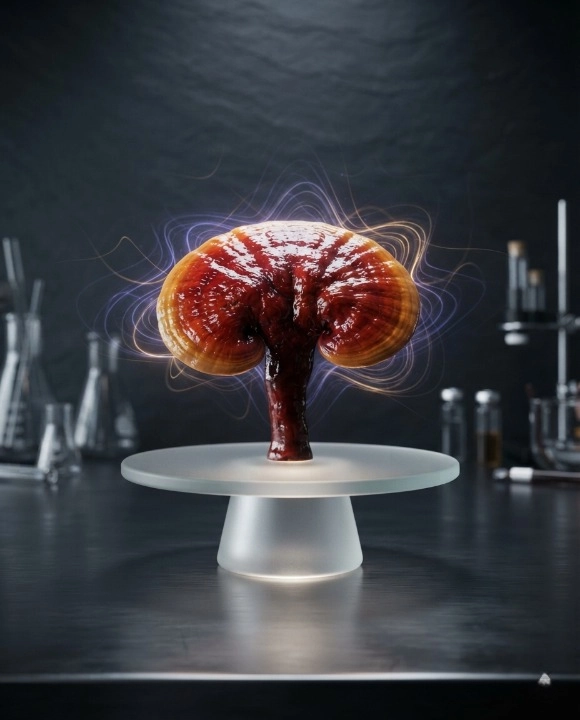
Turkey Tail mushroom Trametes versicolor with concentric bands and immune bioluminescent glow on a pedestal in a biotech laboratory

Turkey Tail (Trametes versicolor): Trained Immunity, PSK/PSP Fractions, and Microbiome

“Turkey Tail” (Trametes versicolor, formerly Coriolus versicolor; Chinese name “Yun Zhi”, Japanese “Kawaratake”) is a widespread polypore mushroom with characteristic multi-colored concentric growth rings on its fruiting body that gave it its name. In traditional East Asian medicine, it has been used for over 2,000 years, and in modern times, it has become arguably the most extensively researched medicinal mushroom in the world. Its uniqueness lies in the fact that it is the only medicinal mushroom from which two distinct standardized fractions have been isolated and officially approved as pharmaceutical drugs. This positions Turkey Tail as one of the most promising natural immune modulators with extensive real-world clinical experience.

Read More »

Гриб рейші Ganoderma lucidum із заспокійливим бурштиновим світінням на постаменті в біотех-лабораторії

Reishi (Ganoderma lucidum): Stress, Cortisol Regulation, Sleep Quality, and Recovery

“Lingzhi” (China) or “Reishi” (Japan) are traditional names for the polypore mushroom Ganoderma lucidum, which has been used in Eastern tradition for over two thousand years primarily as a “calming” remedy — to alleviate restlessness, insomnia, and exhaustion (this specific “An-Shen”, or spirit-calming, effect was documented as early as the classic treatise “Shennong Bencao Jing”). Modern scientific interest in Reishi as an adaptogen is based on the fact that its active molecules modulate the stress axis, inhibitory neurotransmitters, and sleep architecture. This positions the mushroom as one of the most promising natural candidates for supporting stress resilience, restful sleep, and recovery.

Read More »

Cordyceps (Cordyceps): Cellular Energy, Endurance, and the Mechanism of Cordycepin

Cordyceps is a genus of parasitic fungi, of which Ophiocordyceps sinensis (notably the fermented Cs-4 strain) and cultivated Cordyceps militaris — which is richer in the key bioactive molecule cordycepin — are the most extensively studied in nutraceuticals and sports medicine. For millennia, it has been used in Eastern traditional medicine to “restore vitality,” boost endurance, and facilitate adaptation to high-altitude hypoxia. Modern scientific interest stems from the fact that cordycepin structurally mimics adenosine and interacts with central cellular energy pathways, positioning Cordyceps as one of the most promising natural candidates for supporting physical stamina, energy production, and recovery.

Read More »

Склероцій гриба чага Inonotus obliquus із сяючими бурштиновими прожилками біоактивних сполук у концептуальній біотех-лабораторії

Chaga (Inonotus obliquus): Cellular Protection and Anti-Aging Potential for Skin

Skin Anti-Aging: Antioxidant Mechanism, ORAC Score, Scientific Evidence, and Applications in Cosmetology. Chaga (Inonotus obliquus) is not a typical capped mushroom, but a black, sterile conk (sclerotium) with a distinctive cracked “charcoal-like” surface that grows for decades on birch tree trunks. It is this parasitic sclerotium, rather than the fruiting body, that is most prized: over years of parasitism, it accumulates a highly concentrated “cocktail” of antioxidants. This antioxidant potential explains the growing interest in Chaga as a natural remedy against skin photoaging and decline — the main focus of this review.

Read More »

Scroll to Top