Two Fractions and the History of Their Discovery
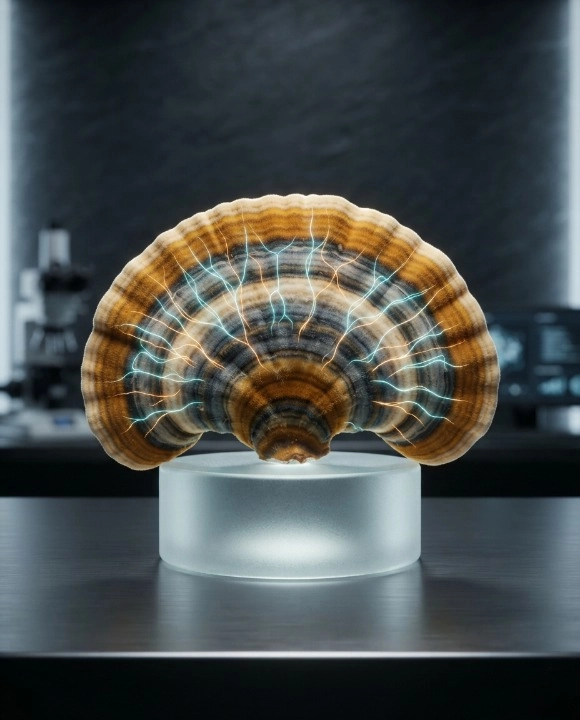
Modern interest in the mushroom was established by two closely related yet distinct fractions — Japanese PSK and Chinese PSP (Lucius K., 2026).
PSK (Polysaccharide-K, “Krestin” / Krestin®) — Japan. The discovery story is almost legendary: an engineer at Kureha Chemical Industry noticed that his neighbor had significantly restored his health by regularly drinking tea brewed from Turkey Tail. Intrigued, he convinced his company to investigate the fungus. As a result, in 1971, PSK was isolated from the CM-101 strain — a protein-bound polysaccharide (approximately 62% polysaccharide and 38% protein) with a β-glucan backbone. By 1977, the Ministry of Health and Welfare of Japan approved PSK as an adjuvant therapy in oncology, and by the 1980s, it had become a routine adjunct to chemotherapy and radiation therapy in Japan — representing one of the world’s first officially approved medicinal mushroom-derived pharmaceuticals (Maehara Y et al., 2012).
PSP (Polysaccharopeptide) — China. Slightly later, in the 1980s, Chinese scientists isolated a structurally similar fraction — polysaccharopeptide (reports on PSP date to 1983–1984) from the COV-1 strain. It differs in its monosaccharide profile (containing rhamnose and arabinose) and has been utilized in clinical practice in China since 1987. Today, Turkey Tail is officially included in the Pharmacopoeia of the People’s Republic of China (Chang Y. et al., 2017).
What is a Fungal “Strain”. The designations CM-101 and COV-1 are identification codes for specific cultivated clonal lines of the same fungal species. A strain represents the descendants of a single selected isolate maintained in pure culture; this concept applies not only to bacteria but also to fungi, as they are cultivated from pure mycelial lines. This is fundamentally important: over 100 wild strains of T. versicolor are documented, and different strains grown under varying conditions produce polysaccharides with distinct molecular weights and sugar-to-protein ratios. This is precisely why pharmaceutical PSK and PSP are manufactured from strictly defined, standardized strains — ensuring the active constituent remains consistent and reproducible from batch to batch.
| Comparison Parameter | PSK (Polysaccharide-K / Krestin®) | PSP (Polysaccharopeptide) |
|---|---|---|
| Country & Approval Year | Japan (Isolated in 1971, approved in 1977) | China (Isolated in 1983, approved in 1987) |
| Standardized Strain | Strain CM-101 | Strain COV-1 |
| Biochemical Structure | Protein-bound β-glucan (~62% sugars, 38% protein) | Polysaccharopeptide (contains rhamnose and arabinose) |
| Clinical Status | Approved oncology adjuvant drug (Japan) | Listed in the Chinese Pharmacopoeia, immunotherapeutic |
The Concept of “Trained Immunity”
The most compelling modern scientific framework for understanding how Turkey Tail functions is the concept of “trained immunity”, formulated between 2011 and 2016 by the research group of Mihai Netea (Netea M.G. et al., 2016; Moorlag S.J. et al., 2020; Fanucchi S. et al., 2021). Classically, immunological “memory” was believed to be an exclusive feature of the adaptive immune system (lymphocytes, antibodies), while innate immunity (macrophages, monocytes, NK cells — natural killer cells) was thought to respond non-specifically and identically upon each encounter. Groundbreaking research has demonstrated otherwise: specific stimuli can “train” the innate immune system, leaving a persistent functional footprint.
β-glucans — the primary active constituents of Turkey Tail — play a pivotal role in this process. The mechanism proceeds as follows: β-glucans are recognized by pattern recognition receptors of the innate immune system (predominantly Dectin-1 and CR3 — complement receptor 3), which initiates the intracellular Akt/mTOR/HIF-1α signaling cascade (a pathway that shifts cellular metabolism toward aerobic glycolysis). This triggers profound epigenetic and metabolic reprogramming within innate immune cells: histone modifications open chromatin access to defensive gene programs, allowing the cell to “remember” this activated state. Following this priming, monocytes and macrophages respond to subsequent (even entirely unrelated) pathogens significantly faster and more robustly — mounting enhanced cytokine output (tumor necrosis factor-α, TNF-α; interleukins IL-1β and IL-6) and superior pathogen clearance.
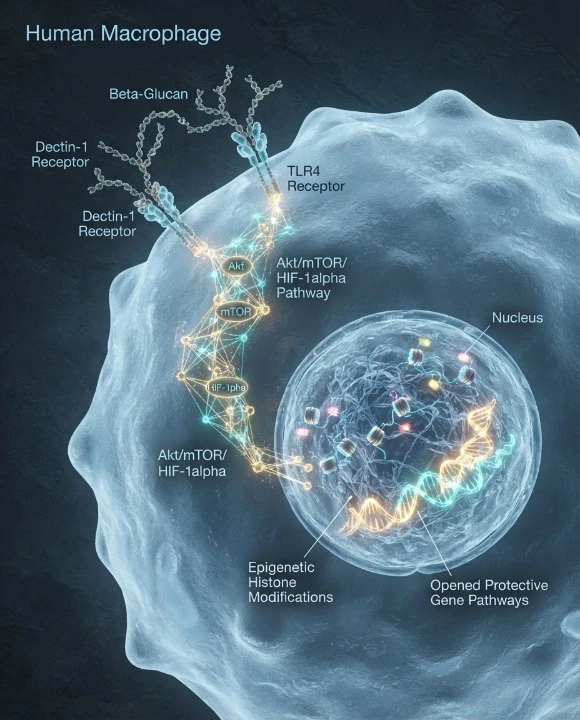
Fig. 2. Molecular mechanism of “trained immunity”: interaction of β-glucans with Dectin-1 triggers the Akt/mTOR/HIF-1α cascade and epigenetic cellular memory.
Crucially, this reprogramming does not merely affect short-lived circulating mature cells, but also extends to hematopoietic progenitor cells within the bone marrow, enabling the “trained” heightened state to persist for weeks to months. This concept provides a sound biological explanation for why Turkey Tail has traditionally been linked to broad, non-specific resistance to infections and why its immunomodulatory effects represent sustained cellular adaptation rather than simple transient stimulation. This is an active, rapidly expanding field of biomedical research — and one of the most promising frontiers for medicinal mushroom science.
How Turkey Tail Works: Additional Mechanisms
Innate Immune Activation via TLR4
Alongside Dectin-1/CR3 signaling, protein-bound β-glucans activate Toll-like receptor 4 (TLR4): in macrophages, this triggers the transcription factor NF-κB (nuclear factor κB) and stimulates downstream cytokine synthesis. The functional consequences of this cascade include the maturation of dendritic cells and macrophages, enhancement of NK cell and CD8⁺ cytotoxic T-lymphocyte cytotoxicity, and a phenotypic shift toward a Th1 response (antitumor and antiviral type). Interestingly, PSK has also been characterized as a TLR2 agonist — demonstrating that the mushroom simultaneously engages multiple innate immune sensory pathways (Habtemariam S., 2020).
Overcoming Immunosuppression
A particularly valuable property of PSK is its capacity to “restore” immune competence suppressed by tumor microenvironments or cytotoxic therapies (Maehara Y et al., 2012): correcting Th1/Th2 imbalances, facilitating dendritic cell maturation, and stimulating interleukin-15 secretion by monocytes. This explains why these standardized fractions demonstrate their greatest therapeutic utility as adjuncts to standard treatments, when immunocompetence requires active restoration.
Impact on the Gut Microbiome and Flora Restoration
One of the most compelling modern avenues of research is Turkey Tail’s action via the gut-immune axis. β-glucans are non-digestible in the upper gastrointestinal tract and reach the colon intact, where they are fermented by resident commensal bacteria — meaning the mushroom acts as a potent prebiotic that nourishes beneficial microbial populations.
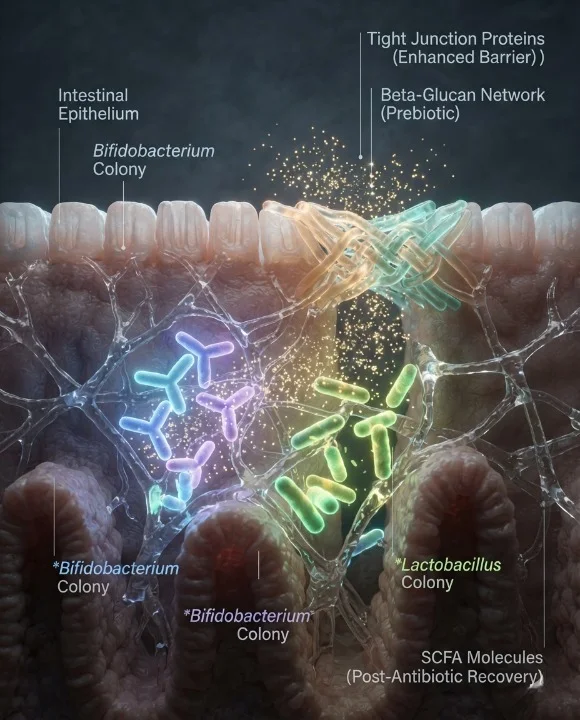
Clinical Evidence (Pallav et al., 2014). In a randomized clinical trial (RCT), 24 healthy volunteers received PSP, the antibiotic amoxicillin, or no intervention for 8 weeks. PSP consistently and predictably modulated the microbiome composition in a beneficial direction: significantly increasing Bifidobacterium and Lactobacillus species while suppressing potentially opportunistic Clostridium, Staphylococcus, and Enterococcus, enhancing short-chain fatty acid production and lowering fecal pH. Notably, each participant’s microbiome shifted favorably while remaining anchored to their individual baseline ecosystem — demonstrating that the mushroom supports and enriches existing microbial diversity rather than disrupting it. By comparison, in the same study, amoxicillin caused severe microbial dysbiosis (markedly increasing Escherichia/Shigella), with recovery requiring several weeks.
These findings position Turkey Tail as a promising candidate for preserving and restoring gut microbial homeostasis — particularly following antibiotic regimens. The authors suggest that a portion of the mushroom’s traditional systemic indications may be directly mediated by this prebiotic microbiota modulation, though hard clinical endpoints require confirmation in larger cohorts.
Immune Support: Respiratory Infections, Allergy, and Vaccination
Colds and Respiratory Infections
Traditionally, Turkey Tail was utilized specifically for upper respiratory tract infections and inflammation, an application that aligns closely with the concept of trained immunity: primed innate immune cells mount faster and more potent responses against a broad spectrum of pathogens, including respiratory viruses (Netea M. G. et al., 2016). Mechanistically, the fungus boosts NK cell cytotoxicity, promotes dendritic cell maturation, and stimulates interferon production — reinforcing the primary front-line defense against viral entry. However, scientific rigor demands clarity: the majority of high-quality clinical trials regarding cold prevention have focused on β-glucans derived from other fungi or yeasts, and large-scale RCTs specifically evaluating T. versicolor for seasonal colds remain scarce. Thus, this represents a biologically sound mechanism and a promising research avenue rather than a definitively established clinical indication.
Vaccination: Enhancing Response
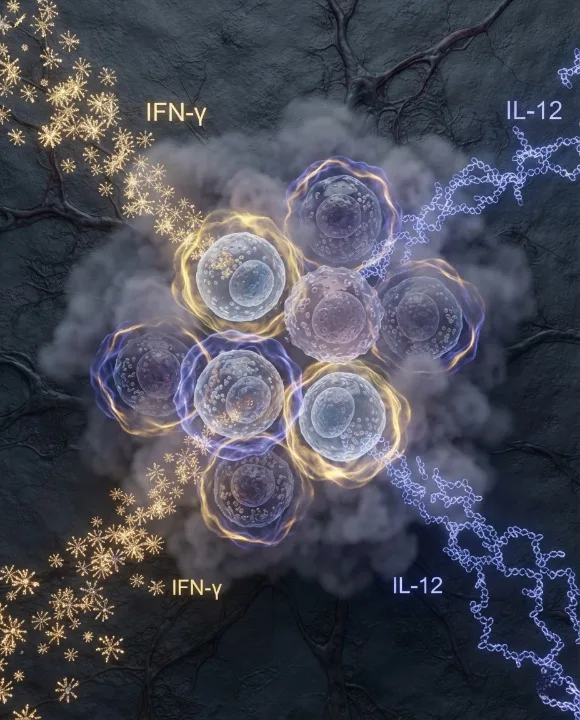
Another promising frontier is utilizing mushroom fractions as vaccine adjuvants. Robust experimental data support this: PSK activates Toll-like receptor 2 (TLR2), highly expressed on dendritic cells — the master orchestrators of adaptive immune responses. In preclinical studies (Engel et al., 2013), PSK administered as an adjuvant with a model vaccine induced dendritic cell maturation (upregulating CD80, CD86, MHCII, CD40), stimulated interleukin-12, TNF-α, and IL-6 secretion, and significantly enhanced antigen-specific T-cell responses with elevated production of IFN-γ (interferon-γ), IL-2, and TNF-α. Clinically, PSK has been evaluated in conjunction with anti-HER2 cancer vaccines in breast cancer patients. While these represent predominantly preclinical and oncological datasets, they highlight the fungus’s potential to boost vaccine immunogenicity, a concept awaiting investigation in prophylactic routine vaccines.
Allergy: Potential Th1/Th2 Rebalancing
Allergic disorders are characterized by an immunological skew toward a Th2 response (with excessive IgE production). Turkey Tail β-glucans promote a compensatory shift toward a Th1 profile, which theoretically counterbalances the hyperactive Th2 signaling typical of allergic states (Maehara Y et al., 2012). This currently remains largely a preclinical hypothesis: direct clinical trials evaluating the mushroom in allergic diseases are limited, making this an interesting mechanistic concept requiring formal human clinical trials.
Oncology: The Strongest Evidence Base
Historically, oncology has yielded the most substantial clinical evidence, where standardized fractions have been rigorously evaluated as adjuvants alongside standard therapies:
- Gastric Cancer (Meta-Analysis by Oba, 2007). In a pooled analysis of 8 randomized clinical trials comprising 8,009 patients following curative surgical resection, the addition of PSK to standard chemotherapy significantly improved 5-year overall survival (hazard ratio for death, HR = 0.88).
- Colorectal Cancer (Meta-Analysis by Sakamoto, 2006). In 3 RCTs involving 1,094 patients with curatively resected colorectal cancer, adjuvant PSK significantly reduced overall mortality risk (HR = 0.71) and improved disease-free survival.
- Breast Cancer, Phase I (Torkelson, 2012). Following standard radiotherapy, oral T. versicolor supplementation at doses up to 9 g/day was well-tolerated and produced dose-dependent immunological recovery — significantly increasing total lymphocyte counts, NK cell functional cytotoxicity, and CD8⁺ T-cell numbers.
| Study | Cohort / Participants | Protocol / Intervention | Key Clinical Outcome |
|---|---|---|---|
| Oba et al. (2007) | 8,009 patients (Gastric cancer, 8 RCTs) | Chemotherapy + PSK | Statistically significant improvement in 5-year survival (HR = 0.88) |
| Sakamoto et al. (2006) | 1,094 patients (Colorectal cancer, 3 RCTs) | Chemotherapy + PSK | Reduced mortality risk (HR = 0.71), improved disease-free survival |
| Pallav et al. (2014) | 24 healthy volunteers (RCT) | PSP vs. Amoxicillin vs. Control, 8 weeks | Prebiotic growth of Bifidobacterium and Lactobacillus, gut microbiome protection |
| Torkelson et al. (2012) | Women with breast cancer (Phase I) | T. versicolor up to 9 g/day following radiation | Safety confirmed; dose-dependent recovery of lymphocyte counts and NK cell cytotoxicity |
Balanced Assessment: Robust Japanese meta-analyses stand in contrast to the more conservative assessment by the Cochrane Review (Pilkington K. et al., 2022), which rates the overall certainty of evidence as low to very low — partly because many trials were historical East Asian studies utilizing older chemotherapy regimens. In all oncology contexts, Turkey Tail and its fractions are intended strictly as complementary adjuvants, never as substitutes for standard oncological therapies, and must always be coordinated with the treating oncologist.
Future Research Directions
- Trained Immunity in Infection Prophylaxis. Determining whether Turkey Tail can non-specifically reduce the incidence and severity of seasonal respiratory infections in healthy cohorts via innate immune training represents a primary priority for future RCTs.
- Post-Antibiotic Microbiome Support. Dedicated clinical trials evaluating whether PSP reduces antibiotic-associated gastrointestinal symptoms and accelerates floral recovery, utilizing robust metagenomic and clinical endpoints.
- Modern Oncological Protocols. Re-evaluating PSK and PSP in combination with contemporary chemotherapy regimens, targeted biological agents, and immune checkpoint inhibitors (e.g., anti-PD-1/PD-L1 therapies).
- Standardization and Bioavailability. Head-to-head comparisons of prescription pharmaceutical fractions with over-the-counter extracts; identifying predictive biomarkers of clinical response.
- Metabolic Health. Preclinical evidence indicating prebiotic benefits under high-fat dietary conditions suggests metabolic applications that require formal clinical verification.
Historical Context and Modern Applications
In traditional East Asian herbalism, Turkey Tail has been employed for centuries, and over the 20th and 21st centuries, it completed a unique journey from traditional folk remedy to standardized pharmaceutical drug and staple of modern functional wellness culture.
In Western wellness culture, the mushroom was significantly popularized by American mycologist Paul Stamets: throughout the 2000s, he highlighted Turkey Tail in literature and lectures (Stamets P., 2012), with immense public attention generated by his 2011 TEDMED address discussing his mother’s clinical experience using the mushroom alongside standard breast cancer treatments. This narrative catalyzed substantial scientific interest and contributed to funding the Phase I clinical trial (Torkelson et al., 2012). The company founded by Stamets subsequently became a major international producer of mushroom-based supplements.
Today, Turkey Tail is among the most widely utilized functional mushrooms globally (capsules, extract powders, teas), positioned primarily for immune resilience and gastrointestinal health (Berry J., 2024); industry market analyses document sustained growth in the nutraceutical sector (Grand View Research, MarketsandMarkets, 2024–2025). Practical enthusiasm within biohacking, athletic, and preventative medicine communities outpaces formal academic literature and remains largely empirical: it relies on historical tradition, compelling mechanistic insights (trained immunity, prebiotic action), and anecdotal observations rather than vast clinical trials in healthy populations. Consequently, real-world usage should be regarded as promising working hypotheses awaiting formal verification rather than an established medical protocol.
Safety Profile
Precautions and Drug Interactions: Turkey Tail and its fractions PSK and PSP exhibit a highly favorable safety profile — a major reason for their widespread integration in oncology. In extensive Japanese trials, adverse events associated with PSK were exceptionally mild; in Phase I trials (Torkelson, 2012), doses up to 9 g/day were well-tolerated. The most common mild side effects are minor gastrointestinal symptoms (nausea, abdominal discomfort) and occasional transient nail hyperpigmentation. Key clinical precautions include: due to potent immune-modulating activity, caution is advised in organ transplant recipients and individuals with autoimmune conditions (theoretical interference with immunosuppressive regimens); animal studies noted that PSP slightly delayed peak plasma concentrations of tamoxifen — a pharmacokinetic interaction to monitor; safety data during pregnancy and lactation are insufficient (Memorial Sloan Kettering Cancer Center). Use in oncology patients should always be supervised by an oncologist, and preference should be given to quality-controlled products with verified polysaccharide content.
Conclusion
Turkey Tail (Trametes versicolor) represents a promising natural immune modulator with a unique medical status: it is the only medicinal fungus from which two officially registered prescription pharmaceutical fractions have been developed (Japanese PSK, approved in 1977, and Chinese PSP, approved in 1987). The contemporary concept of “trained immunity” provides a robust biological explanation for its activity: β-glucans engage Dectin-1/CR3 and the Akt/mTOR/HIF-1α cascade to epigenetically reprogram innate immune cells, enabling faster, heightened responses upon subsequent pathogen exposure; additionally, the fungus activates TLR4/NF-κB, counteracts immunosuppression, and nourishes beneficial microbiota. The strongest clinical data reside in adjuvant oncology meta-analyses; promising preclinical avenues include vaccine adjuvant enhancement (via TLR2 and dendritic cell maturation) and respiratory support, alongside clinical confirmation of prebiotic microbiome restoration (Pallav, 2014). The safety profile is remarkably favorable. As research continues, the most promising frontiers include non-specific immune priming in healthy cohorts and post-antibiotic microbiome rehabilitation, with larger standardized trials clarifying its definitive role in immune health and defensive training.
🍄 Explore Other Articles in Our Medicinal Mushroom Series:
Discover the mechanisms of action, clinical evidence, and practical applications of other foundational adaptogenic mushrooms:
- 🧠 Brain & Memory: Lion’s Mane (Hericium erinaceus) — stimulation of neurogenesis, nerve growth factor (NGF), and cognitive support.
- 😴 Stress, Cortisol & Sleep: Reishi (Ganoderma lucidum) — HPA axis regulation, evening cortisol reduction, and restorative sleep quality.
- ⚡ Energy & Endurance: Cordyceps (Cordyceps) — AMPK cellular energy sensor activation, mitochondrial biogenesis, and aerobic stamina.
- 🛡️ Immunity & Microbiome: Turkey Tail (Trametes versicolor) — the concept of trained immunity, PSK/PSP fractions, and prebiotic support.
- ✨ Anti-Aging & Skin Health: Chaga (Inonotus obliquus) — record-high ORAC antioxidant score, collagen preservation, and cellular longevity.
References
- Berry J. Health benefits of turkey tail mushrooms. Medical News Today, 2024.
- Chang Y. et al. Preclinical and Clinical Studies of Coriolus versicolor Polysaccharopeptide as an Immunotherapeutic in China. Discovery Medicine. 2017;23(127):207–219.
- Engel A. L., Sun G. C., Gad E. et al. Protein-bound polysaccharide activates dendritic cells and enhances OVA-specific T cell response as vaccine adjuvant. Immunobiology. 2013;218(12):1468–1476. doi:10.1016/j.imbio.2013.05.001.
- Fanucchi S., Domínguez-Andrés J., Joosten L. A. B., Netea M. G., Mhlanga M. M. The Intersection of Epigenetics and Metabolism in Trained Immunity. Immunity. 2021;54(1):32–43. doi:10.1016/j.immuni.2020.10.011.
- Grand View Research, MarketsandMarkets, 2024–2025.
- Habtemariam S. Trametes versicolor (Synn. Coriolus versicolor) Polysaccharides in Cancer Therapy: Targets and Efficacy. Biomedicines. 2020;8(5):135. doi:10.3390/biomedicines8050135. PMID: 32466253.
- Lucius K. The Medicinal Mushroom Trametes versicolor: Reviewing Preclinical and Clinical Evidence. Integrative and Complementary Therapies. 2026. doi:10.1177/27683192261431082.
- Maehara Y et al. Biological mechanism and clinical effect of protein-bound polysaccharide K (KRESTIN®): review of development and future perspectives. Surgery Today. 2012;42(1):8–28. doi:10.1007/s00595-011-0075-7.
- Memorial Sloan Kettering Cancer Center. Coriolus versicolor. Available from: mskcc.org/cancer-care/integrative-medicine/herbs/coriolus-versicolor
- Moorlag S. J. C. F. M., Khan N., Novakovic B. et al. β-Glucan Induces Protective Trained Immunity against Mycobacterium tuberculosis Infection: A Key Role for IL-1. Cell Reports. 2020;31(7):107634. doi:10.1016/j.celrep.2020.107634.
- Netea M. G., Joosten L. A. B., Latz E. et al. Trained immunity: A program of innate immune memory in health and disease. Science. 2016;352(6284):aaf1098. doi:10.1126/science.aaf1098.
- Oba K., Teramukai S., Kobayashi M., Matsui T., Kodera Y., Sakamoto J. Efficacy of adjuvant immunochemotherapy with polysaccharide K for patients with curative resections of gastric cancer. Cancer Immunology, Immunotherapy. 2007;56(6):905–911. doi:10.1007/s00262-006-0248-1. PMID: 17106715.
- Pallav K., Dowd S. E., Villafuerte J. et al. Effects of polysaccharopeptide from Trametes versicolor and amoxicillin on the gut microbiome of healthy volunteers: a randomized clinical trial. Gut Microbes. 2014;5(4):458–467. doi:10.4161/gmic.29558. PMID: 25006989.
- Pilkington K., Wieland L. S., Teng L., Jin X. Y., Storey D., Liu J. P. Coriolus (Trametes) versicolor mushroom to reduce adverse effects from chemotherapy or radiotherapy in people with colorectal cancer. Cochrane Database of Systematic Reviews. 2022;(11):CD012053. doi:10.1002/14651858.CD012053.pub2.
- Sakamoto J., Morita S., Oba K. et al. Efficacy of adjuvant immunochemotherapy with polysaccharide K for patients with curatively resected colorectal cancer: a meta-analysis of centrally randomized controlled clinical trials. Cancer Immunology, Immunotherapy. 2006;55(4):404–411. doi:10.1007/s00262-005-0054-1.
- Stamets P. Trametes versicolor (Turkey Tail Mushrooms) and the Treatment of Breast Cancer. Global Advances in Health and Medicine. 2012;1(5):20.
- Torkelson C. J., Sweet E., Martzen M. R. et al. Phase 1 Clinical Trial of Trametes versicolor in Women with Breast Cancer. ISRN Oncology. 2012;2012:251632. doi:10.5402/2012/251632.