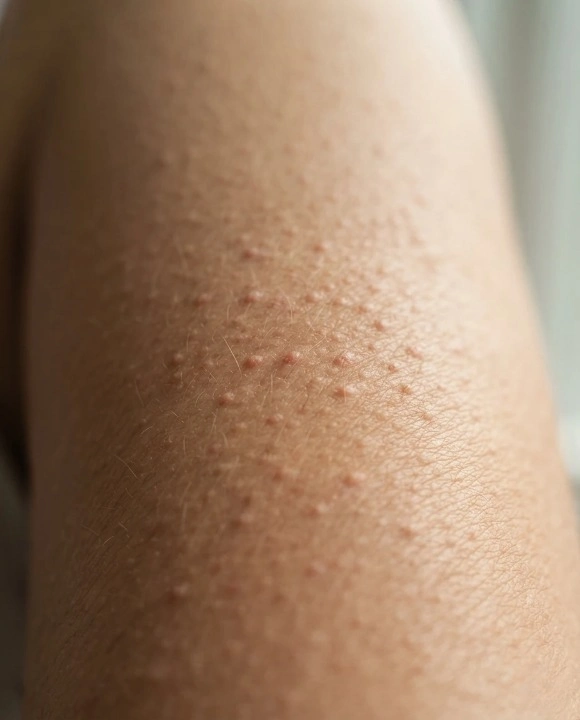
Have you ever noticed small, rough bumps on your arms, thighs, or buttocks that feel like sandpaper and look like “goosebumps”?
If so, you most likely have follicular keratosis (FK). It was previously and incorrectly referred to colloquially as “pigmented” or even “pyloric” keratosis, but these terms are medically inaccurate. FK is a genetically determined skin characteristic that affects up to 80% of adolescents and more than 40% of adults worldwide.
Follicular keratosis develops when keratin — a protein that normally protects the skin — accumulates in excess and forms dense “plugs” that block hair follicles. This results in the characteristic painless bumps.
Although this condition is completely benign and does not pose a health risk, for many people it remains a significant cosmetic concern. In 2026, dermatology offers much gentler and more effective ways to manage keratosis than the aggressive scrubs of the past. In this article, we will explore how to take control of this persistent condition using the latest knowledge about the skin barrier.
What Is Follicular Keratosis?
What Causes These Annoying “Goosebumps”?
Follicular keratosis develops due to impaired shedding of cells inside the hair follicle. Instead of being shed in a timely manner, dead skin cells mix with keratin and “seal” the follicle.
Key facts to know in 2026:
- It is not inflammation: FK is not a form of acne, although the bumps may sometimes become red due to irritation or dryness.
- Color matters: The bumps may be skin-colored, red (Keratosis Pilaris Rubra), or brown. The latter are often mistaken for pigmentation, although the color is simply related to the depth of the keratin plug.
- Location: The outer parts of the upper arms, thighs, and buttocks are most commonly affected. Less commonly, the cheeks may be involved, which is often mistakenly treated as a rash in children.
- Seasonality: The condition almost always worsens in winter, when humidity drops and the skin barrier becomes more vulnerable.
It is important to understand that follicular keratosis is not a condition that can be “cured” once and for all. It is a characteristic of your skin that requires regular and appropriate care.
Learn how to prepare for seasonal changes in the article “The Impact of Seasonal Changes on the Skin Microbiome”.
Who Is at Risk: Why Does Follicular Keratosis Develop?
The likelihood of developing follicular keratosis is influenced by a combination of factors, ranging from heredity to metabolic characteristics.
Table: Risk Factors for Follicular Keratosis
| Factor | How does it affect the skin? | Current data (2026) |
|---|---|---|
| Genetics | Deficiency of the protein filaggrin, which helps retain moisture. | An autosomal dominant condition: a 50% chance of inheriting it from a parent. |
| Age | Hormonal changes and increased cell turnover. | Affects up to 80% of adolescents. It is increasingly persistent in adults due to environmental factors. |
| Skin type | An impaired lipid barrier interferes with the natural shedding of skin cells. | Closely associated with the “atopic march” (eczema and dry skin). |
| Microbiome | An imbalance of bacteria on the skin’s surface can increase follicular plugging. | A link has been demonstrated between the state of the skin microbiome and the severity of “goosebumps.” |
| Metabolism | The influence of insulin resistance and vitamin D levels on keratin synthesis. | Hormonal fluctuations, particularly during pregnancy, can be a significant trigger. |
| Seasonality | Dry air and friction from clothing (e.g., leggings) can damage the skin barrier. | Winter is the main period of exacerbation due to the heating season. |
Is it related to vitamin A?
Although vitamin A deficiency can cause similar symptoms (phrynoderma), most people with follicular keratosis have normal blood vitamin levels. The problem is not a vitamin deficiency in the body, but rather how the skin’s receptors respond to the natural process of renewal.
Important to remember: If you notice these bumps on your skin, you are not alone. They are not a sign of “dirty skin” or disease, but simply an indication that your epidermis needs specific care and support for its barrier function.
In the next section, we will take a closer look at how to distinguish follicular keratosis from other conditions, such as acne or folliculitis, in order to choose the right skincare strategy.
Symptoms of Follicular Keratosis: How to Recognize “Chicken Skin”?
Follicular keratosis has a very distinctive appearance that is difficult to confuse with other conditions if you know what to look for. In dermatology in 2026, we identify three key features: texture, color, and location.
Main Signs:
- “Sandpaper” texture: This is the most characteristic symptom. Even if the bumps are barely visible, the skin feels rough and dry to the touch.
- Keratin “spikes”: On closer inspection, each bump is a tiny plug (crust) lodged in the opening of a hair follicle. Sometimes a curled hair may try to emerge from underneath it.
- Color range: The bumps may be skin-colored, whitish, or bright red. The latter variant is called Keratosis Pilaris Rubra — it is more common in young people and is accompanied by noticeable redness of the skin around the follicles.
Where Do the Bumps Most Commonly Appear?
- Shoulders and forearms: A classic location (the outer and dorsal surfaces).
- Thighs: The front and outer surfaces. This condition is often mistaken for the effects of shaving, but with keratosis, the bumps are persistent.
- Buttocks: Here, keratosis is often accompanied by increased dryness and may cause mild discomfort due to friction from clothing.
- Face (cheeks): Keratosis Pilaris Faciei is common in children. It is often mistaken for diathesis or acne; however, unlike rashes, keratosis on the cheeks does not contain pus and is symmetrical.
Is It Follicular Keratosis or Something Else?
Because Keratosis Pilaris is so common, it is often confused with other conditions. In 2026, dermoscopy (examination under magnification) is considered a useful diagnostic tool that allows a doctor to distinguish keratosis from the following conditions:
Comparison: How to Distinguish Follicular Keratosis
| Condition | Appearance | Symptoms | Key Difference from FK |
|---|---|---|---|
| Follicular keratosis (FK) | Small, firm “spikes” or skin-colored or red bumps. | Painless, with occasional mild itching when the skin is very dry. | Sandpaper-like texture. The condition is chronic and symmetrical. |
| Folliculitis | Red bumps, often with a white pus-filled “head” in the center. | Tenderness to the touch and a sensation of warmth at the site of inflammation. | Acute onset. Usually caused by an infection; the bumps are not firm. |
| Acne | Comedones (blackheads), papules, and deep subcutaneous nodules. | May be painful when inflamed. | Presence of comedones. Primarily affects the face, chest, and back. |
| Atopic eczema | Red, scaly patches that may ooze or crack. | Severe, exhausting itch. | The patches are not limited to the hair follicles and have poorly defined borders. |
| “Strawberry legs” | Dark or red spots (clogged pores) at the level of the skin. | No noticeable symptoms. | The skin remains smooth to the touch; there are no firm, raised bumps. |
2026 tip: If the bumps become painful, start itching severely, or spread to the palms and soles (where there are no hair follicles), you should see a dermatologist promptly, as this is not typical of Keratosis Pilaris.
Skincare Strategy for Follicular Keratosis (2026)
Although the genetic predisposition to keratosis pilaris (KP) cannot be “cured” permanently, as of 2026 we have tools that can help achieve 90–100% smoother skin. The key to success is not aggressive scrubbing, but a combination of smart exfoliation and deep barrier restoration.
1. Over-the-counter ingredients: what to look for on the label?
Instead of buying random creams, look for these active ingredients, which are considered the current gold standard:
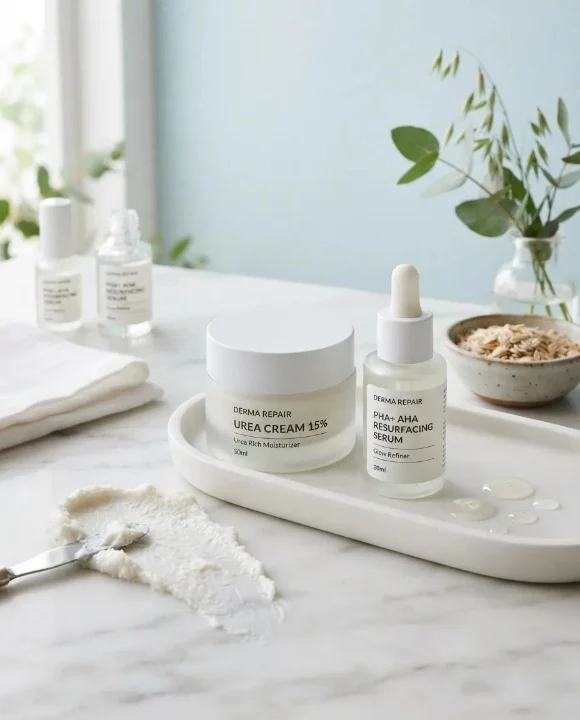
- Urea 10–20%: This is the “queen” of keratosis treatment. At a concentration of 10%, it provides intensive hydration, while above 15% it begins to gently dissolve keratin plugs (keratolytic action).
- PHA acids (gluconolactone, lactobionic acid): A newer approach to keratosis skincare. Unlike AHAs (such as glycolic acid), PHAs act more gently, are less likely to cause stinging, and additionally attract moisture. They are ideal for Keratosis Pilaris Rubra (the red type).
- Salicylic acid (BHA): Because it is oil-soluble, it penetrates deeply into the follicle and “unblocks” it from within. Look for it in body cleansing gels or toners.
- Ceramides and postbiotics: Essential ingredients in 2026. They help restore the skin’s protective barrier and support a healthy microbiome, which may help prevent follicular inflammation.
2. Recommended products
Well-regarded product lines include CeraVe (SA range), La Roche-Posay (Lipikar), as well as pharmacy products such as Lacera (with a high urea content) and updated Cetaphil formulas.
3. Cleansing: The “No Friction” Rule
The main mistake of the past was using harsh scrubs, washcloths, or brushes. Skin trauma can cause it to produce even MORE keratin as a protective response.
In 2026, dermatologists recommend:
- Use gentle cleansing oils or gels with an acidic pH (5.5).
- Apply acid-based products to dry skin after showering so they can work more effectively.
- Avoid soap and hot water, which can strip lipids from the skin.
4. The New Standard: Azelaic Acid
For people whose keratosis is accompanied by persistent redness, products containing azelaic acid are increasingly recommended in 2026. It can help calm redness and even out the skin tone around the bumps.
Important: Don’t expect instant results. Epidermal renewal takes about 28 days. The first noticeable changes may appear after 4–6 weeks of consistent skincare. If you stop the routine, the bumps may return, so consistency is your best ally.
Professional and Prescription Treatment: When Home Care Is Not Enough
If you do not see significant improvement after 2–3 months of consistent home care, or if keratosis pilaris is accompanied by pronounced redness and itching, you should consult a dermatologist about prescription treatment.
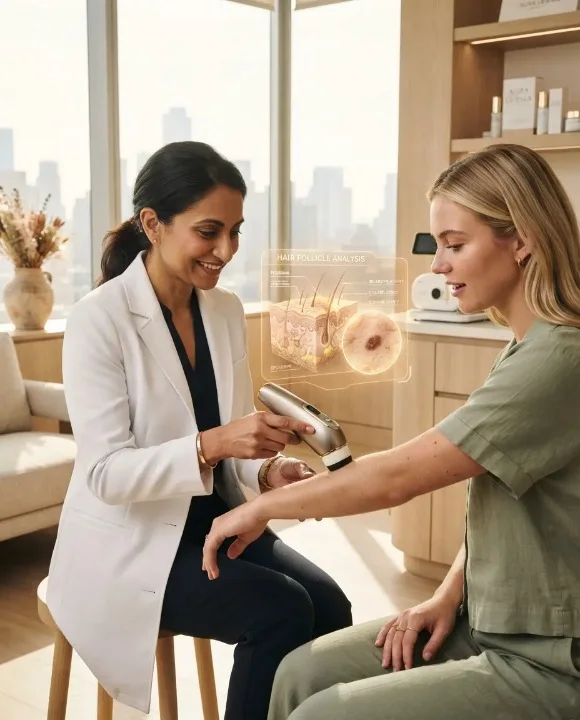
As of 2026, treatment protocols for Keratosis Pilaris (KP) include the following approaches:
Modern Professional and Prescription Treatments for Keratosis Pilaris (2026)
| Method / Treatment | How does it work? | Who is it best suited for? | Doctor’s note (2026) |
|---|---|---|---|
| Encapsulated retinoids | Accelerate cell turnover, “dissolving” keratin plugs. | For persistent bumps that do not respond to home creams. | A special coating minimizes skin irritation and dryness. |
| Vitamin D3 creams | Normalize cell division and reduce inflammation around the follicle. | For more complex forms of keratosis prone to inflammation. | Act more gently than retinoids and are ideal for long-term control. |
| Vascular lasers (PDL, IPL) | Target enlarged capillaries that contribute to skin redness. | For Keratosis Pilaris Rubra (pronounced redness). | Address skin color, not just texture. A course of treatments is required. |
| Photodynamic therapy | Deeply cleanses follicles and suppresses excessive keratin production. | For large affected areas and those seeking rapid results. | A cutting-edge 2026 approach to comprehensive epidermal renewal. |
| Systemic retinoids | Completely alter the skin renewal cycle at the cellular level. | Only in exceptionally severe cases under medical supervision. | Require strict medical monitoring and regular laboratory tests. |
Doctor’s advice: Prescription medications are powerful tools. Never start using prescription tretinoin or calcipotriene without consulting a specialist, as improper use can trigger retinoid dermatitis and further worsen the condition of the skin.
Home Methods and Lifestyle: How to Support Your Skin Every Day
In addition to professional care, there are time-tested methods supported by modern research that can be used at home. In 2026, the main focus has shifted from “scraping away” bumps to gently soothing the skin.
1. Proper Cleansing: Forget About Harsh Brushes
Although “dry brushing” was often recommended in the past, as of 2026 dermatologists advise being extremely cautious with this approach.
- Why it matters: Excessive friction increases inflammation and can cause microtrauma to the follicles.
- 2026 alternative: Instead of harsh brushes, use soft silicone massagers or simply a terry cloth during the shower. This provides sufficient exfoliation without damaging the protective skin barrier.
2. Colloidal Oat Baths
This is one of the few “home” remedies officially endorsed by dermatological associations. Oatmeal contains avenanthramides — compounds that can quickly relieve itching and redness.
- Tip: Add finely ground oatmeal to warm (not hot!) water for 10–15 minutes. This is especially helpful in winter, when keratosis tends to become more irritated.
3. Oils: Squalane and Shea Instead of Coconut Oil
Coconut oil was often recommended because of its lauric acid content, but in 2026 we know that it has a high level of comedogenicity (it can clog pores even further).
- Best choice: For skin with keratosis pilaris, squalane, jojoba, or shea oils are ideal. They mimic the skin’s natural sebum, soften keratin plugs, and do not create a “greenhouse effect” on the skin’s surface.
4. Smart Humidity Control
Dry air is your skin’s main enemy. In 2026, using humidifiers with smart sensors has become common for people with atopic skin and keratosis.
- Goal: Maintain bedroom humidity at 50–60%. This prevents the outer layer of the epidermis from drying out, allowing skin cells to shed more easily and naturally.
5. Short, Warm Showers
Hot water strips natural oils from the skin, making the bumps feel rougher.
- 2026 rule: Keep showers to no more than 10 minutes, and use warm water. Immediately after showering (within 3 minutes), while the skin is still damp, apply a moisturizer with urea or ceramides. This is known as the “damp skin rule,” and it increases the effectiveness of skincare products by 30–40%.
Important: Home methods are only supportive measures. If symptoms of keratosis pilaris worsen, pustules or severe discomfort develop, this is a sign that your skin needs medical attention rather than home remedies.
How to Live Comfortably with Keratosis Pilaris: Tips for 2026
Lifestyle changes are often no less important than expensive creams. In 2026, dermatologists view keratosis pilaris (KP) as a condition that is 50% dependent on external triggers. Here’s how to minimize their impact:
Table: Lifestyle Guide for Keratosis Pilaris (Lifestyle Guide 2026)
| Area of life | What is the risk? | Tip / 2026 Hack |
|---|---|---|
| Clothing and fabrics | Tight clothing and coarse fibers cause micro-irritation. | Choose Tencel or bamboo — they are smoother than cotton. |
| Hygiene (Water) | Hard water containing minerals clogs pores and damages the skin barrier. | Install a shower water-softening filter — this is the foundation for smoother skin. |
| Swimming pools | Chlorine can severely dry out the epidermis, making the bumps more pronounced. | Apply a barrier balm before swimming as an “invisible shield.” |
| Sun and UV | Sun exposure can cause “autumn hyperkeratosis” (a flare-up after tanning). | Use SPF 50+ with modern chemical filters that do not clog pores. |
| Nutrition | A lack of healthy lipids can make the skin more vulnerable. | Add omega-3 and ceramides to your diet (in supplement form). |
| Psychosomatic factors | The stress hormone cortisol can contribute to microinflammation. | Regular relaxation practices as part of a comprehensive care plan. |
Living with keratosis pilaris is about taking small steps. The right fabrics, soft water, and sun protection can help you forget about “chicken skin” and feel confident in any situation.
The Emotional Impact of Keratosis Pilaris: More Than Just Bumps
Although keratosis pilaris (KP) is a benign condition, it can significantly affect self-esteem and body image. Many people feel uncomfortable in social situations — at the beach, in the gym, or during intimate interactions — because they consider the texture of their skin “imperfect.”
In 2026, the dermatological community actively supports the Skin Positivity movement. It is important to remember:
- You are not alone: KP affects 50–80% of adolescents and nearly one in two adults. It is so common that it can be considered a normal variation rather than a “disease.”
- Skin does not have to be perfectly smooth: Texture is natural. The goal of skincare in 2026 is not to achieve an artificial “plastic” appearance, but to maintain comfort and a healthy skin barrier.
Self-care practices and focusing on health rather than comparing yourself with filtered photos on social media can help reduce emotional pressure. Knowing that the condition can be managed can boost confidence.

Embrace Your Skin: A Confident Path to Smoother Skin
Keratosis pilaris is a genetically determined skin characteristic caused by the accumulation of keratin in the hair follicles. Although this condition accompanies many people throughout their lives, modern skincare strategies can help keep the skin soft and healthy.
By incorporating gentle exfoliation (PHA/BHA acids), deep hydration with urea, and barrier protection into your routine, you can significantly improve skin texture. Remember that results take time (4 to 8 weeks) and consistency.
If home methods do not produce the desired effect, be sure to consult a dermatologist. In 2026, a doctor may recommend laser therapy or encapsulated retinoids, which can work quickly and with minimal irritation. Your skin does not define you as a person, but caring for it gently is an expression of self-love.
Frequently Asked Questions About Keratosis Pilaris (FAQ 2026)
What Is Keratosis Pilaris and Why Does It Occur?
Keratosis pilaris (KP) is a condition in which the protein keratin blocks the openings of hair follicles, forming rough bumps. The main cause is a genetic predisposition that affects the rate of skin cell turnover.
Where does “chicken skin” most commonly appear?
The most typical areas are: the outer surface of the upper arms (90% of cases), thighs (60%), buttocks (30%), and sometimes the cheeks in children.
What are the main symptoms of keratosis pilaris?
- Small, painless bumps (skin-colored, red, or brown).
- Rough skin texture (“sandpaper-like” skin).
- Worsening in winter and improvement in summer (or in humid climates).
- Absence of pus-filled contents (unlike acne).
Can keratosis pilaris be cured once and for all?
Since it is a genetic skin condition, it cannot be completely “cured,” but it can be successfully managed. In many people, the condition significantly improves or disappears on its own after the age of 30.
What are the most effective treatment methods in 2026?
A combination of urea (10–20%), PHA acids for gentle exfoliation, and laser therapy (PDL) to reduce redness. The modern standard is supporting the skin microbiome with postbiotics.
How long does it take to see results?
Visible smoothing of the skin texture usually takes 4 to 8 weeks of regular use of appropriate skincare products.
What can worsen keratosis pilaris?
- Dry air and low temperatures.
- Hard tap water.
- Tight synthetic clothing.
- Using harsh scrubs and abrasive washcloths.
When should you see a doctor?
If the bumps become painful, severe itching develops, pus-filled lesions appear, or the appearance of your skin causes significant psychological distress. Modern dermoscopy can help a doctor make an accurate diagnosis within minutes.
Conclusion: A New Era in Caring for Textured Skin
As of August 2026, we have moved away from viewing keratosis pilaris as a “disease” that needs to be treated with aggressive methods. Today, dermatology regards Keratosis Pilaris as a genetic skin condition that requires not “correction” but thoughtful management.
The key lessons of 2026 for everyone with “chicken skin”:
- Gentleness above all: Harsh scrubs and brushes are a thing of the past. The modern standard is chemical exfoliation (PHA and BHA acids) and high concentrations of urea.
- Support the skin barrier: Healthy skin with keratosis pilaris is well-hydrated skin. Using ceramides and postbiotics helps maintain healthy hair follicles.
- Technology in the service of aesthetics: If home care does not reduce redness, next-generation vascular lasers can address this issue in several sessions.
- Lifestyle matters: Water quality, indoor humidity, and the choice of fabrics (for example, Tencel instead of coarse cotton) are fundamental to success.
Keratosis pilaris no longer has to be an obstacle to self-confidence. With the right tools and patience, your skin can be smooth and healthy every day.
References (updated 2026)
This article was prepared using data from leading international dermatological associations and the results of clinical studies published between 2024 and 2026. You can consult the original sources using the links below:
- American Academy of Dermatology (AAD): Keratosis pilaris overview — Updated guidance on the diagnosis and treatment of keratosis pilaris.
- Mayo Clinic: Keratosis pilaris symptoms & causes — Basic clinical information about the genetic factors associated with the condition.
- Journal of the American Academy of Dermatology (JAAD) — Clinical studies from 2025 on the effectiveness of PHA acids and encapsulated retinoids.
- National Health Service (NHS): Keratosis pilaris — Official recommendations from the United Kingdom’s National Health Service.
- PubMed (NCBI): Role of Microbiome in Follicular Skin Conditions — Scientific publications on the influence of the skin microbiome on the development of keratosis pilaris (2024–2026 archive).
- British Association of Dermatologists (BAD): Patient Information Leaflets — Detailed recommendations for patients on choosing skincare ingredients.
Note: The information in this article is for informational purposes only. To establish an accurate diagnosis and receive prescription treatment, be sure to consult your dermatologist.
About the Author