The liver is the body’s main “filter,” but it also has clear physiological limits. Against the background of stress, urbanization, and diets high in sugar and ultra-processed foods, interest in “detox programs” and hepatoprotectors is growing. This article examines how liver detoxification actually works, the role of diet and lifestyle, and where nutraceuticals may have a place.
The liver and detoxification systems: what actually happens
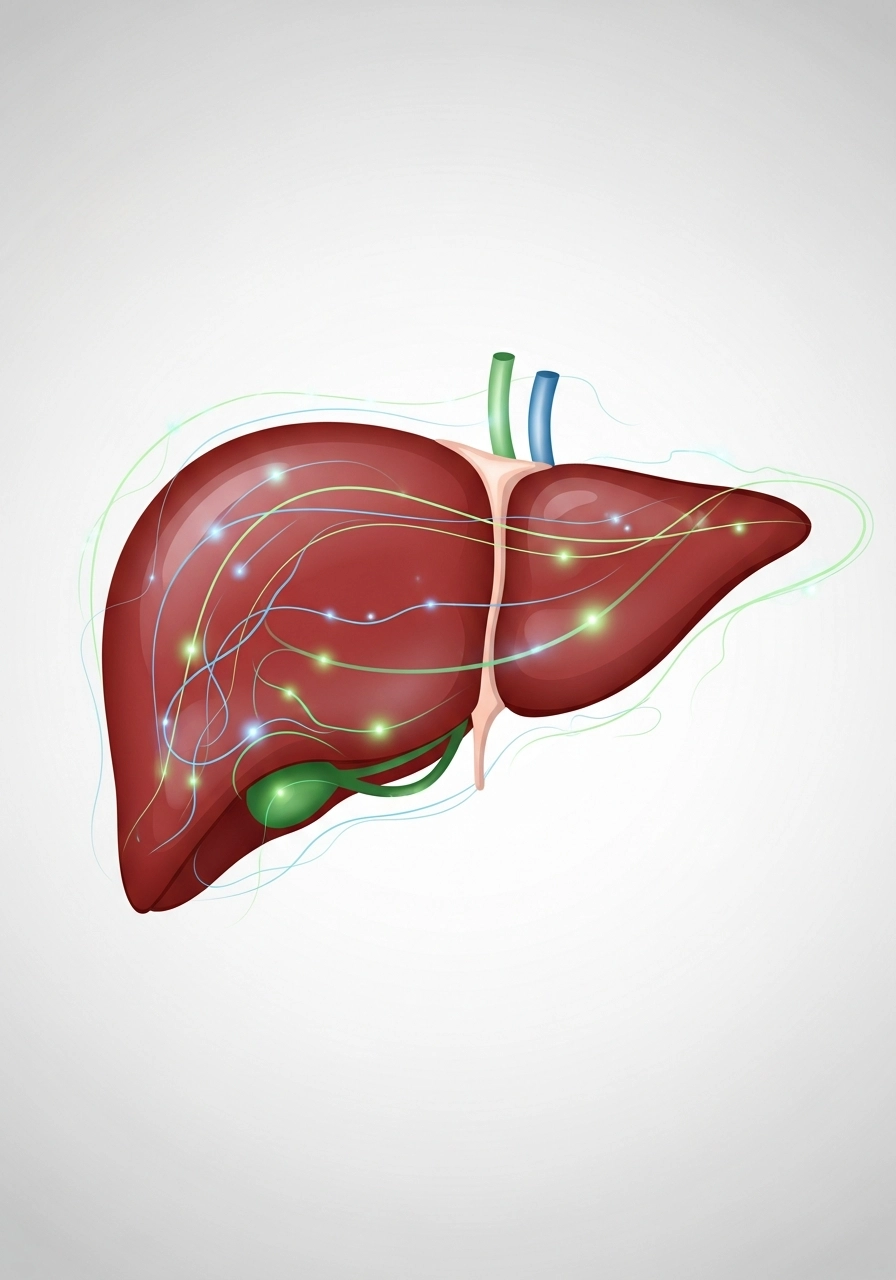
The liver is responsible for:
-
biotransformation of xenobiotics (medications, toxins, metabolic byproducts);
-
bile synthesis;
-
participation in carbohydrate, fat, and protein metabolism;
-
storage of vitamins and trace elements.
“Detoxification” is conventionally divided into two phases of enzymatic reactions (Phase I and Phase II), in which an important role is played by:
-
enzymes of the cytochrome P450 system;
-
conjugation systems (glutathione, sulfates, glucuronides, etc.).
These processes require substrates and cofactors — amino acids, antioxidants, vitamins, and trace elements.
Table 1. Factors that overload the liver
| Factor | Possible impact on the liver |
|---|---|
| Excess calories and sugar | non-alcoholic fatty liver disease |
| Alcohol abuse | alcohol-related damage, inflammation |
| Ultra-processed foods | promotion of metabolic disorders |
| Uncontrolled medication use | drug-induced liver injury |
| Chronic stress and sleep deprivation | indirect impact via hormonal imbalance |
In most cases, “liver detoxification” does not require exotic regimens. It requires reducing the load and providing the liver with essential nutrients.

The role of diet and lifestyle
-
Normalizing caloric intake and reducing excess sugar and refined carbohydrates.
-
Limiting alcohol.
-
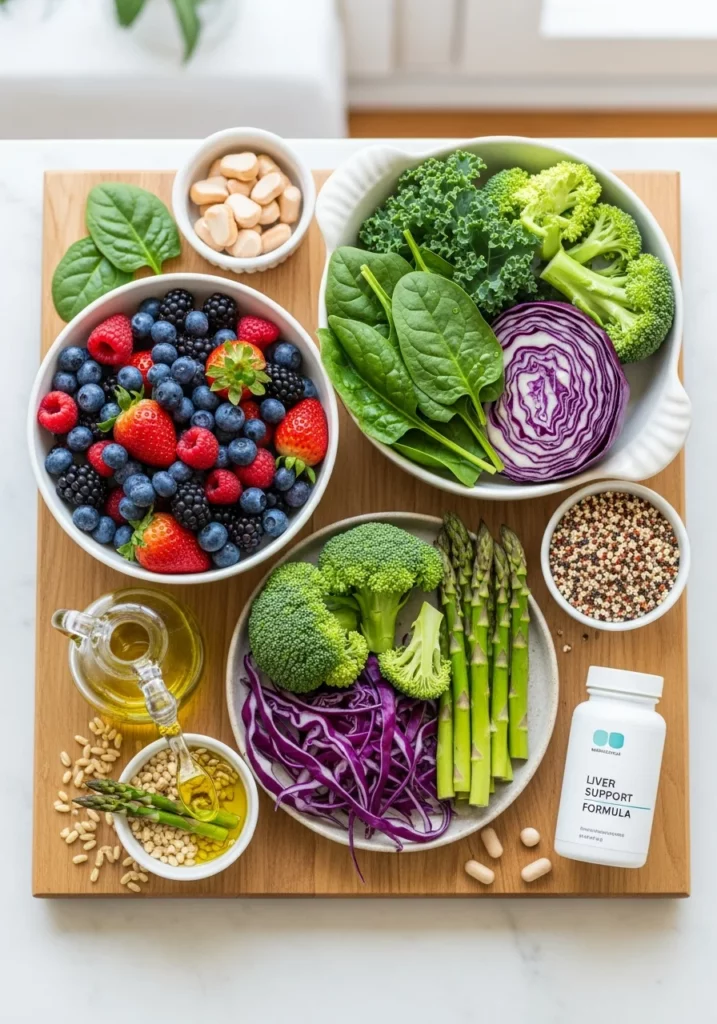
Increasing the share of vegetables, fruits, whole grains, and sources of dietary fiber.
-
Regular physical activity that improves insulin sensitivity and reduces steatosis.
These basic steps alone can significantly reduce the “detox load” on the liver.
Nutrients and nutraceuticals for liver support
Among the nutrients studied in the context of liver health are:
-
antioxidants (vitamins C and E, polyphenols);
-
sulfur-containing compounds (N-acetylcysteine as a glutathione precursor);
-
certain phytocomponents (silymarin, artichoke, etc.);
-
choline (involvement in fat metabolism);
-
omega-3 PUFAs (reduction of inflammatory processes, support of lipid profile).
Table 2. Potential nutraceutical approaches and their goals
| Nutrient / complex | Potential action | Comment |
|---|---|---|
| Antioxidants (C, E, polyphenols) | reduction of oxidative stress | as part of a complex, not a “panacea” |
| Omega-3 PUFAs | support of lipid metabolism, anti-inflammatory effect | especially in metabolic disorders |
| N-acetylcysteine | glutathione precursor | used according to indications |
| Silymarin | antioxidant and membrane-protective action | study data of varying quality |
| Choline | involvement in fat metabolism | important in fatty liver disease |
Nutraceuticals may be appropriate:
-
in cases of dietary deficiencies;
-
as part of комплексной therapy (upon a doctor’s recommendation);
-
in proven metabolic disorders (e.g., non-alcoholic fatty liver disease).
Are “detox programs” necessary?
Most aggressive “detoxes” (strict fasting, extreme mono-diets, laxatives) can:
-
not support but instead burden the liver and other organs;
-
provoke nutrient deficiencies;
-
worsen well-being (weakness, dizziness).
A physiological approach is gentle correction of diet and routine, and, if necessary, targeted nutraceutical support.
Questions and answers
Can you “cleanse” the liver in 7 days on a detox diet?
No. Real improvement in liver parameters usually requires long-term lifestyle changes.
Should everyone take hepatoprotectors “just in case”?
No. The use of any products should be based on medical history, laboratory results, and a doctor’s recommendations.
Is it possible to restore the liver solely through diet?
In the early stages of metabolic disorders, dietary, weight, and activity adjustments can be very effective. At later stages, medical supervision is required.
Are popular “detox” smoothies and teas dangerous?
They can be, especially if they contain strong laxative or diuretic components. They do not replace physiological liver processes and may disrupt electrolyte balance.
Conclusions
The liver already has powerful natural detoxification systems. The main task is not so much to “force” it to work harder as to avoid overloading it and to provide essential nutrients. Diet, routine, and physical activity are the foundation. Nutraceuticals can be useful support, but they do not replace fundamental lifestyle changes and are not a universal “detox solution.”
References
-
Chalasani N. et al. The diagnosis and management of nonalcoholic fatty liver disease.
-
Sanyal A.J. et al. Pathogenesis of NASH and implications for therapy.
-
Serviddio G. et al. Oxidative stress and liver disease.
-
Federico A. et al. Emerging drugs for nonalcoholic fatty liver disease.
About the Author