

Vitamin D has become a “star” of the media space over the past decade. It is credited with effects on bones, immunity, mood, cancer prevention, and even COVID-19.
Some of these claims are exaggerated, but the role of vitamin D in bone-muscle health and immunity is indeed well documented, especially in regions with low sunlight exposure.
This article examines who needs vitamin D diagnostics and correction in winter, and where it is just marketing.
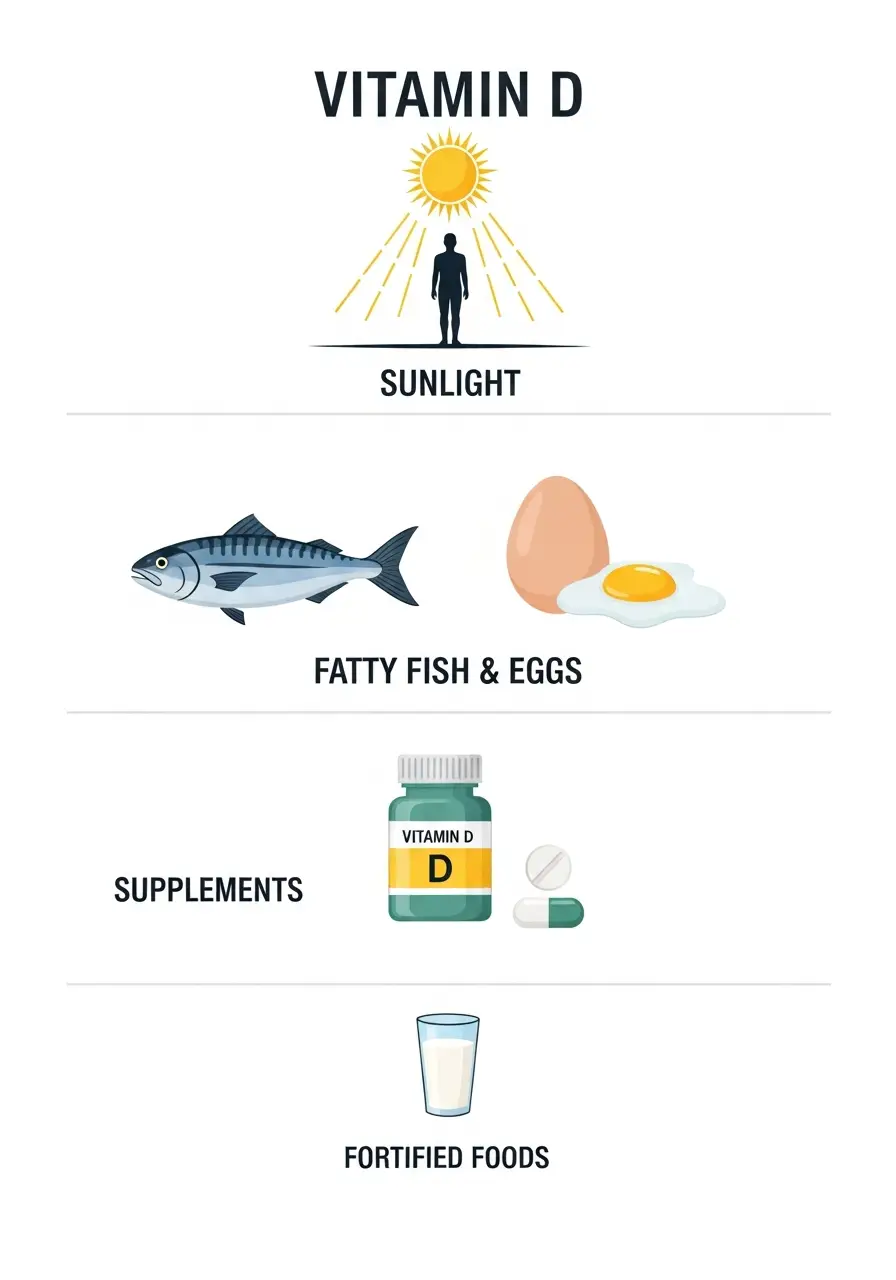
Why vitamin D deficiency is so common
-
Geography: latitudes with a short daylight period in autumn and winter.
-
Indoor work, minimal sun exposure.
-
Use of sunscreen in summer (which is also important).
-
Limited number of foods naturally containing vitamin D.
According to European data, in many countries >50% of adults have insufficient or deficient 25(OH)D levels, especially in winter.
Table title: Vitamin D functions with clinically proven significance
| System/Function | What is known today |
|---|---|
| Skeletal system | Regulation of calcium and phosphorus metabolism, bone mineralization |
| Muscles | Effect on muscle tone, prevention of falls in the elderly |
| Immune system | Modulates innate and adaptive immunity |
| Parathyroid glands | Influence on PTH and calcium balance |
Vitamin D and respiratory infections: what studies say
Meta-analyses of randomized studies have shown that preventive intake of vitamin D can reduce the risk of acute respiratory infections, especially in people with baseline deficiency. The effect is moderate but statistically significant.
At the same time:
-
Vitamin D is not a fast-acting remedy for an already developed infection;
-
There is no reason to increase doses above the recommended “just in case” level.
Table title: Who should primarily check 25(OH)D
| Patient category | Why important |
|---|---|
| People 60+ | Risk of osteoporosis, falls |
| Patients with osteoporosis/osteopenia | Monitor therapy effectiveness |
| Patients with malabsorption | Intestinal diseases, bariatric surgery |
| People with dark skin in northern latitudes | Reduced sun-induced D synthesis |
| Patients with obesity | Altered metabolism and storage |

Practical approaches to prescribing in winter
-
For healthy adults in regions with low sunlight exposure, preventive doses in line with local recommendations are appropriate.
-
For patients with osteoporosis, the elderly, and risk groups — it is advisable to monitor 25(OH)D levels and adjust doses individually.
-
It is important to avoid self-administration of high “bolus” doses, especially in kidney disease.
In the articles “Digestive Enzymes: Why Even Healthy People Need Them in Winter” and “Folic Acid in Winter: Why Deficiency Is Not Just a Pregnancy Issue”, learn about the importance of other vitamins in winter for supporting immunity and health. You can conveniently order vitamins online at medizine.ua.
Questions and answers
Should everyone get a vitamin D test before supplementation?
For basic preventive doses in healthy adults, testing is not always mandatory. However, for long-term high-dose use or in risk groups (elderly, osteoporosis, kidney disease) it is advisable to know the baseline level.
Can excess vitamin D be harmful?
Yes. Vitamin D hypervitaminosis causes hypercalcemia, affecting the kidneys, heart, and vessels. Therefore, the “more is better” principle is dangerous here.
Does vitamin D really “protect against COVID-19”?
There is data linking low D levels with more severe courses, but this does not make vitamin D a specific preventive or therapeutic agent. It is part of the overall nutritional background.
Which form is better — drops, capsules, or tablets?
Clinically, it is more important to reach and maintain the target level than the form. Choice depends on convenience, compliance, and cost.
Conclusions
-
Vitamin D is not a “magic pill for all diseases,” but it is a key nutrient for bones, muscles, and immunity.
-
In winter, the risk of deficiency increases significantly, justifying preventive intake in moderate doses and more active screening in risk groups.
-
It is the responsibility of doctors and pharmacists to maintain a balance between evidence-based recommendations and the trend of excessive intake.
References
-
Holick M.F. Vitamin D deficiency. N Engl J Med. 2007.
-
Martineau A.R. et al. Vitamin D supplementation to prevent acute respiratory infections. BMJ. 2017.
-
EFSA. Dietary reference values for vitamin D. 2016.
-
Pludowski P. et al. Vitamin D supplementation guidelines in Central Europe. 2018.
About the Author