

After the holidays, patients often visit the pharmacy complaining of heaviness in the stomach, bloating, and discomfort after meals. The most common question is “Do I need enzymes?”.
However, in many cases these symptoms are not related to enzyme deficiency but to disrupted eating patterns and overeating.
The pharmacist’s task is to distinguish functional overload from situations where enzyme support is truly appropriate.
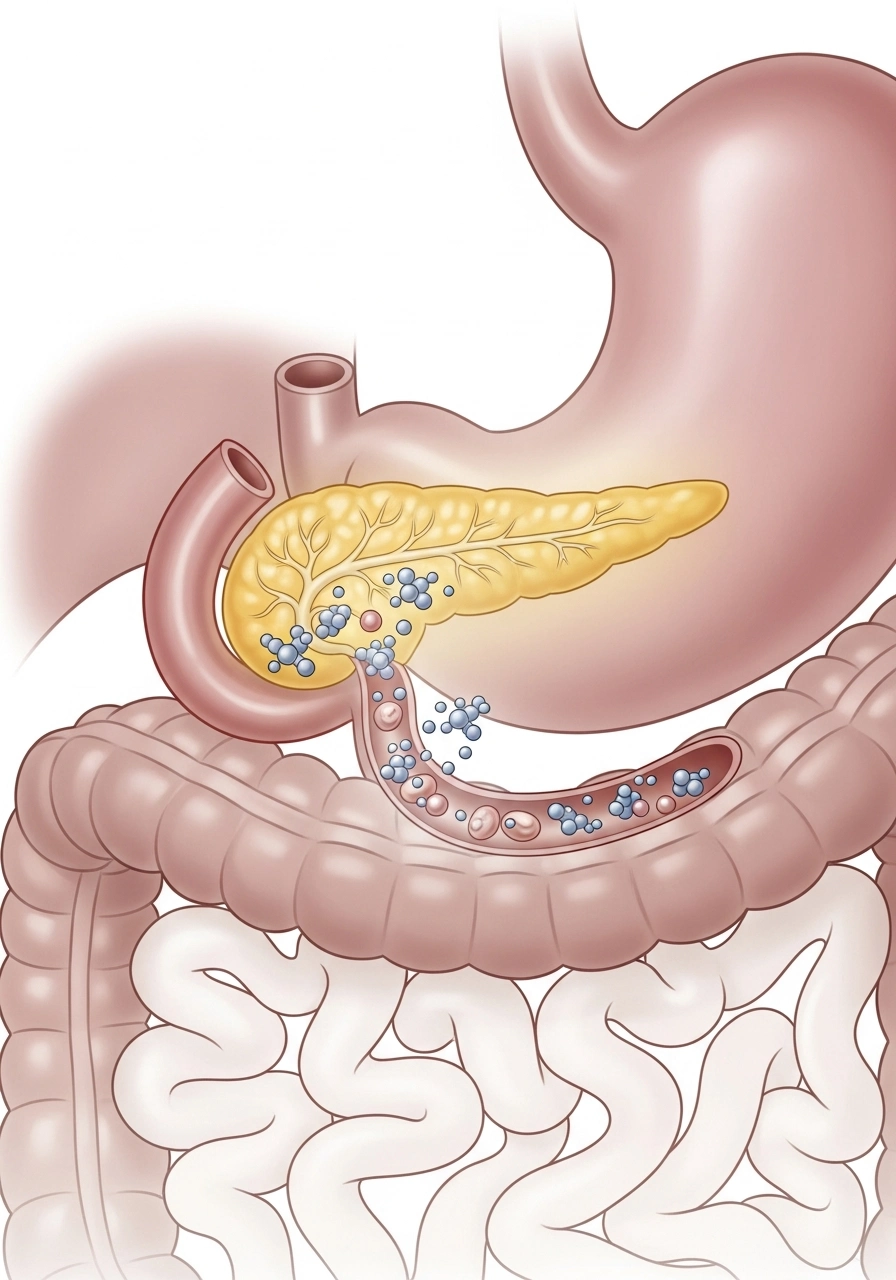
Digestive physiology: what happens during overeating
In a healthy person, the digestive system has sufficient reserve capacity to digest food. Problems arise when:
-
food is consumed in excessive amounts;
-
the interval between meals is disrupted;
-
hard-to-digest foods are combined (fats + proteins + alcohol).
Under such conditions, symptoms occur due to overload, not because of true enzyme deficiency.
When the issue is the regimen, not enzymes
In most post-holiday cases, it is sufficient to:
-
reduce portion sizes;
-
normalize intervals between meals;
-
avoid late and heavy dinners.
Table 1. Overeating vs enzyme deficiency
| Feature | Functional overeating | Enzyme deficiency |
|---|---|---|
| Relation to food | After large portions | Even after moderate meals |
| Duration of symptoms | Short-term | Persistent |
| Response to regimen | Improvement | Minimal effect |
| Need for enzymes | Optional | Often appropriate |
Enzyme support: indications and limits of use
Enzymes are appropriate if symptoms:
-
recur;
-
occur even with moderate eating;
-
are accompanied by steatorrhea, pronounced bloating, and nausea.
Main enzyme groups:
-
Lipase — fat digestion
-
Proteases — proteins
-
Amylase — carbohydrates
Enzymes do not replace dietary correction but only complement it. The Medizine online store offers a wide selection of nutrients and products to support digestion, energy, and overall well-being.
Read more practical tips on post-holiday recovery in our blog.
Common mistakes in enzyme use
-
“I take enzymes just in case”
-
Long-term use without symptom assessment
-
Using them as prevention for overeating
Such approaches reduce treatment effectiveness and create incorrect expectations among patients.

Practical algorithm for the pharmacist
Table 2. Rational choice of support strategy
| Situation | First recommendation | Additional |
|---|---|---|
| Single episode of overeating | Dietary adjustment | Water, pause |
| Symptoms after fatty food | Reduce fat intake | Short enzyme course |
| Regular discomfort | Dietary assessment | Enzymes + consultation |
| Comorbid conditions | Physician | Individual approach |
Educational role of the pharmacist
The pharmacist helps the patient:
-
understand the cause of the symptoms;
-
avoid unnecessary medications;
-
form realistic expectations regarding enzyme support.
QUESTIONS – ANSWERS
Does every discomfort after eating indicate an enzyme deficiency?
No. In most cases after the holidays, symptoms are associated with overeating or disruption of the eating routine, rather than with a true enzyme deficiency.
When are enzymes truly appropriate?
Enzyme support may be justified if symptoms recur, occur even after moderate portions, or are accompanied by pronounced bloating and nausea.
Can enzymes be taken prophylactically before a feast?
Regular prophylactic use of enzymes is not recommended, as it does not replace normalization of eating habits and may contribute to unhealthy dietary behaviors.
What is more effective in a single episode of overeating — enzymes or regimen?
In cases of one-time overeating, in most situations it is sufficient to reduce portion sizes, take breaks between meals, and maintain an adequate drinking regimen.
Can enzymes replace dietary correction?
No. Enzymes do not eliminate the underlying cause of the problem and should be used only as an additional tool, not as a primary solution.
What is the role of the pharmacist in choosing between enzymes and regimen?
The pharmacist helps assess the nature of the symptoms, explain their temporary character, and offer rational rather than excessive support.
Conclusions
Not every post-meal discomfort is an indication for enzyme use. In the post-holiday period, in most cases normalization of the eating regimen is sufficient.
Enzyme support should be justified, short-term, and targeted, taking into account the clinical picture.
References
-
Guyton AC, Hall JE. Textbook of Medical Physiology. Elsevier.
-
McClave SA et al. Digestive Physiology and Nutrition. JPEN.
-
Linder MC. Nutritional Biochemistry. Elsevier.
-
World Gastroenterology Organisation. Practice Guidelines.
-
NIH Office of Dietary Supplements.
About the Author