

Headache — “pressure”, weakness — “vitamin deficiency”, stomach pain — “stomach”. We are used to quickly explaining symptoms based on personal experience or online searches. However, this kind of self-diagnosis often leads to misdiagnosis and incorrect conclusions about our health.
Why Self-Diagnosis Frequently Fails
In daily life, symptoms are often interpreted too literally. People quickly “assign” a disease diagnosis — based on advice from friends, online searches, or past experiences. But the same symptoms can have different origins, and self-diagnosis oversimplifies the body’s complex processes.
This increases the risk of wrong decisions, unnecessary treatments, and missing the true causes of health issues.
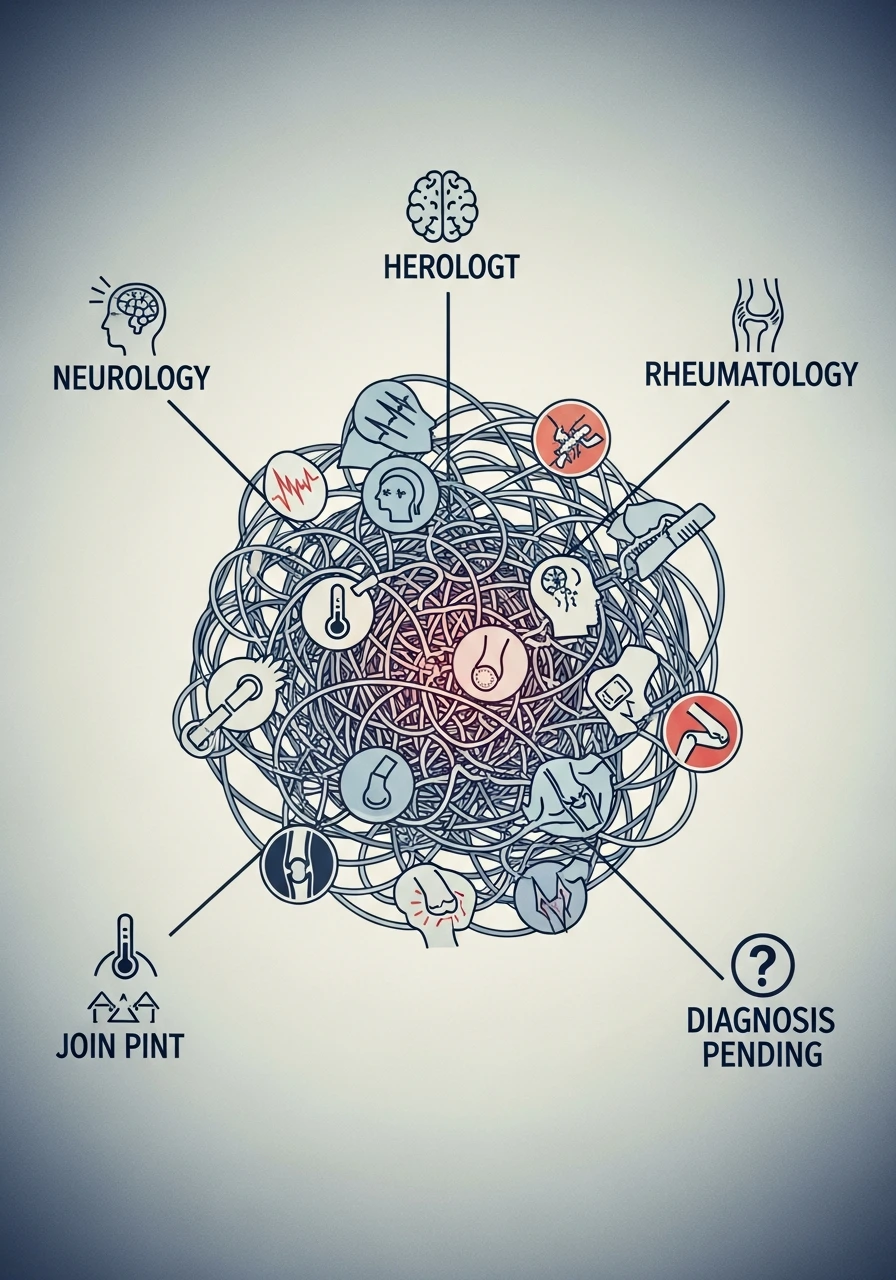
How Symptoms Mislead: Why False Beliefs Form
In today’s information-rich environment, any symptom can be “explained” in minutes. Headache — “pressure”, stomach pain — “stomach”, fatigue — “vitamin deficiency”.
While this seems logical, the body does not operate on a simple one-cause-one-symptom principle.
That’s why self-diagnosis is often not just inaccurate, but potentially harmful.
Why the Same Symptoms Can Have Different Causes
How Symptomatic Thinking Works
Symptomatic thinking follows simple logic: “There is a symptom → therefore, there is a specific disease.”
In reality, pain, weakness, dizziness, or discomfort can be:
- a functional response;
- a result of overload;
- a manifestation of adaptation;
- a side effect of lifestyle.
The Role of Context and Contributing Factors
No symptom exists in isolation. Its significance changes depending on:
- time of occurrence;
- duration;
- accompanying sensations;
- lifestyle;
- emotional state.
Without considering context, even an “obvious” symptom can lead to false conclusions.

Googled ≠ Understood: Common Self-Diagnosis Mistakes
Table 1. Typical Self-Diagnosis Mistakes
| Mistake | Why it is dangerous |
|---|---|
| Searching for a single symptom | Alternative causes are ignored |
| Focusing on the worst-case scenario | Anxiety increases |
| Comparing with others | Individual characteristics are ignored |
| Self-prescribing treatment | Symptoms are masked, the cause remains |
| Delaying medical consultation | Real problems may progress |
Information from open sources rarely takes individual differences or the clinical context of symptoms into account.
How Doctors Distinguish Similar Conditions
Doctors do not look for the “disease name” immediately. Their goal is to:
- exclude dangerous conditions;
- assess symptom dynamics;
- correlate complaints with objective data;
- determine if the symptom is part of a systemic response.
The Danger of Hasty Conclusions and Misdiagnosis
Table 2. Consequences of Misdiagnosis
| Consequence | What happens |
|---|---|
| Symptom chronicity | The cause is not addressed |
| Overtreatment | The body receives unnecessary strain |
| Missing important signals | The real problem is masked |
| Increased anxiety | Symptoms are perceived as stronger |
| Loss of trust in medicine | The person stops seeking help |
It is important to understand: a hasty diagnosis often causes more harm than no diagnosis at all.
Questions & Answers
Why can one symptom indicate different conditions?
The same symptom can be a manifestation of different processes in the body since the body uses a limited number of signals for various regulatory mechanisms.
Is self-diagnosis dangerous?
Self-diagnosis can be dangerous if it replaces professional medical evaluation and affects treatment decisions.
Why can symptoms mimic other problems?
Symptoms can mimic other conditions due to overlapping mechanisms of nervous, hormonal, and vascular regulation.
Is the first explanation always correct?
The first explanation of symptoms is not always correct because in medicine it is considered only a hypothesis, not a confirmed fact.
How to reduce the risk of misdiagnosis?
Attention to symptom context, critical thinking, and timely consultation with a professional help reduce the risk of errors.
Conclusion
A symptom is a signal, not a ready-made diagnosis. Self-diagnosis simplifies complex processes and often leads to false conclusions. Critical thinking, attention to context, and a gradual approach significantly reduce the risk of mistakes and unnecessary treatment.
References
- Croskerry P. Diagnostic failure: a cognitive perspective. Academic Medicine, 2009.
- WHO. Diagnostic errors and patient safety.
- NICE Guidelines: Diagnostic assessment principles.
- PubMed: Symptom-based diagnosis limitations — review articles.
- BMJ: Cognitive biases in clinical decision-making.
About the Author