

During periods of severe frost, training in severe frost can become not only a challenge for endurance but also a potential threat to health. Low temperatures, slippery surfaces, and cold air increase the risk of injuries, muscle spasms, and irritation of the respiratory tract.
At the same time, completely giving up physical activity in winter is also undesirable: lack of movement negatively affects muscle tone, metabolism, and overall well-being. Therefore, in the cold season it is important not to increase the load, but to adapt workouts — choosing safe alternatives and a moderate format of activity.

Why training in freezing weather can be dangerous
Hypothermia and injuries
At low temperatures, the body expends more energy to maintain warmth. Blood vessels constrict, muscles become less elastic, and the response to physical load slows down. This increases the risk of strains, spasms, and injuries, especially during sudden movements or intense workouts.
In addition, cold air can irritate the respiratory tract, which is especially important for people with bronchopulmonary conditions or increased sensitivity. Read more about the effects of weather on blood vessels, the nervous system, and well-being in the article “Sharp Temperature Fluctuations in February: Headaches & Fatigue Explained”.
Table 1. Main risks of physical activity in freezing weather
| Risk | Potential consequence |
|---|---|
| Hypothermia | General exhaustion |
| Reduced muscle elasticity | Injuries, spasms |
| Slippery surfaces | Falls |
| Cold air | Respiratory irritation |
It is important to remember: not every winter workout should take place outdoors, especially in extreme weather conditions.
Table 2. Signs that exercising in freezing weather is excessive
| Sign | What it indicates |
|---|---|
| Shivering during movement | Insufficient warming |
| Numbness of limbs | Impaired circulation |
| Dizziness | Overexertion |
| Shortness of breath | Excessive load |
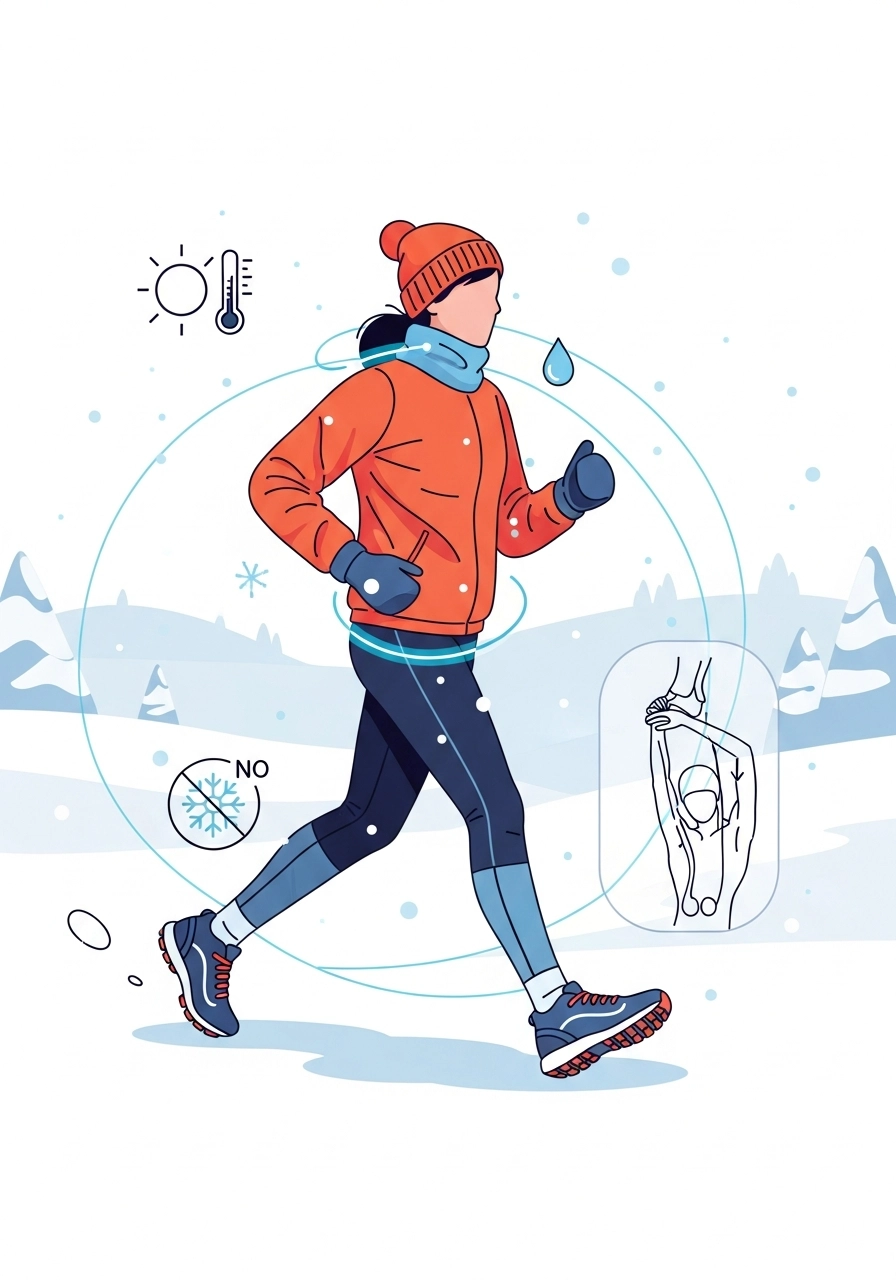
What to replace running and outdoor training with in freezing weather
Home workouts and stretching
Indoors, you can safely maintain muscle tone and mobility. Light strength exercises using body weight, yoga, Pilates, and stretching reduce the risk of injuries and support blood circulation.
Cardio without exposure to cold air
You can get cardio exercise without running in freezing weather: marching in place, low-impact exercises, dance movements, or using a stationary bike indoors help maintain cardiovascular health without the risk of hypothermia.
How to stay in shape during winter without health risks
In winter, it is more effective to focus on consistency rather than intensity. Even 15–30 minutes of moderate movement daily positively affect metabolism, mood, and muscle tone. It is also important to include mobility and relaxation exercises to compensate for reduced activity during the cold season.

Questions and Answers
Can you run during severe frost?
Training in severe frost is associated with the risk of hypothermia, muscle spasms, and respiratory irritation. At temperatures below −10°C, it is safer to move your run indoors or replace it with alternative cardio.
Which workouts are safest during severe frost?
The safest option is indoor training with low-impact exercises: bodyweight workouts, Pilates, yoga, mobility routines, and moderate cardio without exposure to cold air.
How much should you train in winter to avoid harm?
Optimally — 120–150 minutes of moderate activity per week. During periods of severe frost, consistency and stability are more important than high intensity or long outdoor workouts.
Conclusions
Training in severe frost requires adaptation rather than a complete отказ of movement. Intense exercise in cold conditions increases the risk of injuries, spasms, and respiratory overload.
A safe winter strategy is to replace outdoor workouts with indoor formats while maintaining moderation and regularity. This approach helps maintain muscle tone, metabolism, and energy levels without the risk of hypothermia.
References:
-
World Health Organization. Physical activity guidelines.
-
PubMed: Cold exposure and exercise safety.
-
NICE. Physical activity and injury prevention.
-
Reviews on muscle function in cold environments.
-
EFSA. Physical activity and metabolic health.
About the Author