
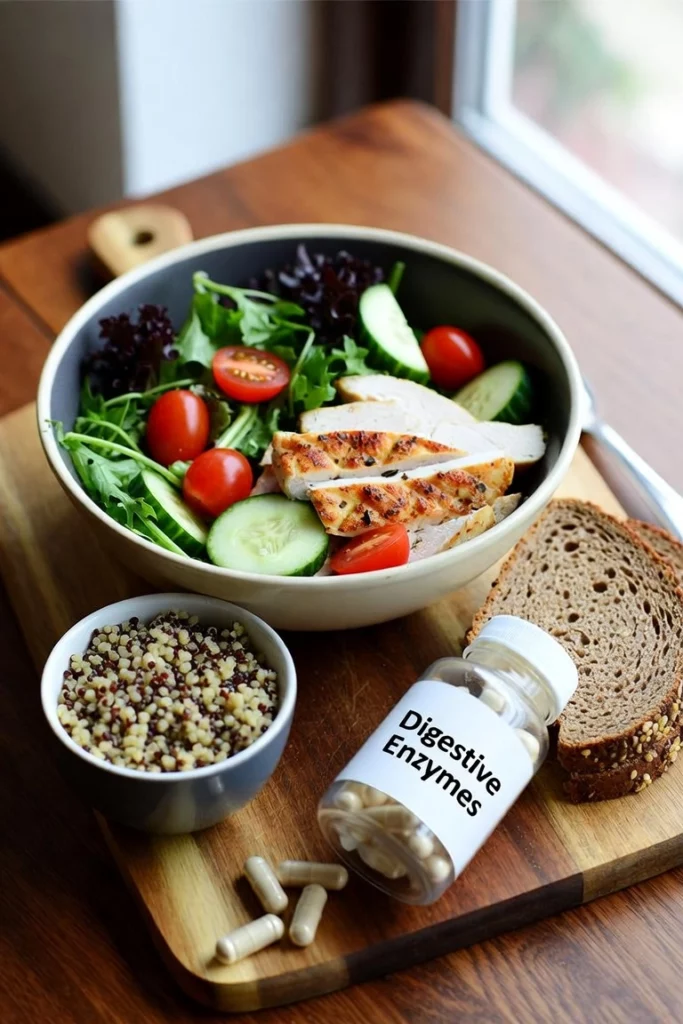
Digestive enzymes have long ceased to be a product only for people with pancreatic diseases. Today, they are purchased after holidays, during travel, for bloating, heaviness after meals, and even “for prevention.” At the same time, not every instance of post-lunch discomfort means the body lacks enzymes. In this article, we will look into how digestive enzymes work, who they can truly benefit, and when the problem has a completely different cause.

What Are Digestive Enzymes
Enzymes are special proteins that help the body break down food into small components.
It is thanks to them that we can obtain nutrients from products.
The majority of digestive enzymes are produced by the pancreas.
Without them, even the healthiest food would not be fully absorbed.
Which Enzymes Participate in Digestion
Each group of nutrients requires its own enzymes.
Table 1. Main digestive enzymes and their roles
| Enzyme | What it breaks down |
|---|---|
| Amylase | Carbohydrates |
| Lipase | Fats |
| Protease | Proteins |
| Lactase | Milk sugar (lactose) |
| Maltase | Maltose |
| Sucrase | Sucrose |
If at least one of them is lacking, unpleasant symptoms may appear after eating.
Why Does It Feel Like Enzymes Are Lacking
Many people associate any abdominal bloating specifically with an enzyme deficiency.
In reality, there are significantly more causes.
Among the most common:
- overeating;
- excess of fatty foods;
- eating too fast;
- high consumption of carbonated drinks;
- irritable bowel syndrome;
- intolerance to specific products;
- excessive fiber;
- stress.
Therefore, bloating in itself does not yet mean that you need to run to the pharmacy for enzymes.
When Digestive Enzymes Are Truly Needed
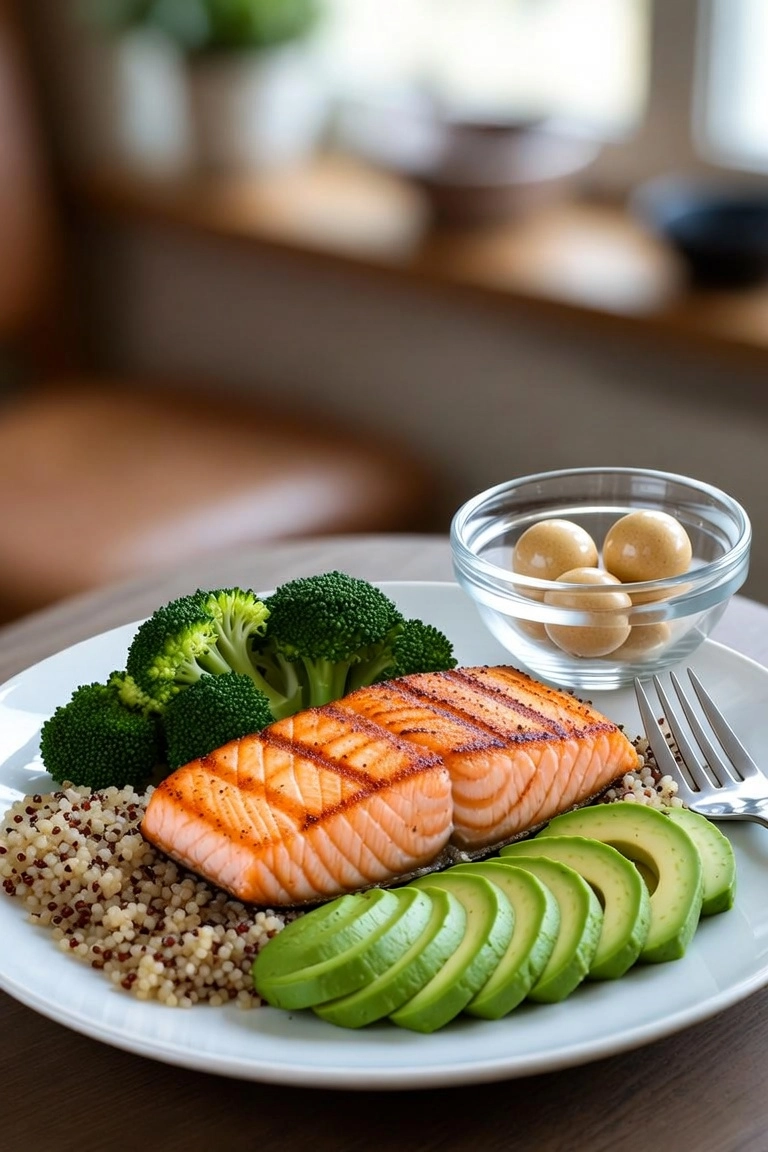
There are situations where the use of enzyme preparations has a logical explanation.
The most famous example is exocrine pancreatic insufficiency.
In such a case, the body produces insufficient amounts of its own enzymes, which causes problems with food digestion.
Enzyme preparations are also used for certain gastrointestinal diseases as recommended by a doctor. It is important to understand that the need for additional enzymes can change depending on the season. For example, during the winter period, our menu becomes heavier and higher in calories. We talked in more detail about why enzymes may be needed even by healthy people in winter in our premium material.
What If It’s Just Heaviness After a Feast
This is where the most interesting part begins.
It is for these situations that enzymes are most often purchased independently.
The logic is clear:
“I ate a lot of BBQ, salads, and cake, so I need to help my digestion.”
Sometimes this can indeed improve how one feels.
But let’s be honest: no enzyme is capable of canceling out the consequences of severe overeating.
If a person consumed two daily norms of calories in one evening, the problem is not just about enzyme function.
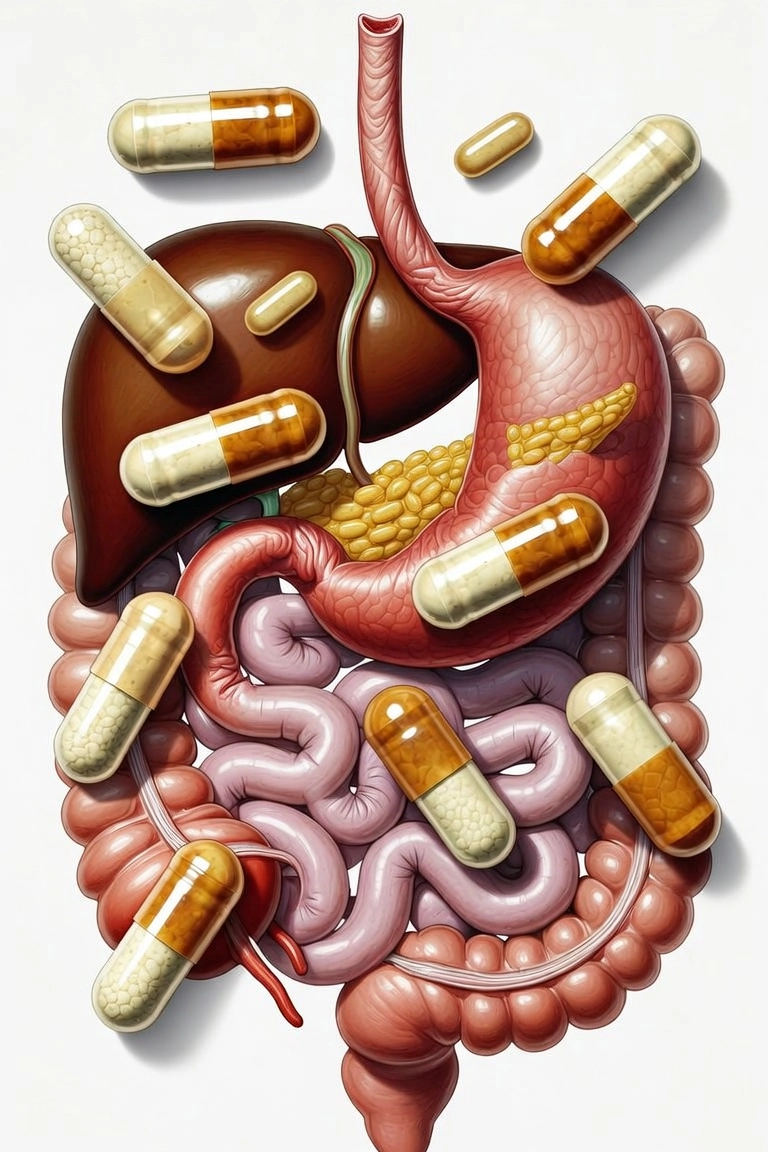
Lactase: The Exception to the Rules
There is one enzyme that deserves separate attention.
We are talking about lactase.
It is what helps digest milk sugar — lactose.
In many adults, lactase activity decreases with age.
Then, after consuming milk, the following may occur:
- bloating;
- rumbling;
- gas;
- abdominal discomfort;
- diarrhea.
In such cases, the enzyme lactase is often used immediately before consuming dairy products. It is lactase that helps the body break down milk sugar. If its activity is reduced, unpleasant symptoms arise after consuming dairy. We wrote in detail about how to distinguish lactase from lactose and get rid of discomfort from milk in a separate guide.
Plant-Based Enzymes: Marketing or Real Benefit
In recent years, supplements with bromelain and papain have become popular.
Bromelain is obtained from pineapple.
Papain — from papaya.
They are often advertised as universal helpers for digestion.
There is significantly less scientific data regarding their use compared to classic enzyme preparations.
However, interest in such products continues to grow.
Enzymes and Bloating: Is There Always a Connection?
No.
And this is one of the biggest myths.
Bloating can be related to:
- irritable bowel syndrome;
- excess of FODMAP products;
- disruption of eating habits;
- stress;
- intolerance of specific products.
In such cases, enzymes do not always solve the problem.
Sometimes a person is already on their fourth pack of enzymes, even though the real cause is completely different.
Can Enzymes Be Taken Constantly?
This is one of the most frequent questions in the pharmacy.
Many are worried that the body will “get lazy” and stop producing its own enzymes.
For a healthy person, such concerns lack convincing evidence.
At the same time, constant intake of any supplements without a clear reason is hardly a good idea. Before introducing any supplements into your diet on a permanent basis, it is important to study all the benefits and possible side effects of enzymes.
How to Understand That the Problem Might Not Be in Enzymes
There are signals that require a more careful attitude towards health.
Table 2. Symptoms that should not be explained solely by enzyme deficiency
| Symptom | Reason for additional examination |
|---|---|
| Unexplained weight loss | Requires health status assessment |
| Chronic diarrhea | Can have various causes |
| Blood in stool | Requires examination |
| Persistent abdominal pain | Not a typical manifestation of enzyme deficiency |
| Night symptoms | Require attention |
In such situations, one should not be limited to another pack of enzymes.
Most Common Myths About Digestive Enzymes
Table 3. Most common myths and real facts about digestive enzymes
| Myth | Reality (Fact) |
|---|---|
| Enzymes are needed by everyone after 40 | No. Age itself does not mean an automatic enzyme deficiency. |
| If there is bloating, it means enzymes are lacking | No. There can be dozens of reasons for bloating — from diet to stress. |
| The more enzymes, the better | Not always. An excess of enzymes does not make the digestion process ideal. |
| Enzymes help with weight loss | No. To date, there is no convincing scientific evidence for this. |
Questions and Answers
Do enzymes help after overeating?
Sometimes they can relieve the feeling of heaviness but are unable to fully compensate for the excess of food.
Should enzymes be taken for prevention?
For most healthy people, there is no such need.
What is better: plant-based or classic enzymes?
It all depends on the situation and the goals of use.
Do enzymes help with bloating?
In some cases yes, but far from always.
Why is there discomfort after milk?
One of the reasons could be insufficient activity of the enzyme lactase.
Conclusions
Enzymes are not a magic pill for every instance of post-meal discomfort. They truly play an important role in digestion and can be useful in specific situations. At the same time, the majority of cases of bloating, heaviness, or rumbling in the abdomen are not related to a real enzyme deficiency.
Before buying another enzyme complex, it is worth asking yourself a simple question: is the problem really with enzymes or with eating habits?
Useful addition from our partners
For those who want to understand more deeply the choice of remedies for comfortable digestion and fighting bloating, we recommend reading the material on the website of our partners Medizine: «How enzymes help after heavy meals and with food intolerance». In the article, you will find additional advice on how to properly support the body in case of dietary restrictions or after festive feasts.
The material is for informational purposes only. Before taking any supplements or preparations, consult a doctor. Do not use supplements as a replacement for a complete diet.
References
- Keller J, Layer P. Human Pancreatic Exocrine Response to Nutrients in Health and Disease. Gut. 2005.
- Domínguez-Muñoz JE. Pancreatic Enzyme Therapy for Pancreatic Exocrine Insufficiency. Current Gastroenterology Reports. 2019.
- Whitcomb DC. Pancreatic Enzyme Replacement Therapy. Gastroenterology Clinics of North America. 2018.
- National Institute of Diabetes and Digestive and Kidney Diseases (NIDDK). Exocrine Pancreatic Insufficiency.
- Misselwitz B et al. Lactose Malabsorption and Intolerance. United European Gastroenterology Journal. 2019.
About the Author