

Collagen has long ceased to be a niche supplement for cosmetology. Today, it is used to support skin, joints, bones, and sports recovery. At the same time, a vast number of marketing claims have emerged around collagen, some based on scientific data and others significantly exaggerating the product’s real capabilities.
Current research shows that collagen peptides can improve skin condition, reduce signs of aging, and positively impact joint function. However, the effect is usually moderate, develops gradually, and depends on dosage, raw material quality, and consistency of intake.
Why so many myths have emerged around collagen
Collagen has become one of the most popular ingredients in the dietary supplement market. The reason is simple: it is linked to the concerns that affect most people after the age of 30.
This includes:
- appearance of wrinkles;
- decreased skin elasticity;
- joint discomfort;
- loss of muscle mass;
- decreased bone density.
The product’s popularity outpaced scientific development. Initially, collagen was marketed as an almost universal anti-aging remedy. Only later did high-quality clinical studies begin to emerge.
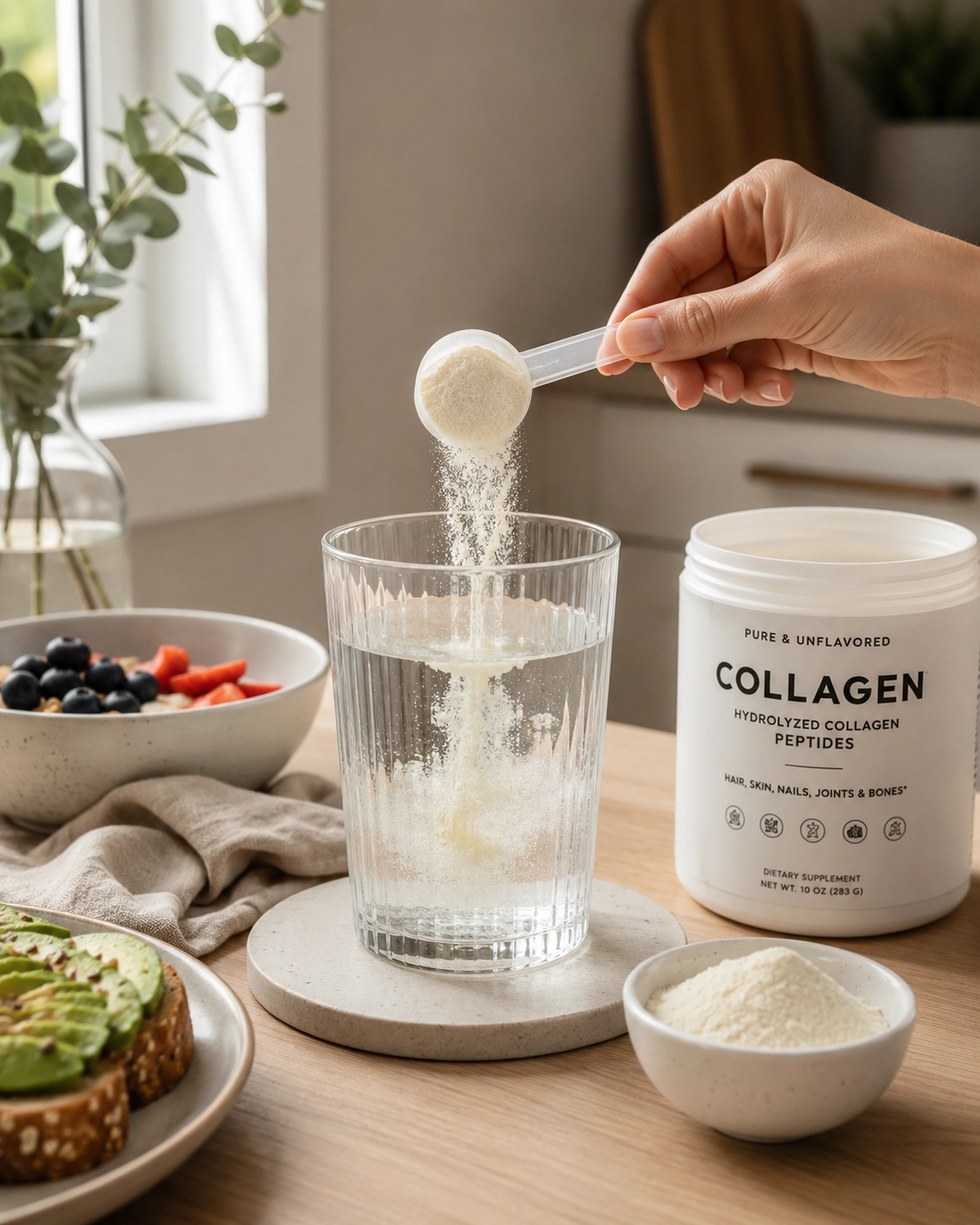
Collagen, gelatin, and collagen peptides: what’s the difference?
One of the most frequent questions is: if collagen and gelatin come from the same raw material, why pay more?
The difference is real.
| Form | Structure | Average molecular weight | Features |
|---|---|---|---|
| Native collagen | Triple helix | >250 kDa | Natural protein form |
| Gelatin | Partially hydrolyzed collagen | ~180 kDa | Used in the food industry |
| Collagen peptides | Short peptide fragments | <30 kDa | Better solubility and faster absorption |
Once in the body, all these forms are eventually broken down into amino acids and peptides. That is why many scientists believe the key role is played not by the product’s name, but by the composition of the final peptides that enter the bloodstream.
How collagen peptides work
In the 1990s, it was believed that collagen simply provided the body with building material.
Today, the picture is more complex.
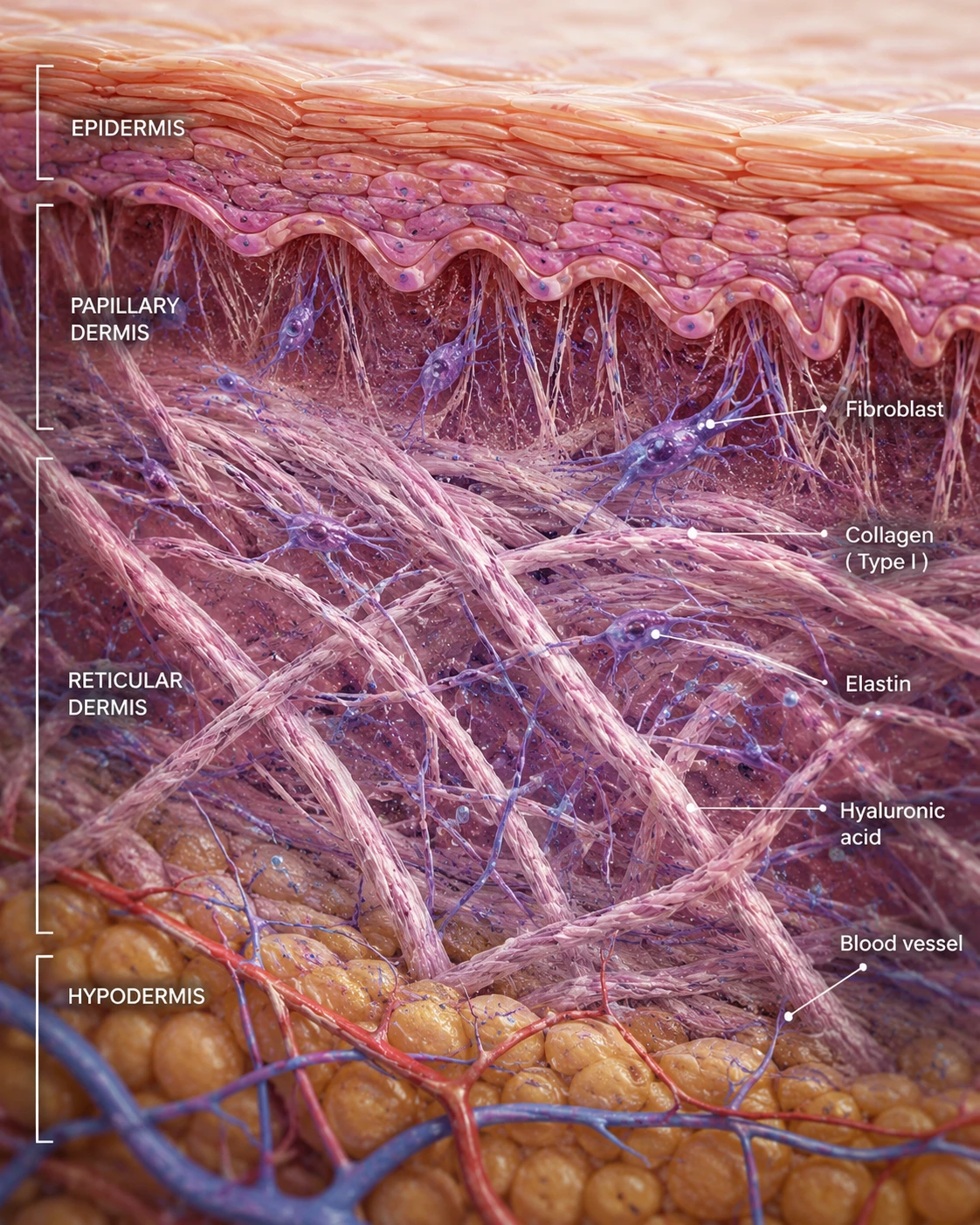
Certain collagen peptides can interact with receptors on connective tissue cells. This stimulates the activity of fibroblasts, chondrocytes, and osteoblasts.
The result can be an increase in the synthesis of:
- one’s own collagen;
- elastin;
- hyaluronic acid;
- extracellular matrix components.
This specific mechanism is what manufacturers refer to as bioactivity.
At the same time, it is important to understand: most evidence for these mechanisms comes from laboratory studies on cell cultures. While a clinical effect in humans exists, it is significantly more modest than what is often shown in advertising materials.

Are all collagens the same?
The short answer is no.
Collagen peptides can differ by:
- peptide chain length;
- amino acid profile;
- production method;
- degree of hydrolysis.
This is why the results of studies on one brand cannot be automatically applied to all products labeled “collagen.”
This is one of the main consumer mistakes.
If a certain clinical effect was demonstrated for a specific product, it does not mean that any other collagen will work the same way.
Is the type of collagen important?
Packaging often features labels such as:
- Type I;
- Type II;
- Type III.
Marketing explains this very simply:
- Skin — Type I;
- Joints — Type II;
- Vessels — Type III.
Human physiology is much more complex.
After hydrolysis, large protein structures break down into small fragments. For cells, the characteristics of these fragments matter more than just the initial type of collagen.
Therefore, modern science is gradually moving from the concept of “collagen type” to the concept of “peptide profile.”

How much collagen is actually needed?
One of the most common marketing strategies is to demonstrate massive dosages.
In reality, most clinical studies have used much more modest amounts.
| Application Area | Daily Dose |
| Skin support | 2.5–5 g |
| Joints | 5–10 g |
| Bone tissue | 5 g |
| Sports recovery | 10–15 g |
| Ligaments and tendons | approx. 5 g |
Increasing the dose to 20–30 g does not always ensure a better result.
In most cases, effectiveness is determined not by the maximum amount of collagen, but by the consistency of intake.
What happens to collagen after age 25?
Peak collagen synthesis occurs around ages 20–25.
Gradual changes then begin:
- annual loss of about 1% of collagen;
- slowing of fibroblast function;
- decreased elastin production;
- deterioration of tissue regeneration.
By age 60, the amount of collagen in some tissues can decrease by nearly half.
Age-related changes in skin, joints, and bones are directly linked to this process.
Does collagen work for joints?
The most convincing data today have been obtained for:
- osteoarthritis;
- sports-related stress;
- prevention of joint overuse.
Meta-analyses indicate reduced pain and improved joint function compared to placebo.
The effect typically develops after 2–6 months of regular use.
For individuals with severe degenerative changes, collagen cannot replace medical treatment or orthopedic interventions.
Does collagen help the skin?
This is where the evidence base is most convincing.
Systematic reviews show improvements in:
- skin hydration;
- elasticity;
- dermal density;
- fine line depth.
At the same time, this is not equivalent to the effects of cosmetic procedures or plastic surgery.
Most study participants report moderate but noticeable changes after 8–12 weeks of intake.
The problem with collagen research
This is where it gets most interesting.
Most high-quality studies are funded by collagen manufacturers.
This does not mean the results are false.
However, several limitations exist:
- small sample sizes;
- short observation periods;
- use of specific brands;
- difficulty comparing different products.
That is why there is still a lack of independent long-term studies.
Conclusions
Collagen peptides remain one of the few nutraceuticals for which a substantial volume of clinical data has been accumulated.
Today, we can speak of:
- moderate improvement in skin condition;
- support for joint function;
- potential benefits for bone tissue;
- assistance in sports recovery.
At the same time, collagen cannot turn back biological age, completely eliminate wrinkles, or restore destroyed cartilage.
The most realistic approach is to view it as an additional tool for supporting connective tissue health, rather than a universal anti-aging solution.
Questions & Answers
What is the best form of collagen?
Hydrolyzed collagen peptides are most commonly used. They have the highest number of clinical studies supporting them.
How long does it take to see results?
For the skin, it usually takes 8–12 weeks. For joints — from 2 to 6 months.
Can collagen be obtained from food?
Yes. Sources include bone broths, fish skin, aspic (meat jelly), and protein-rich foods. However, standardizing the dose in this case is more difficult.
Is there any point in taking collagen after age 50?
Yes. After age 50, natural collagen production significantly decreases, making the potential benefits of supplements more noticeable.
References
- de Miranda RB et al. Effects of hydrolyzed collagen supplementation on skin aging: a systematic review and meta-analysis. International Journal of Dermatology. 2023.
- Pu SY et al. Oral collagen supplementation for skin health and aging: systematic review and meta-analysis. Nutrients. 2023.
- Bello AE, Oesser S. Collagen hydrolysate for the treatment of osteoarthritis and other joint disorders. Current Medical Research and Opinion. 2006.
- König D et al. Specific collagen peptides improve bone mineral density and bone markers in postmenopausal women. Nutrients. 2018.
- Clark KL et al. 24-Week study on the use of collagen hydrolysate as a dietary supplement in athletes with activity-related joint pain. Current Medical Research and Opinion. 2008.
This material is for informational purposes only and should not be used for diagnosis or treatment. A dietary supplement is not a medicinal product. Self-medication can be harmful to your health. Always consult a healthcare professional before use.
About the Author