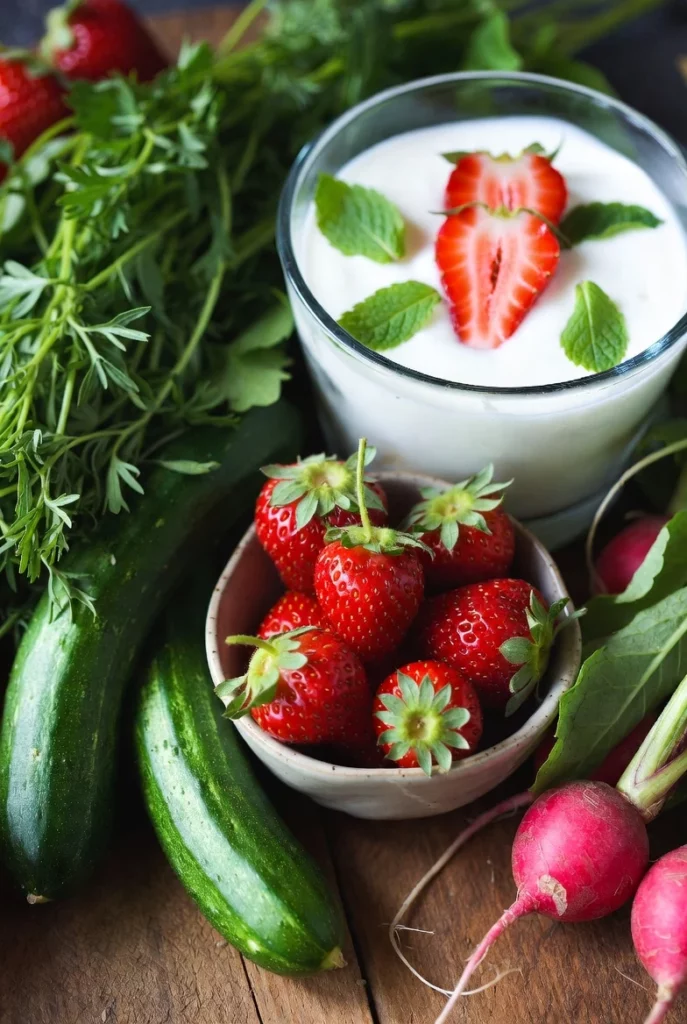
At the end of spring, the body often naturally craves lighter foods: more greens, vegetables, berries, water, and fewer heavy hot meals. This is a normal seasonal change, but there is no need to suddenly “switch to salads.” It is better to add seasonal products gradually while paying attention to protein, water, fiber, and your own body’s reactions.
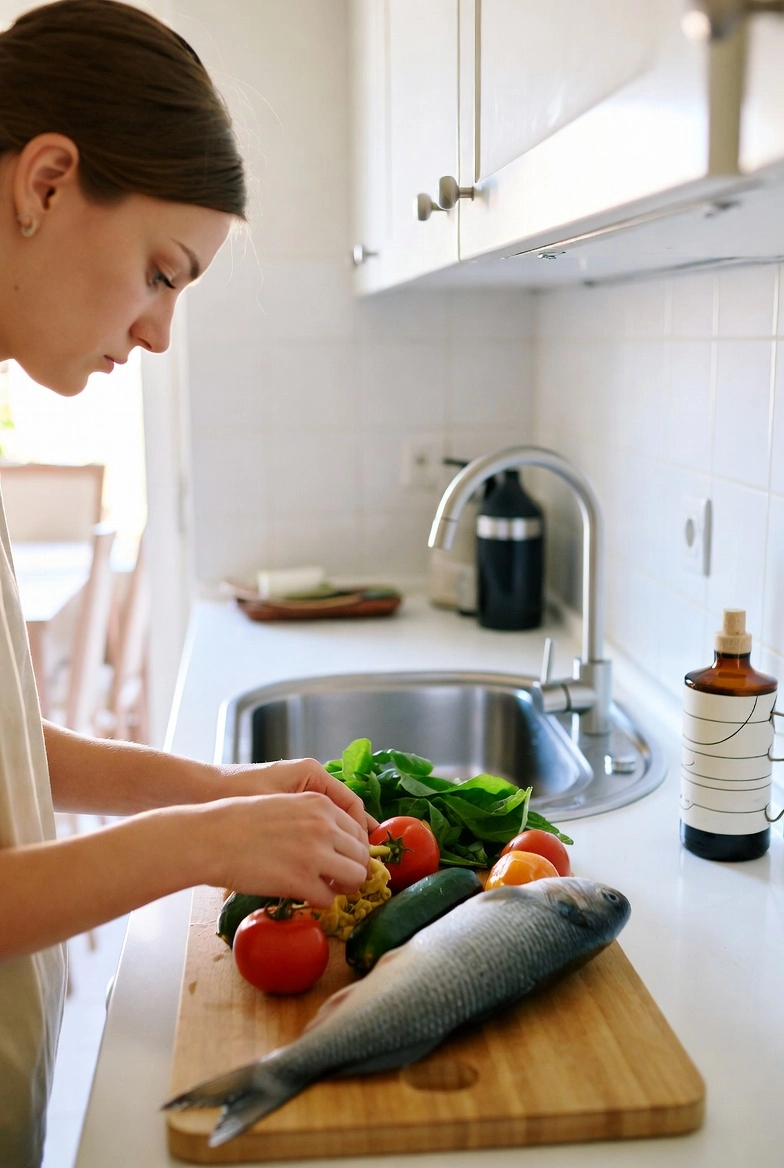
Nutrition at the End of Spring: What Should You Change?
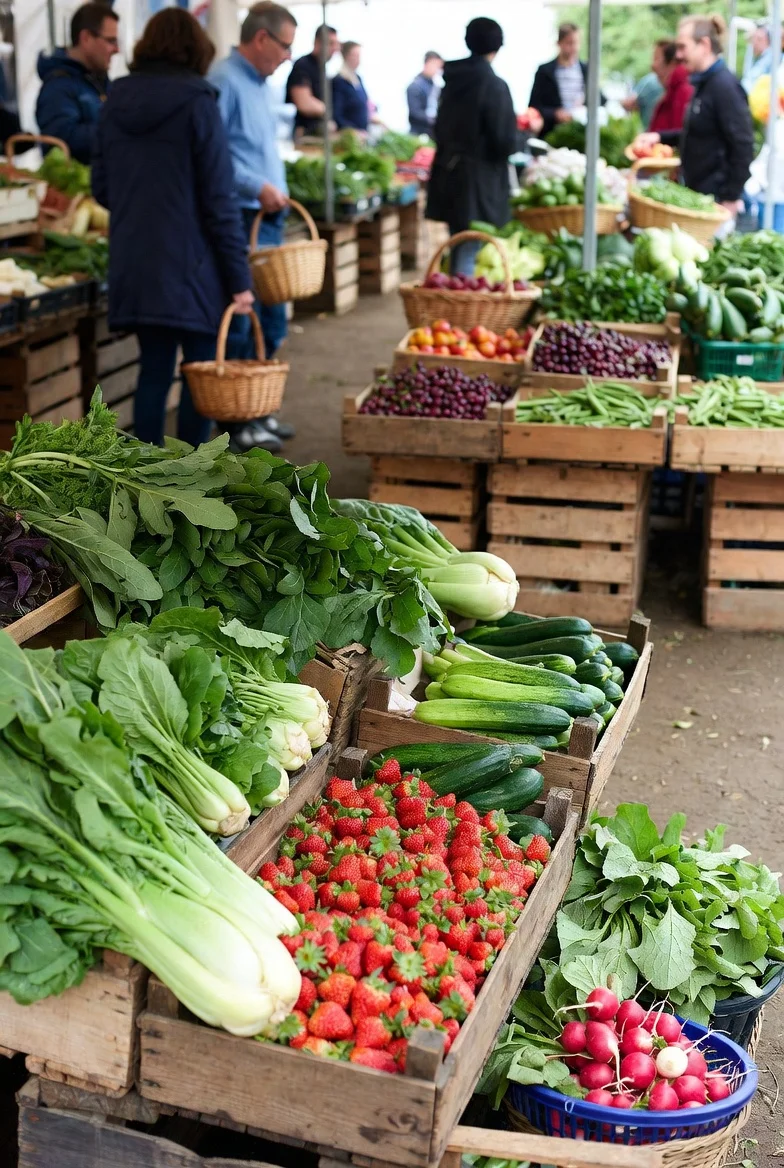
The end of spring usually brings more fresh products, warmer weather, and slightly different eating habits. People tend to crave simpler meals: salads, berries, greens, dairy products, fish, cold soups, and lighter side dishes.
This does not mean your diet has to become “perfectly green” within three days. The body likes stability. Sudden dietary changes can cause bloating, stomach discomfort, unstable appetite, and cravings for sweets.
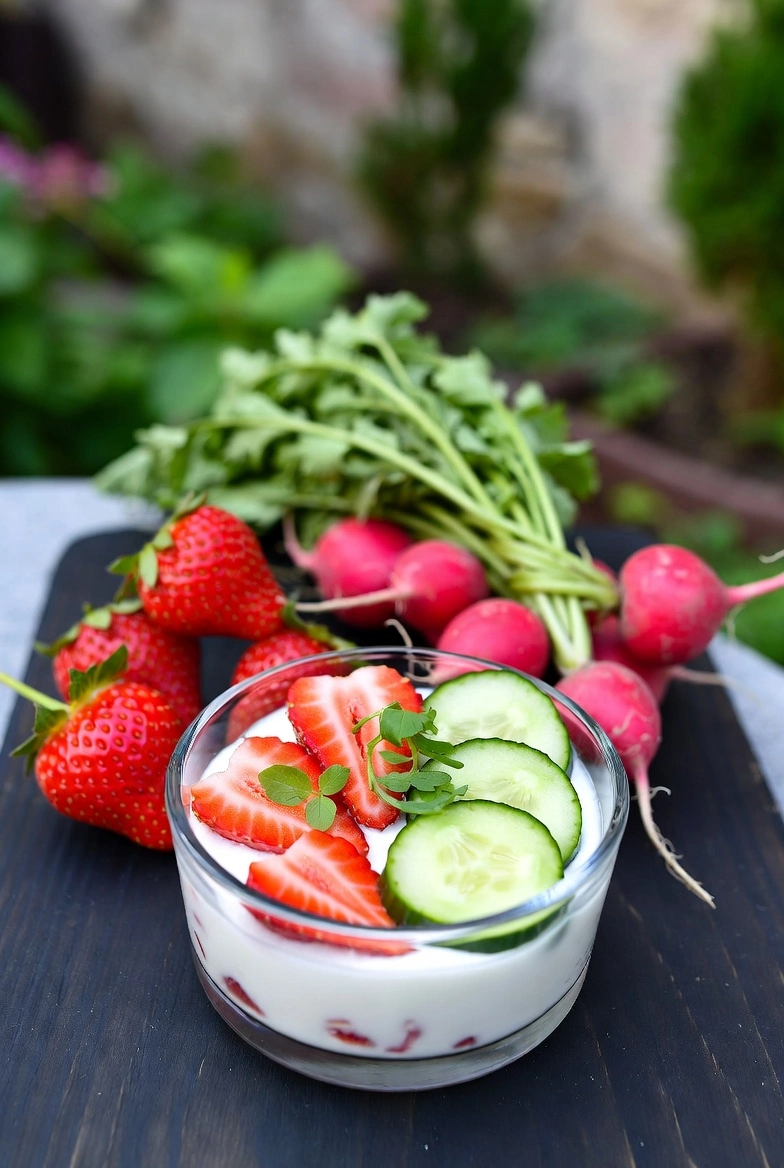
Top Seasonal Foods in May: Greens, Vegetables, and the First Berries
At the end of spring, it is worth adding more:
| Food group | What to choose | Benefits | How to eat without overdoing it |
|---|---|---|---|
| Greens | spinach, lettuce, dill, parsley, arugula | fiber, folate, potassium | add a handful to your main meal |
| Vegetables | cucumbers, radishes, young cabbage, asparagus | water, fiber, micronutrients | combine with protein and fat |
| Berries | strawberries, raspberries, blueberries | polyphenols, vitamin C | add a portion to porridge, yogurt, or cottage cheese |
| Legumes | peas, lentils, beans | protein, fiber | start with small portions |
| Dairy products | yogurt, kefir, cottage cheese | protein, calcium | choose options without large amounts of sugar |
WHO recommends eating at least 400 g of vegetables and fruits per day, excluding potatoes and other starchy root vegetables. This is a good basic target, not a survival marathon.
Changes in appetite
In warm weather, appetite often decreases. This is normal. The problem begins when a person replaces полноценные meals with coffee, fruit, and “something light.”
Light food should still be real food. For example: salad plus eggs or fish, buckwheat with vegetables and cheese, yogurt with berries and nuts.
How to Balance Nutrients and Improve Well-Being Before Summer
Well-being at the end of spring depends not only on how many greens are on your plate. Sleep, water intake, protein consumption, regular meals, physical activity, and how digestion reacts to new foods also matter.
Nutrient balance
A good seasonal plate is simple: half vegetables and fruits, one quarter protein, and one quarter whole grains or other complex carbohydrates. A similar principle is used in the Harvard Healthy Eating Plate.
| Component | Why it matters | Examples |
|---|---|---|
| Protein | satiety, muscles, stable appetite | eggs, fish, poultry, legumes, cheese |
| Complex carbohydrates | energy without sharp spikes and crashes | buckwheat, oats, bulgur, whole grain bread |
| Fats | hormones, flavor, absorption of fat-soluble vitamins | olive oil, nuts, avocado, seeds |
| Fiber | digestion, microbiota, satiety | vegetables, berries, legumes, whole grains |
| Water | thermoregulation, concentration, normal bowel function | water, unsweetened tea, partly vegetables and fruits |
EFSA indicates an adequate total water intake of about 2 L per day for women and 2.5 L for men, including water from food. Needs may increase in hot weather and during physical activity.
Meal routine
Before summer, many people start chaotically “lightening” their diet. Coffee in the morning, salad during the day, then evening hunger and a kitchen raid. Sound familiar? This is not weak willpower. It is a poorly structured day.
It is better to have 3 proper meals or 2 meals plus a nutritious snack. Ideally, every meal should include protein. It keeps you full much better than plain fruit or cookies.
A Safe Transition: What to Watch for When Changing Your Diet
Sudden dietary changes
The most common mistake: cutting out “all heavy foods” from Monday and suddenly adding a lot of raw vegetables, berries, bran, and legumes. Your gut may not respond very politely.
A better approach:
- Add 1 serving of vegetables to lunch.
- After a few days, add berries or fruit.
- Then increase greens.
- Introduce legumes in small portions.
Salt, sugar, and highly processed foods should be limited. WHO separately highlights the excess intake of salt, free sugars, and foods with unhealthy fats.
Individual reactions
Seasonal foods do not suit everyone equally. Strawberries, radishes, young cabbage, greens, legumes, and dairy products may cause different reactions: rash, itching, bloating, heartburn, stomach pain, or loose stools.
The logic is simple: introduce new foods one at a time. This makes it easier to understand what exactly did not suit you.
Questions and Answers: detoxes, salad dinners, and bloating
Do you need a “detox” in spring?
No. The liver, kidneys, intestines, and skin do their job every day. It is better to support them with proper food, water, sleep, and less alcohol and ultra-processed foods.
Can you have salad for dinner?
Yes, if it is not just a bowl of lettuce and cucumber. Add protein: eggs, tuna, chicken, cheese, chickpeas, or beans. Add some fat too: oil, seeds, or avocado.
Why can vegetables cause bloating?
Because of a sudden increase in fiber, too many raw foods, or sensitivity to certain vegetables. Start with smaller portions. Some vegetables can be eaten stewed or baked instead of raw.
How much water should you drink before summer?
A simple guideline: light-colored urine, normal thirst, and no dry mouth. In hot weather, during sports, or on long walks, you need more water. EFSA suggests around 2 L of total water intake per day for women and 2.5 L for men.
Conclusions
At the end of spring, nutrition naturally becomes lighter. It is a good time to add more vegetables, greens, berries, water, and simple homemade meals.
The key point: do not cut your diet drastically. Protein, complex carbohydrates, fats, and fiber should remain on your plate. Salad without protein is not a solution. Strawberries instead of lunch are not a genius plan either, even if it feels very spring-like.
References
- World Health Organization. Healthy diet, 2026.
- Harvard T.H. Chan School of Public Health. Healthy Eating Plate.
- EFSA. Scientific Opinion on Dietary Reference Values for water, EFSA Journal, 2010.
- NHS. The Eatwell Guide.
About the Author