
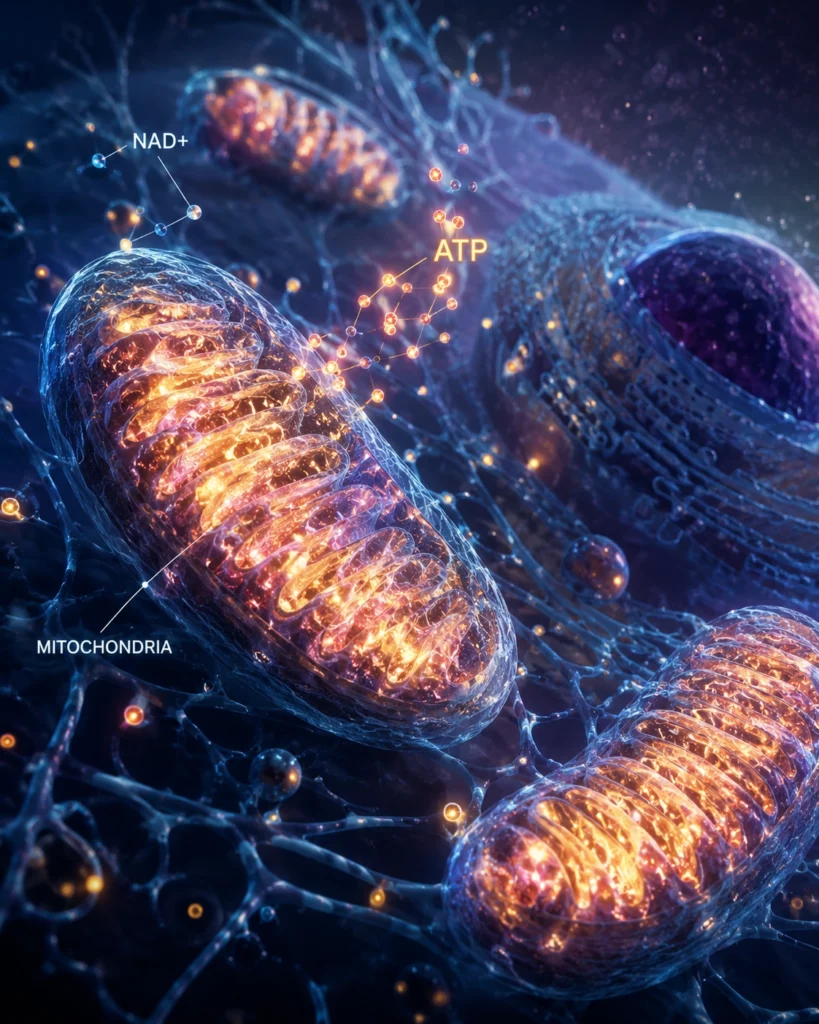
Just a few years ago, NAD+ was known primarily to biochemists and aging researchers. Today, this molecule has become one of the most discussed topics in the world of nutrition and longevity medicine. Dozens of supplements featuring nicotinamide riboside (NR) and nicotinamide mononucleotide (NMN) have appeared on the market, with manufacturers promising support for energy, healthy aging, and even cellular rejuvenation. How well do these claims align with science, what exactly is NAD+, and why are researchers giving it so much attention?
What is NAD+ and Why This Molecule Has Become So Popular
In short, NAD+ (nicotinamide adenine dinucleotide) is one of the most important molecules in the human body.
It is present in practically every cell.
Without it, the following are impossible:
- energy production;
- mitochondrial function;
- cellular metabolism;
- repair of damaged DNA;
- the function of many enzymes.
This is why interest in NAD+ extends far beyond ordinary nutrition.
Why NAD+ Levels Decline with Age
One reason for the popularity of this topic is the observation that NAD+ concentration gradually decreases with age.
Research shows that this process can begin as early as middle age.
Scientists suggest that the decline in NAD+ levels may be related to:
- age-related changes in metabolism;
- accumulation of DNA damage;
- changes in mitochondrial function;
- chronic inflammation.
This is why the idea emerged to support the levels of this molecule using special compounds.
What is Nicotinamide Riboside
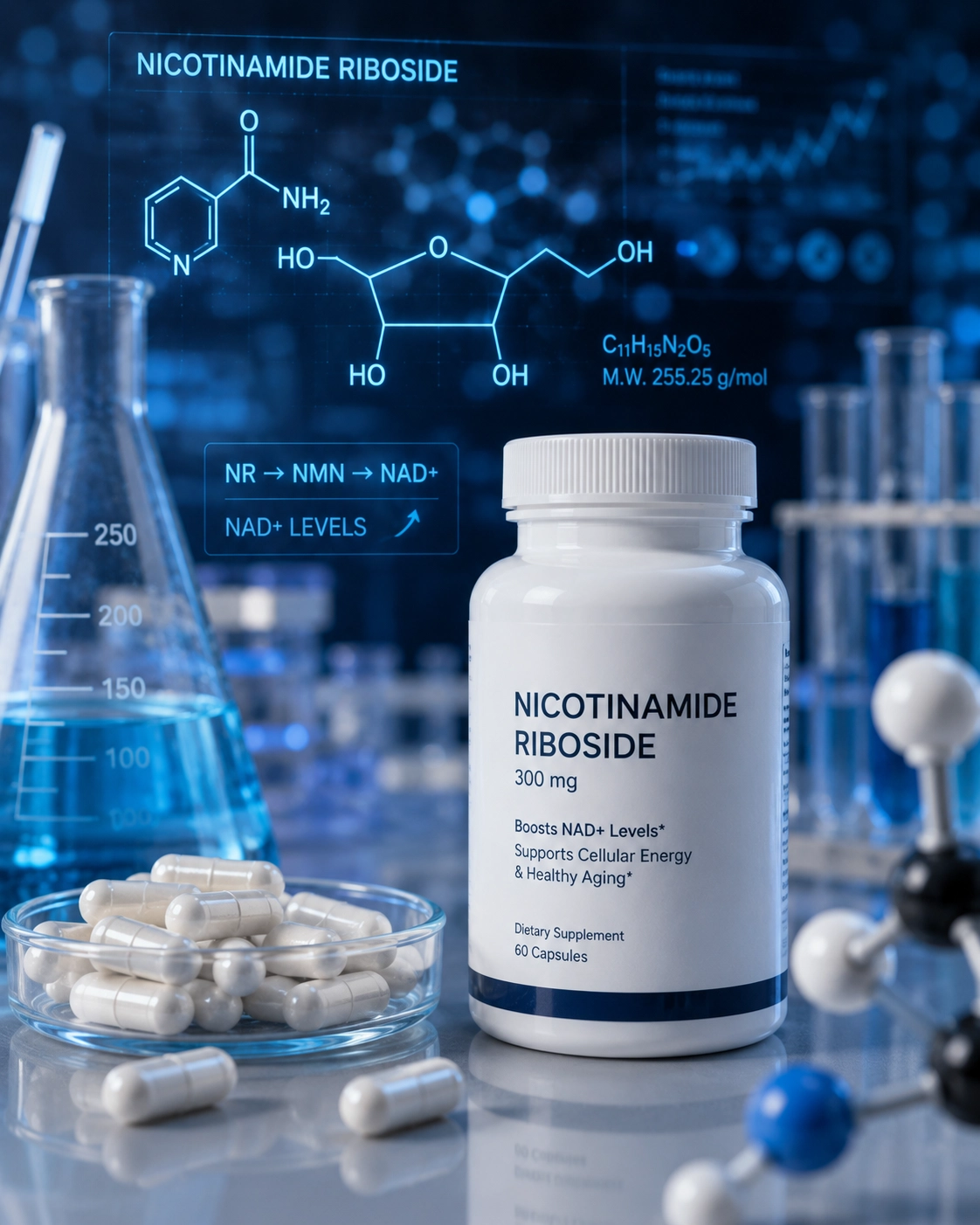
Nicotinamide Riboside, or NR, is a form of vitamin B3.
The unique feature of this substance is that the body can use it to synthesize NAD+.
This is why NR is often called an NAD+ precursor.
In recent years, it has become one of the most popular ingredients in supplements designed to support cellular energy.
Interestingly, in 2026, nicotinamide riboside chloride officially entered the updated list of permitted substances for the production of dietary supplements in Ukraine.
How the Cellular Energy System Works
When a person hears the word “energy,” they usually imagine vigor or the absence of fatigue.
For a cell, things look a bit different.
The main work is performed by mitochondria.
They are often called the power plants of the cell.
This is where the production of ATP occurs — the universal energy source for most biological processes.
NAD+ is directly involved in this process.

Why Mitochondria Became the Main Heroes of Modern Aging Science
Twenty years ago, most aging research focused on individual organs or specific diseases.
Today, attention is increasingly shifting to the cellular level.
Scientists believe that mitochondrial efficiency can influence:
- physical endurance;
- cognitive functions;
- metabolism;
- the rate of age-related changes.
That is why any substances that potentially affect cellular energetics generate such intense interest.
Table 1. Main Participants in the Cellular Energy System
| Component | Role |
|---|---|
| NAD+ | Participates in energy production |
| Mitochondria | ATP production |
| ATP | Main energy source for the cell |
| Coenzyme Q10 | Participates in energy metabolism |
| B Vitamins | Participate in metabolic reactions |
What Modern Research Shows
This is where it is crucial to separate facts from marketing.
Today, it is well-confirmed that nicotinamide riboside can increase NAD+ levels in the blood and tissues.
This has been shown in a number of clinical studies.
A much more difficult question is this:
Does increasing NAD+ automatically lead to improved health?
And here, the answer is not yet so obvious.

Can NAD+ Be Called a Longevity Molecule?
That is how it is often referred to on social media.
The problem is that science is significantly more cautious.
Currently, there is no evidence that increasing NAD+ levels can slow human aging as drastically as is sometimes described in advertisements.
There are interesting results from experimental studies.
There are many promising directions.
But there is always a great distance between a promising hypothesis and a proven clinical effect.
What Is Known About the Impact on the Brain
The brain is one of the most energy-dependent organs.
This is why researchers are actively studying the possible link between NAD+ and cognitive functions.
Research directions include:
- memory;
- concentration;
- age-related cognitive changes;
- neurodegenerative processes.
Work is ongoing, but definitive conclusions have not yet been reached.
Why NMN Is Talked About as Much as NR
Nicotinamide mononucleotide, or NMN, is another NAD+ precursor.
In fact, both NR and NMN work toward a similar biological goal — increasing NAD+ levels.
This is why disputes regularly arise between supporters of these compounds.
So far, there is no convincing evidence of the absolute superiority of one substance over the other.
Table 2. Comparison of Popular NAD+ Precursors
| Substance | Key Feature |
|---|---|
| Nicotinamide Riboside (NR) | Best studied in clinical research |
| NMN | Actively under study |
| Nicotinamide | Traditional form of Vitamin B3 |
| Niacin | Classic form of Vitamin B3 |
Most Common Myths About NAD+
If you raise NAD+ levels, aging will stop
Science does not support this.
NR and NMN have already proven the ability to extend human life
There is currently no such evidence.
It is just another vitamin
No. We are talking about a complex system of cellular metabolism.
NAD+ is only needed for older people
In reality, this molecule is essential at any age.
Questions and Answers
What is NAD+ in simple terms?
A molecule that participates in the production of cellular energy.
Why is everyone talking about it?
Because of its role in metabolism and aging research.
What is Nicotinamide Riboside?
A form of vitamin B3 and a precursor to NAD+.
Can NR be called an anti-aging remedy?
There is currently no such evidence.
Is research still ongoing?
Yes. It is one of the most active directions in modern longevity science.
Conclusions
NAD+ has not become a major topic of modern aging science by accident. This molecule participates in cellular energy production, mitochondrial function, and many fundamental body processes.
Nicotinamide riboside and other NAD+ precursors demonstrate interesting results in studies, but many questions remain between promising mechanisms and actual clinical effects.
It seems that the story of NAD+ is only beginning, and the most exciting discoveries may still lie ahead.
References
-
- Verdin E. NAD+ in Aging, Metabolism, and Neurodegeneration. Science. 2015.
-
- Rajman L, Chwalek K, Sinclair DA. Therapeutic Potential of NAD-Boosting Molecules: The In Vivo Evidence. Cell Metabolism. 2018.
-
- Martens CR et al. Chronic Nicotinamide Riboside Supplementation Is Well-Tolerated and Elevates NAD+ in Healthy Middle-Aged and Older Adults. Nature Communications. 2018.
-
- Yoshino J et al. Nicotinamide Mononucleotide Increases Muscle Insulin Sensitivity in Prediabetic Women. Science. 2021.
-
- Covarrubias AJ et al. NAD+ Metabolism and Its Roles in Cellular Processes During Ageing. Nature Reviews Molecular Cell Biology. 2021.
-
- Order of the Ministry of Health of Ukraine No. 203 dated 02/19/2026 (Official Document Registry).
About the Author