
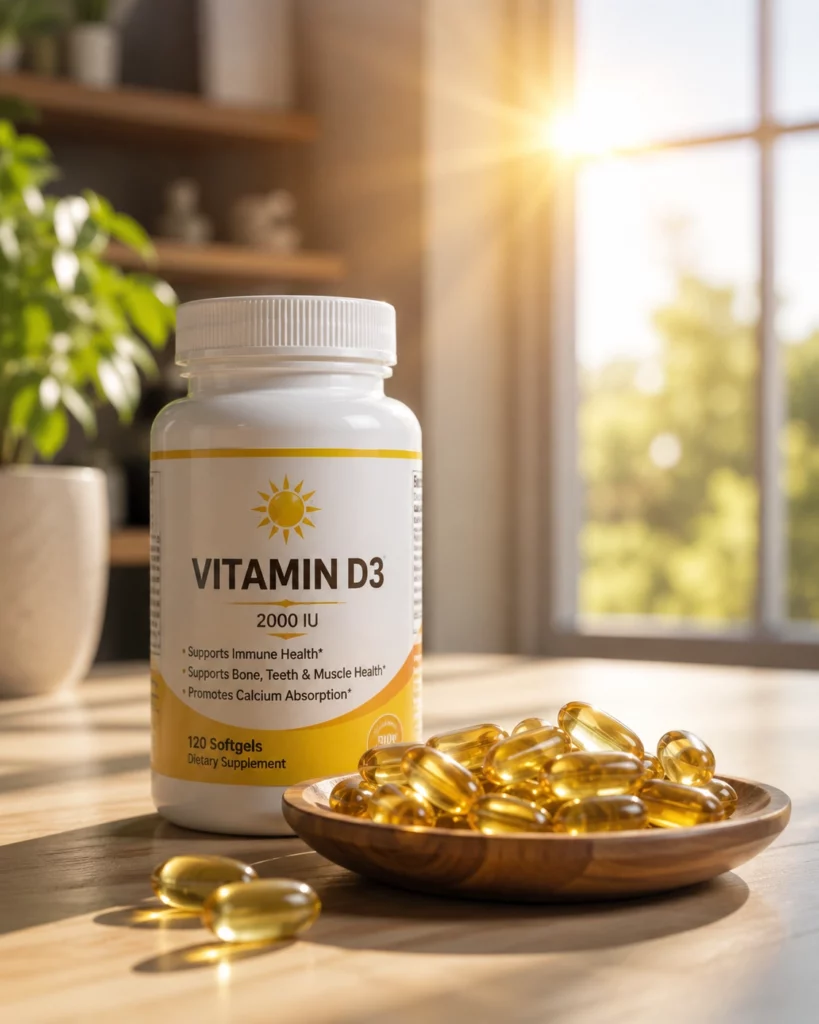
In recent years, Vitamin D has been discussed almost as frequently as magnesium. It is associated with immunity, mood, bone strength, infection prevention, and even longevity. Some of these claims are confirmed by science, some are still under study, and some popular myths have long outpaced real evidence. Let’s explore what role Vitamin D plays in the body, what is known about it today, and why interest in it remains high even after thousands of scientific publications.

Why Vitamin D is Considered Special
Most vitamins are obtained primarily from food.
With Vitamin D, the situation is different.
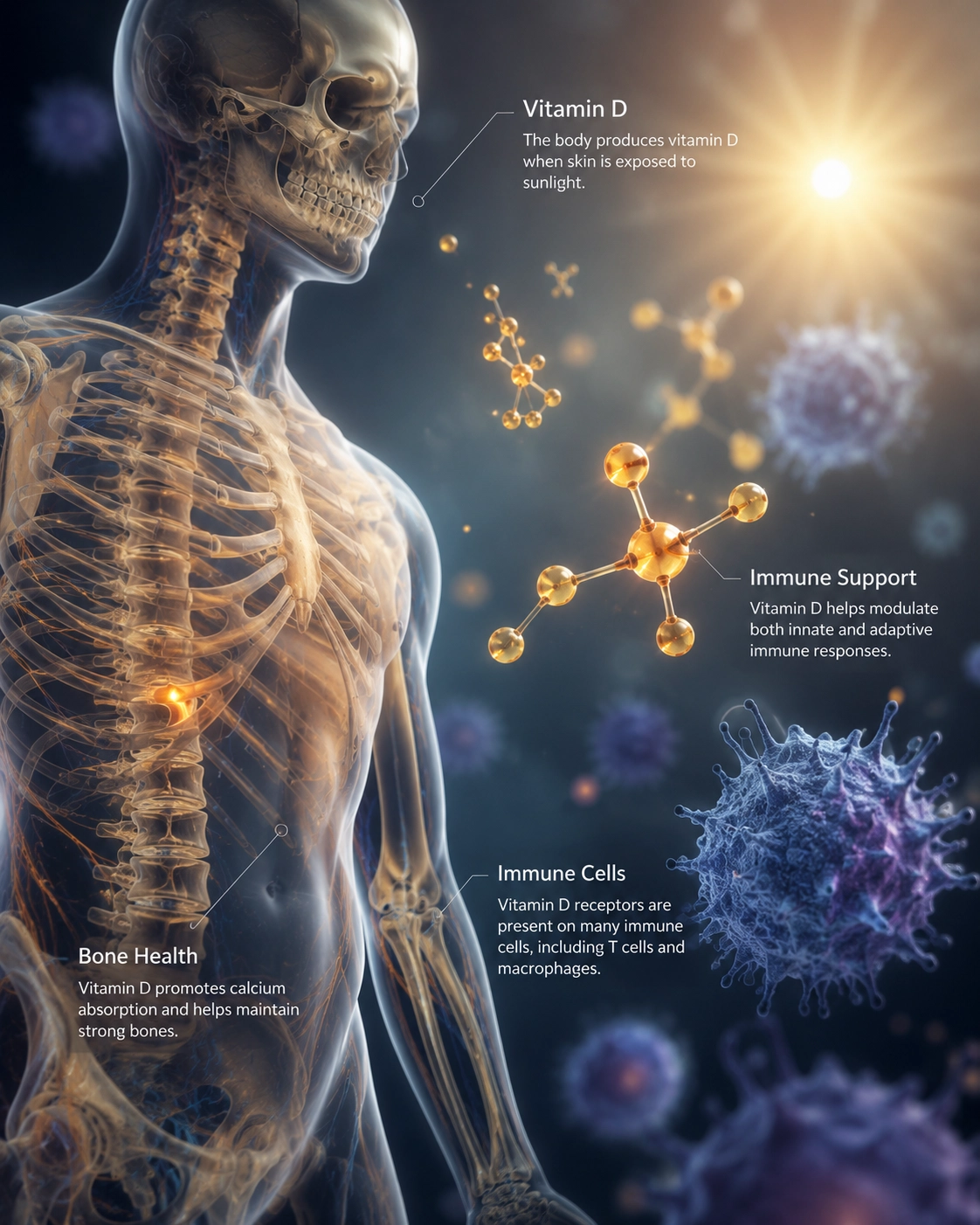
The majority of it is formed in the skin under the influence of ultraviolet radiation from the sun.
This is why it is often called the “sunshine vitamin.”
Interestingly, in its action, it resembles a hormone more than a classic vitamin.
Vitamin D receptors are found in many tissues of the body:
- bones;
- muscles;
- intestines;
- immune cells;
- nervous system.
This explains the immense interest scientists have in its possible effects.

What the Body Needs Vitamin D For
The best-studied function is the regulation of calcium and phosphorus metabolism.
Without a sufficient amount of Vitamin D, it is harder for the body to maintain bone health.
That is why it is particularly important during periods of active growth and in old age.
But its role is not limited to this.
Research shows that Vitamin D is involved in the functioning of:
- the immune system;
- muscle tissue;
- the nervous system;
- cell division processes.
Why It Was Discussed So Much After the Pandemic
The COVID-19 period saw a massive explosion of interest in Vitamin D.
Hundreds of studies appeared, evaluating the possible link between Vitamin D levels and the course of infections.
As a result, a more restrained view was formed.
Today, science confirms the importance of normal Vitamin D levels for the functioning of the immune system.
At the same time, claims that it can protect against any viral infection have not received convincing confirmation.
How the Body Obtains Vitamin D
There are three main sources.
Table 1. Sources of Vitamin D
| Source | Features |
|---|---|
| Sunlight | Primary pathway of formation |
| Food products | Fatty fish, eggs, liver |
| Dietary supplements | Used as an additional source |
The challenge is that modern humans spend a lot of time indoors.
This is especially true for residents of large cities.
Which Foods Contain the Most Vitamin D
The list is quite short.
The leaders remain:
- salmon;
- herring;
- mackerel;
- sardines;
- fish oil;
- eggs;
- cod liver.
It is not easy to obtain large quantities of Vitamin D from food alone.
That is why the question of additional intake is regularly discussed in many countries.

Is it True That Vitamin D Deficiency is Very Common?
Yes.
According to various studies, insufficient Vitamin D levels are found in many regions of the world.
The reasons are clear:
- insufficient exposure to the sun;
- climate characteristics;
- use of sunscreens;
- age-related changes;
- certain diseases.
Crucially, deficiency cannot be determined “by eye.”
What Symptoms are Often Linked to Low Vitamin D Levels
Many errors arise here.
Dozens of lists with hundreds of symptoms can be found on the internet.
In reality, the situation is more complex.
Low Vitamin D levels are sometimes associated with:
- increased fatigue;
- muscle weakness;
- bone discomfort;
- reduced physical endurance.
The problem is that these symptoms are non-specific.
They can also be present in many other conditions.
Vitamin D and Immunity
This direction remains one of the most studied today.
Immune cells have Vitamin D receptors.
It is believed to participate in the regulation of the immune response.
That is why permitted claims regarding the benefits of Vitamin D are often linked to the normal functioning of the immune system. In Ukraine, such claims are regulated by specific requirements for food products and dietary supplements.
Vitamin D and Mood: Is There a Link?
One of the most popular topics in recent years.
Researchers have long noted that low Vitamin D levels are more common in people with various mood disorders.
The issue is that correlation does not imply a causal mechanism.
As of today, the question continues to be actively studied.
There is no definitive answer yet.
Can One Get Too Much Vitamin D?
Yes.
And this is one of the least discussed aspects.
Sometimes people take high doses for months, believing that more means better.
In reality, excessive Vitamin D can create problems due to disrupted calcium metabolism.
This is why modern recommendations emphasize a reasonable approach to dosage.
What Has Changed in the World of Vitamin D Supplements
In recent years, manufacturers have been actively working on new forms.
In 2026, calcidiol monohydrate was included in the updated Ukrainian requirements for dietary supplements as a cutting-edge nutritional ingredient. This is an example of how the market is gradually adapting to modern scientific data and European approaches.
When the question arises—Vitamin D3 or calcidiol: which is better—one should look at the speed of achieving results. Calcidiol (25-hydroxyvitamin D) is an already metabolized form that bypasses the processing stage in the liver. This makes it potentially more effective for people with digestive disorders, while classic D3 remains the “gold standard” for general prevention.
Table 2. Popular forms of Vitamin D
| Form | Feature |
|---|---|
| Vitamin D3 (cholecalciferol) | Most common form |
| Vitamin D2 (ergocalciferol) | Used less frequently |
| Calcidiol | Modern form being actively studied |
Most Common Myths About Vitamin D
Table 3. Most common myths and real facts about Vitamin D
| Myth | Reality (Fact) |
|---|---|
| If you take Vitamin D, you will stop getting sick | This is an exaggeration. Science confirms the importance of the vitamin for immunity, but it is not a guaranteed protection against all infections. |
| The higher the dose of Vitamin D, the better for health | No. Excessive Vitamin D can be toxic and lead to disrupted calcium metabolism and kidney problems. |
| A sun vitamin deficiency cannot happen in summer | It can. The use of sunscreens, office work, and covering clothing prevent its natural synthesis. |
| Vitamin D is only needed for children’s bone growth | No. It is critically important at any age for immunity, the nervous system, and the prevention of many diseases in adults. |
Questions and Answers
Why is Vitamin D called the sunshine vitamin?
Because the majority of it is synthesized in the skin under the influence of sunlight.
Which foods contain the most Vitamin D?
Fatty seawater fish, fish oil, eggs, and liver.
Does Vitamin D affect immunity?
Yes, it participates in the functioning of the immune system.
Can one get an excess of Vitamin D?
Yes, especially with prolonged consumption of high doses.
Which form is used most often?
Cholecalciferol (Vitamin D3) remains the most common.
Conclusions
Vitamin D remains one of the most studied nutrients today. Its role in bone health has been well known for many years. New research continues to examine its link to the immune system, muscle function, and other processes in the body.
Despite its immense popularity, many myths still exist around Vitamin D. That is why today it is important to rely not on sensational headlines but on the results of quality scientific research.
Attention! This material is for informational purposes only and is not a call for self-treatment. Vitamin D dosage should be prescribed exclusively by a doctor based on a laboratory blood test (25-OH). An excess of Vitamin D can be just as dangerous as its deficiency.
References
- Holick MF. Vitamin D Deficiency. New England Journal of Medicine. 2007.
- Bouillon R et al. Vitamin D and Human Health. Lancet Diabetes & Endocrinology. 2019.
- EFSA Panel on Nutrition. Dietary Reference Values for Vitamin D. EFSA Journal.
- National Institutes of Health (NIH). Vitamin D Fact Sheet for Health Professionals.
- Pilz S et al. Vitamin D and Immune Function. Nutrients. 2020.
- Order of the Ministry of Health of Ukraine No. 203 dated Feb 19, 2026.
- Order of the Ministry of Health of Ukraine No. 1145 dated May 15, 2020.
About the Author