In this comprehensive guide, we break down why ferritin levels drop, how to correctly interpret laboratory tests according to modern clinical guidelines, which supplement forms offer the highest absorption, and why daily high-dose iron intake is now considered an outdated approach.
What is Ferritin and How Does It Differ from Hemoglobin?
To understand iron metabolism, imagine the body’s financial system:
-
Serum Iron — pocket cash that the body spends right now.
-
Hemoglobin — essential monthly expenses (supplying tissues and organs with oxygen).
-
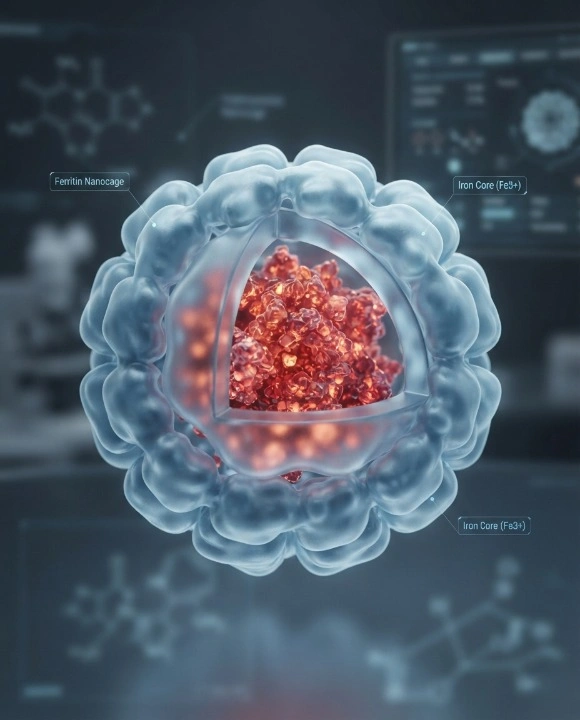
Ferritin — a non-withdrawable reserve deposit (iron stored in the liver, spleen, and bone marrow).
When the body experiences an iron deficit, it first drains the bank deposit (ferritin drops). Only after these reserves are fully exhausted does hemoglobin begin to decrease, leading to iron deficiency anemia. If ferritin is low while hemoglobin remains within normal limits, this condition is known as latent iron deficiency, which already warrants medical intervention.
Why Iron Deficiency Occurs: Main Causes
-
Chronic or acute blood loss:
-
Heavy menstrual bleeding in women (loss of more than 80 ml of blood per cycle).
-
Occult gastrointestinal bleeding (erosions, ulcers, polyps, hemorrhoids).
-
Frequent blood donation without adequate nutritional replenishment.
-
-
Impaired gastrointestinal absorption (malabsorption):
-
Low gastric acidity (hypochlorhydria) or prolonged use of proton pump inhibitors (omeprazole, etc.).
-
Helicobacter pylori infection.
-
Celiac disease, inflammatory bowel disease (IBD — Crohn’s disease, ulcerative colitis).
-
Post-bariatric surgery or gastric/bowel resection.
-
-
Increased physiological demand:
-
Pregnancy (iron requirements double) and lactation.
-
Adolescent growth spurts.
-
Intensive aerobic training (endurance athletes).
-
-
Inadequate dietary intake:
-
Unbalanced vegan or vegetarian diets lacking proper lab monitoring and supplementation.
-
Severe calorie-restricted diets.
-
Important Warning Regarding Inflammation:
Chronic inflammatory conditions do NOT lower ferritin levels in lab results; rather, they falsely elevate them. Ferritin is an acute-phase reactant protein. In the presence of infections, autoimmune disorders, or systemic inflammation, ferritin may appear normal or elevated even when internal iron stores are severely depleted.
Symptoms of Low Ferritin
-
Persistent fatigue and waking up exhausted even after a full night’s sleep.
-
Diffuse hair shedding (telogen effluvium), brittle and peeling nails.
-
Shortness of breath or rapid heartbeat (tachycardia) during mild exertion (e.g., climbing stairs).
-
Restless legs syndrome before bedtime (uncomfortable sensations and an urge to move the legs).
-
Cold intolerance, chronically cold hands and feet.
-
Brain fog, impaired concentration, poor memory, and increased anxiety.
-
Pica cravings (eating chalk, ice, uncooked grains) or altered olfactory preferences (attraction to the smell of gasoline, paint, or wet concrete).
Diagnostics: Essential Tests and How to Read Them
To obtain an accurate clinical assessment, a complete blood count alone is insufficient. A comprehensive iron status panel is required:
Dietary Strategies: Heme vs. Non-Heme Iron
Dietary iron occurs in two distinct forms:
-
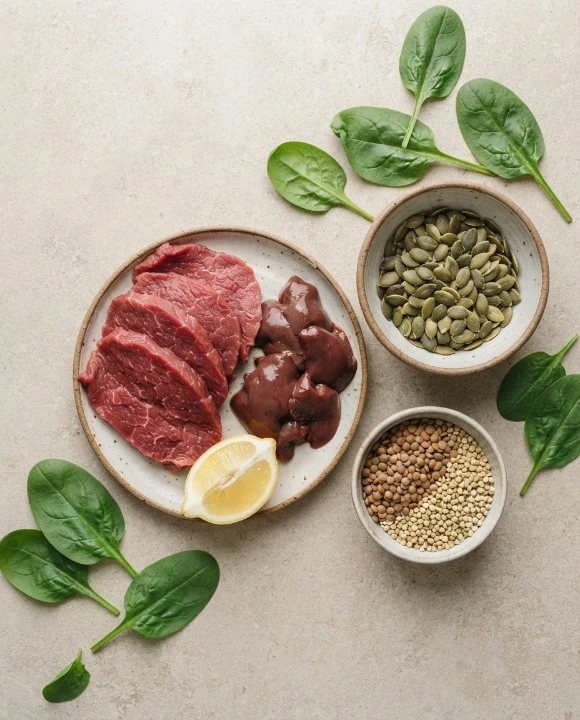
Heme Iron (animal origin): found in organ meats (liver), beef, tongue, duck, turkey, and seafood. It is absorbed at a rate of 15–35% and is minimally affected by gastric acidity.
-
Non-Heme Iron (plant origin): found in pumpkin seeds, buckwheat, lentils, beans, spinach, and tofu. It is absorbed at only 2–10% and heavily depends on optimal stomach acid and supportive cofactors.
Absorption Enhancers:
-
Vitamin C (citrus fruits, sauerkraut, bell peppers, rosehips).
-
Organic acids (apple cider vinegar, lemon juice).
-
Fermented foods.
Absorption Inhibitors (avoid consuming simultaneously with iron supplements or rich meals):
-
Coffee, black and green tea (tannins and polyphenols bind iron; allow an interval of at least 1.5–2 hours).
-
Dairy products and calcium supplements (calcium directly competes for mucosal uptake pathways).
-
Antacids and proton pump inhibitors (reduce essential gastric acidity).
-
Excessive dietary phytates (unsoaked bran, raw legumes).
Iron Supplements: Choosing the Right Form and Dosage
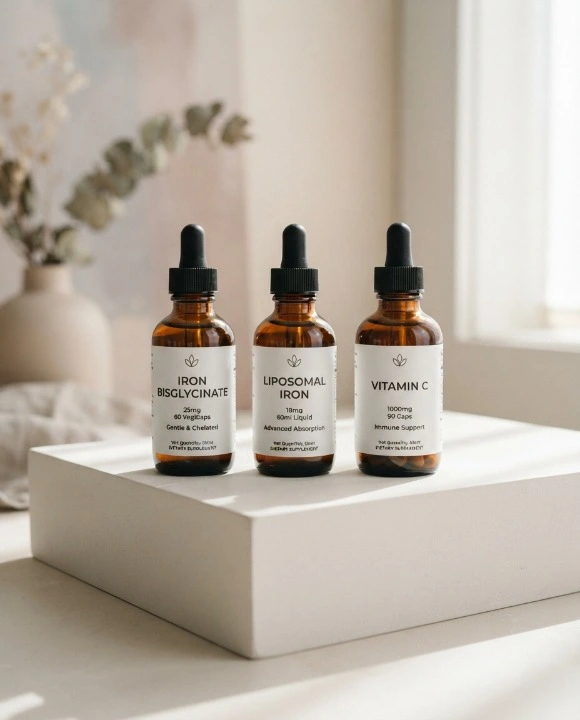
Modern pharmacotherapy offers several classes of oral iron:
-
Iron Chelate (Ferrous Bisglycinate):
-
Iron molecule bound to two glycine amino acids.
-
Pros: Superior bioavailability, minimal GI irritation (rarely causes nausea, cramping, or constipation).
-
-
Sucrosomial / Liposomal Iron:
-
Iron encapsulated in a protective phospholipid bilayer.
-
Pros: Passes through the stomach without mucosal irritation, does not darken stools, and is absorbed directly in the intestines. Excellent choice for patients with gastritis or peptic ulcers.
-
-
Traditional Iron Salts (Sulfate, Fumarate, Gluconate):
-
Pros: Highly accessible, supported by extensive clinical trials.
-
Cons: High incidence of adverse GI events (constipation, metallic taste, heartburn, abdominal pain).
-
-
Polymaltose Complex (Ferric Iron):
-
Gentle action, very high safety profile, minimal overdose risk; however, it elevates ferritin levels more gradually than chelates.
-
Treatment Regimen: Why Alternate-Day Dosing Is Superior
Recent landmark trials (Stoffel et al., The Lancet Haematology) demonstrated that ingestion of oral iron triggers the liver to release the regulatory hormone hepcidin. Hepcidin effectively shuts down ferroportin iron-transport channels for the following 24–48 hours.
-
Daily intake: The next day’s dose is poorly absorbed, remains unabsorbed in the intestinal lumen, oxidizes, and induces dysbiosis and severe constipation.
-
Alternate-day intake (or 3 times per week): Allows hepcidin levels to return to baseline, resulting in 30–40% higher fractional iron absorption and halving the risk of GI side effects.

Recommended Therapeutic Dosages (Elemental Iron):
-
For latent iron deficiency (ferritin < 30 ng/mL, normal Hb): 30–60 mg elemental iron every other day.
-
For iron deficiency anemia (low Hb): 60–100 mg elemental iron every other day (or daily under close medical supervision in severe cases).
When Oral Iron Fails: Indications for Intravenous (IV) Iron
Intravenous iron therapies (ferric carboxymaltose, iron isomaltoside, etc.) must be prescribed strictly by a physician under precise clinical criteria:
-
Severe intolerance or complete therapeutic failure of oral iron after 2–3 months of compliant use.
-
Active ulcerative colitis or Crohn’s disease (oral iron exacerbates mucosal inflammation).
-
Short bowel syndrome or post-bariatric malabsorptive states.
-
2nd or 3rd trimester of pregnancy with severe anemia (when rapid hemoglobin replenishment is mandatory before delivery).
-
Chronic heart failure (CHF) and chronic kidney disease (CKD) with transferrin saturation
-
Urgent pre-operative optimization prior to major elective surgery in anemic patients.
How Long Does It Take to Replenish Iron Depots?
-
4–6 weeks: Initial symptomatic improvement, reduced fatigue, and recovery of hemoglobin levels.
-
3–6 months: Full replenishment of deep ferritin storage pools.
Follow-up testing of ferritin should be scheduled no sooner than 14–28 days after the complete cessation of iron supplements. Testing blood during or immediately after treatment will result in a falsely elevated reading caused by residual circulating supplemental iron in the bloodstream.
TOP 6 Mistakes in Iron Deficiency Management
-
Taking iron pills with coffee, tea, or milk (reduces bioavailability virtually to zero).
-
Discontinuing therapy as soon as hemoglobin normalizes (the ferritin depot remains depleted, leading to symptom relapse within months).
-
Failing to identify and address the root cause (leaving heavy menses, hemorrhoids, or H. pylori gastritis untreated).
-
Taking iron “just in case” without preliminary blood tests (excess iron is a pro-oxidant, causing organ toxicity, tissue damage, and secondary hemochromatosis).
-
Relying on ferritin without measuring CRP (overlooking true iron deficiency masked by acute or chronic inflammation).
-
Leaving iron tablets within reach of children (accidental iron overdose is among the most severe and life-threatening pediatric toxicological emergencies).
Conclusion
Restoring optimal ferritin levels is a marathon, not a sprint. The key to sustainable recovery lies in choosing a modern formulation (bisglycinate or liposomal iron), adopting an alternate-day dosing schedule to regulate hepcidin spikes, and systematically eliminating the underlying root causes of iron loss or malabsorption.
📚 References and Clinical Guidelines
- World Health Organization (WHO). WHO guideline on use of ferritin concentrations to assess iron status in individuals and populations. Geneva: World Health Organization; 2020. — Official WHO Guideline [PMID: 32338827]
- Stoffel N. U., Cercamondi C. I., Brittenham G., et al. Iron absorption from oral iron supplements given on consecutive versus alternate days and as single morning doses versus twice-daily split dosing in iron-depleted women: two open-label, randomised controlled trials. The Lancet Haematology, 2017; 4(11): e524–e533. — DOI: 10.1016/S2352-3026(17)30182-5 [PubMed]
- Camaschella C. Iron-Deficiency Anemia. New England Journal of Medicine (NEJM), 2015; 372(19): 1832–1843. — DOI: 10.1056/NEJMra1401038 [PubMed]
- Snook J., Bhala N., Beales I. L. P., et al. British Society of Gastroenterology guidelines for the management of iron deficiency anaemia in adults. Gut, 2021; 70(11): 2030–2051. — DOI: 10.1136/gutjnl-2021-325210 [PubMed Open Access]
- Tolkien Z., Stecher L., Mander A. P., et al. Ferrous Sulfate Supplementation Causes Significant Gastrointestinal Side-Effects in Adults: A Systematic Review and Meta-Analysis. PLoS ONE, 2015; 10(2): e0117383. — DOI: 10.1371/journal.pone.0117383 [PLoS ONE]
- Li N., Zhao G., Wu W., et al. The Efficacy and Safety of Vitamin C for Iron Supplementation in Adult Patients With Iron Deficiency Anemia: A Randomized Clinical Trial. JAMA Network Open, 2020; 3(11): e2023644. — DOI: 10.1001/jamanetworkopen.2020.23644 [JAMA Open Access]
About the Author