
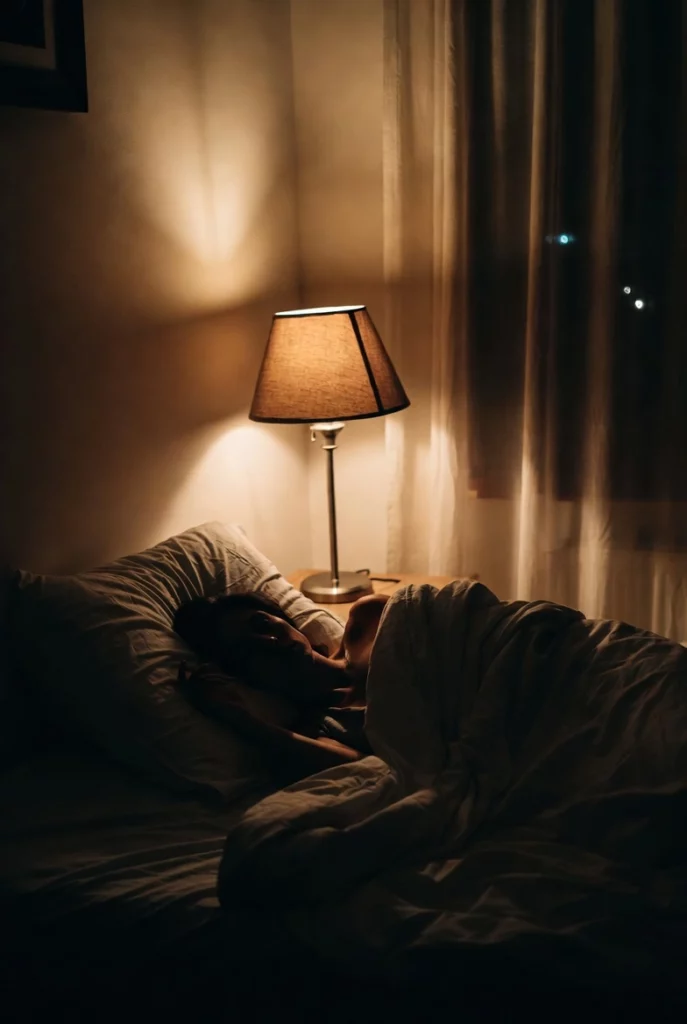
In spring, sleep often “drifts”: many people find it hard to fall asleep, waking up becomes more difficult, or, on the contrary, they wake up too early. The reason is the lengthening of daylight and changes in circadian rhythms. The body readjusts, but it doesn’t happen instantly. A mild jet lag appears without any flight. To avoid feeling like a zombie, it is important to synchronize light, schedule, and activity. Simple measures work here: a stable routine, proper lighting, and moderate movement.
Spring is the moment when the day suddenly becomes longer, and the brain goes: “stop, what’s happening?”
And the readjustment begins.
Why it’s hard to fall asleep in spring
In spring, many notice difficulty falling asleep, shallow sleep, or early awakenings. This is related to the change in daylight: the body receives more light, and internal biological rhythms do not have time to adjust.
Light affects the production of melatonin — a hormone responsible for sleep. You can read more about the impact of lighting on circadian rhythms in the article “Night light and circadian rhythm disruption“. As daylight hours increase, the “time to sleep” signal may shift. As a result, it may feel like the sleep schedule is disrupted, even if the lifestyle has not changed.
In most cases, this is a normal adaptation of the body to seasonal changes, but it can be accompanied by temporary discomfort.
Typical manifestations of seasonal sleep changes:
- difficulty falling asleep
- early awakenings
- shallow or fragmented sleep
- daytime sleepiness or decreased energy
These changes are often related to the body adapting to the lengthening of daylight.
Impact of daylight changes on the body
Circadian rhythms and hormones
The body operates according to circadian rhythms. The main players here are:
- melatonin (sleep)
- cortisol (activity)
Light has a direct effect:
- more light → less melatonin
- earlier light → earlier “wake-up signal”
The problem is that the social schedule doesn’t always keep up with these changes.
Sleep disruption symptoms
Typical signals:
- difficulty falling asleep
- shallow sleep
- early awakenings
- daytime sleepiness
This is not always insomnia as a diagnosis. Often, it is simply adaptation — one of the reasons why it is hard to fall asleep in spring even without changes in lifestyle.
Table 1. How daylight affects sleep
| Factor | What happens | Result |
|---|---|---|
| Early dawn | Reduced melatonin | Early awakening |
| Long day | Rhythm shift | Later sleep onset |
| Bright evening light | “Brain trick” | Poor sleep |
| Irregular schedule | Desynchronization | Fatigue |
How to safely normalize sleep
No complex schemes are needed here. What is required is consistency.
Sleep schedule and lighting
What really works:
- go to bed and wake up at the same time
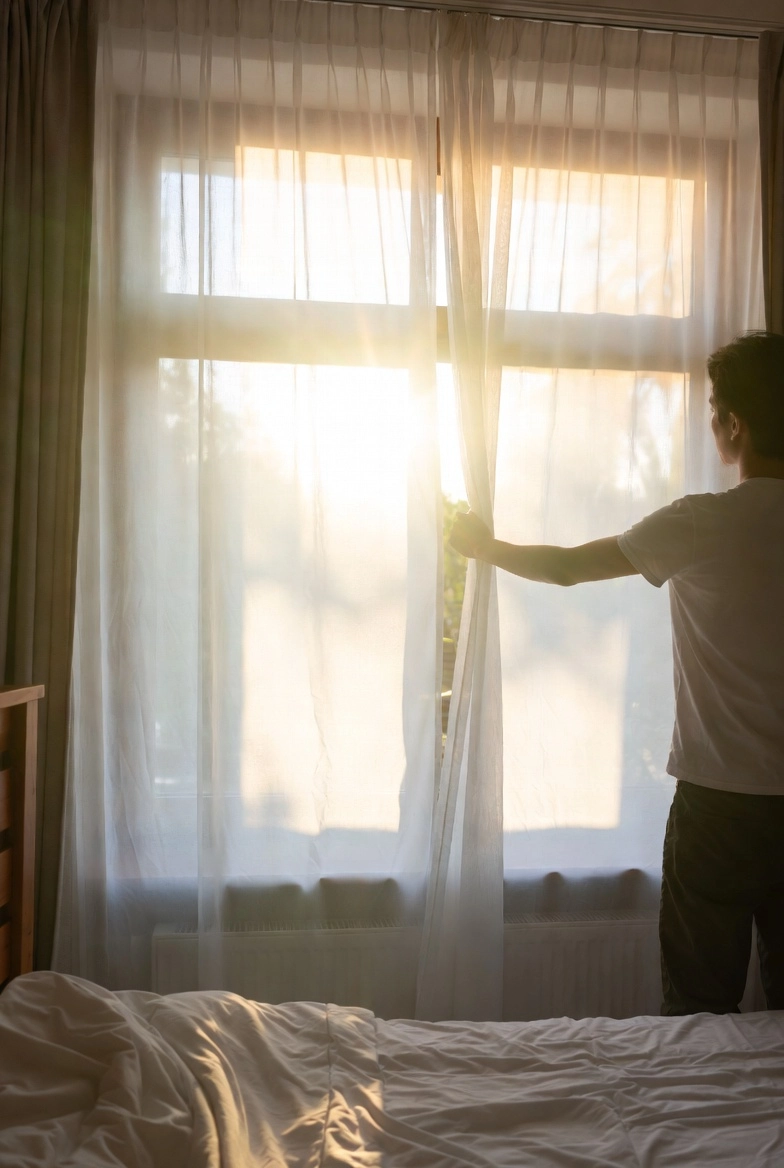
- get morning light (open the curtains, go outside)
- reduce bright lighting in the evening
And the key point:
screens in the evening = reduced quality of sleep.
Light physical activity and relaxation
Movement helps “reset” your rhythms.
But:
- no intense exercise before bedtime
- prefer light activity or stretching
And it’s also important to give your brain the signal that “the day is over.”
Tips for maintaining energy during the day
Because sleep is not only at night. It’s also about the day.
Short walks outdoors
Daylight is a signal for the brain:
“it’s daytime, be active.”
And this genuinely improves sleep in the evening.
Moderate daytime activity
The worst thing you can do is sit all day and wait for your sleep to “fix itself.”
Better:
- move around
- avoid long daytime naps
- limit coffee intake after lunch
Table 2. How to stabilize sleep in spring
| Action | Effect |
|---|---|
| Morning light | Rhythm synchronization |
| Stable schedule | Quality sleep |
| Less evening light | Better falling asleep |
| Daytime movement | More energy |
| Limit gadgets | Deeper sleep |
What not to do
- go to bed significantly later than usual
- compensate for lost sleep with long daytime naps
- use gadgets in the dark before sleep
- consume caffeine in the afternoon
These habits can worsen sleep disturbances and make adaptation to longer daylight more difficult.
Questions and Answers
Why is it harder to fall asleep in spring?
Due to changes in daylight and circadian rhythms. Increased light affects melatonin production, so bedtime may shift. This is a normal physiological response.
Should I take melatonin?
In some cases, melatonin can be used, but not “just in case.” It’s important to assess your sleep schedule and lighting first, and consult a doctor if needed.
Why do I wake up earlier than necessary?
Morning light suppresses melatonin production and signals the body that the day has started. This can cause waking earlier than usual.
How long does adaptation take?
Usually, adaptation lasts 1–2 weeks. In most cases, this is enough for the body to adjust to changes in daylight.
Is this insomnia?
Not necessarily. Spring sleep changes are often just the body adapting to longer daylight and are not medically defined insomnia.
Insomnia is usually diagnosed if difficulty falling asleep or frequent awakenings persist for a long time, occur regularly, and affect daytime well-being.
If sleep disturbances persist for more than a few weeks or worsen, it is recommended to consult a doctor.

Conclusions
Spring sleep is not a problem but a process of adjustment.
In short:
daylight during the day, darkness in the evening, stable schedule.
In most cases, the body gradually adapts to changes in daylight if a stable routine and sleep hygiene are maintained.
References
- National Sleep Foundation. Circadian rhythms and sleep.
- Centers for Disease Control and Prevention. Sleep hygiene guidelines.
- World Health Organization. Sleep and health.
- Czeisler CA, et al. Sleep and circadian rhythms. New England Journal of Medicine.
- Walker M. Why We Sleep. 2017.
- Arendt J. Melatonin and human rhythms. Chronobiology International.
About the Author