
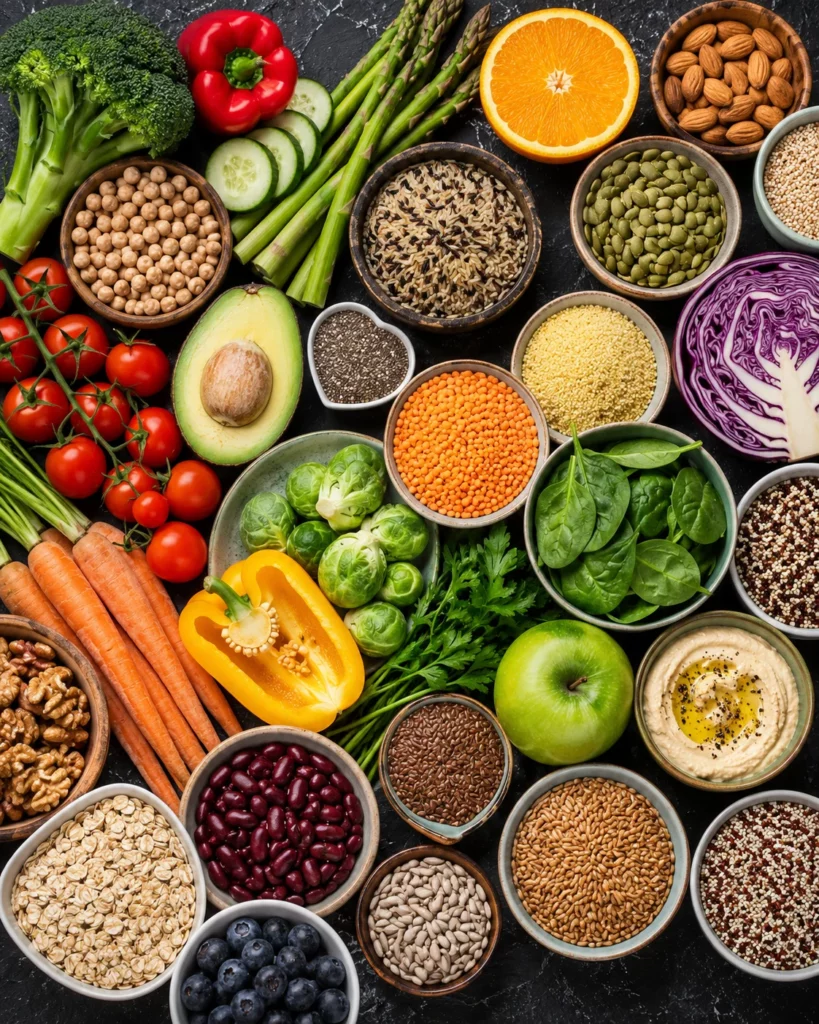
When it comes to gut health, most people immediately think of probiotics. For years, advertising has convinced us that beneficial bacteria are the main secret to good digestion. However, in recent years, scientists have increasingly focused on another dietary component — fiber. It is fiber that serves as food for gut bacteria and largely determines the composition of the microbiome. Does this mean probiotics are overrated? And what is actually more important for a healthy gut?
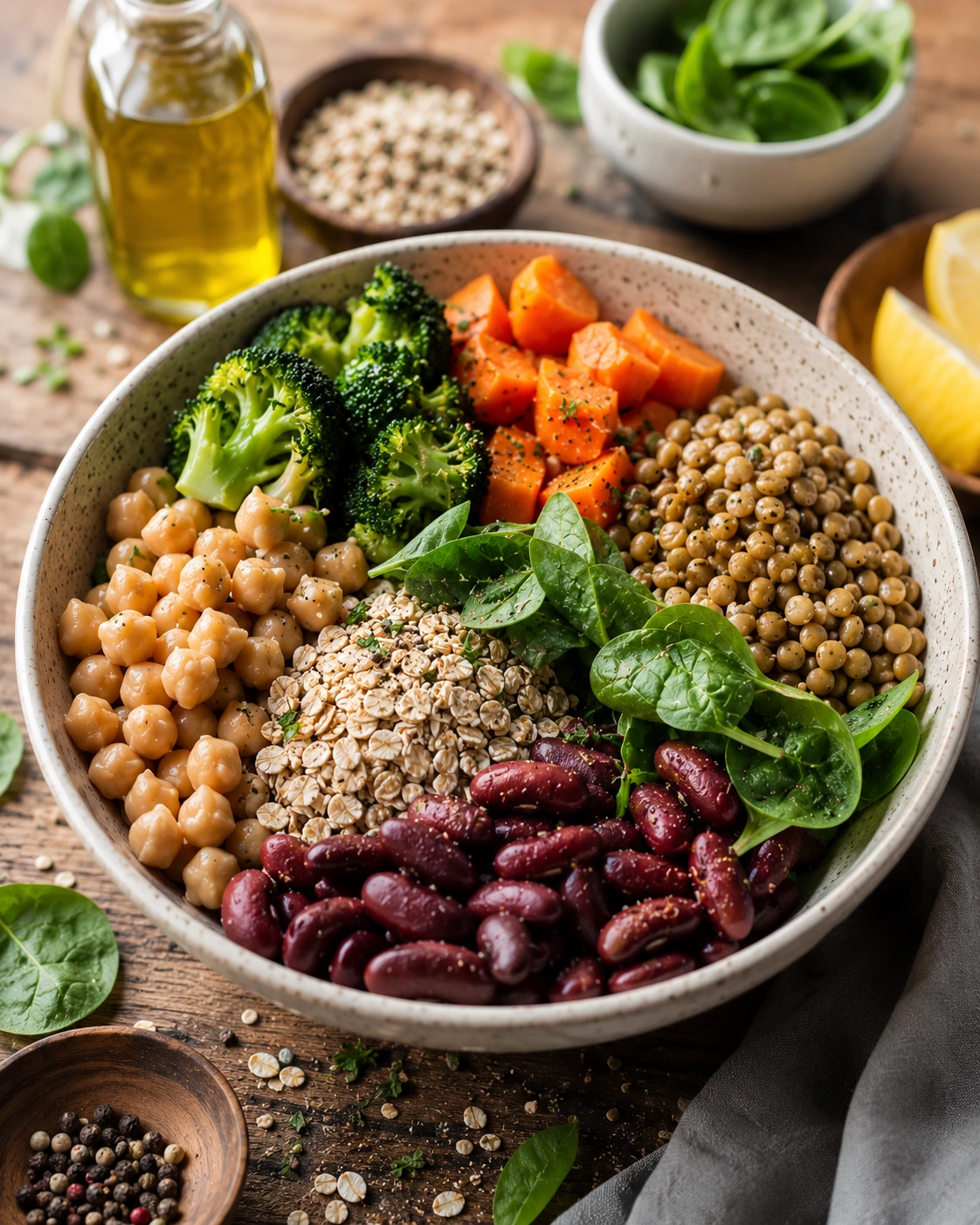
Why the microbiome has become so popular
Just ten years ago, the word “microbiome” was known mainly to gastroenterologists.
Today, everyone is talking about it.
From bloggers to yogurt manufacturers.
The reason is simple.
Gut bacteria affect more than just digestion.
Studies show their connection with:
- the immune system;
- metabolism;
- body weight;
- mood;
- the state of the intestinal barrier.
Against this backdrop, the probiotic market has grown into billions of dollars.
But along with popularity, many simplifications have appeared. Read also: Microbiome and vitamins: how the gut affects the absorption of beneficial substances.
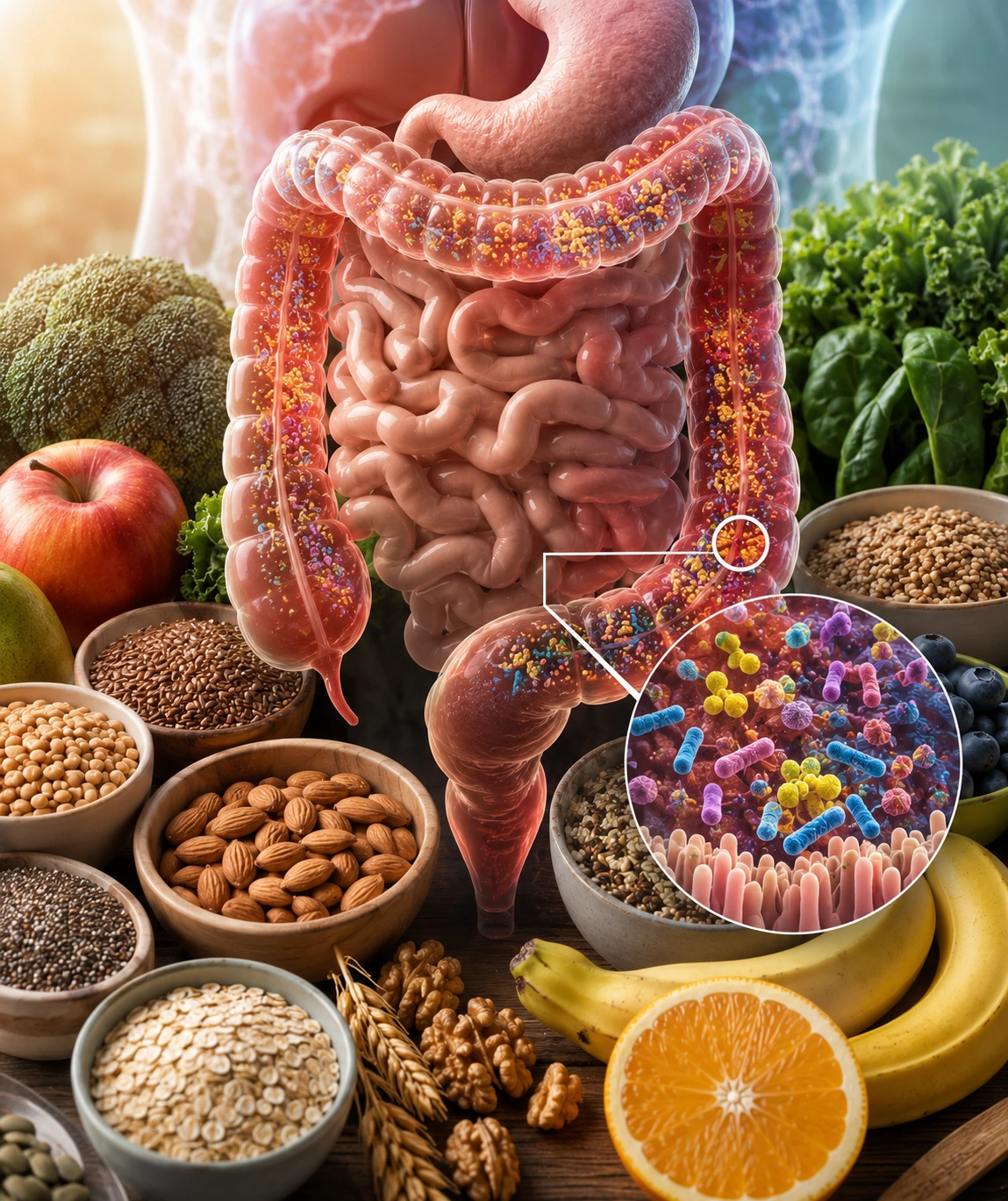
What are probiotics
Probiotics are live microorganisms that can provide health benefits when consumed in adequate amounts.
Most often, they include:
- Lactobacillus;
- Bifidobacterium;
- Saccharomyces boulardii;
- other strains of bacteria or yeast.
It is important to understand one thing.
A probiotic is not just one specific bacterium.
Each strain has its own characteristics.
Therefore, the phrase “probiotics help with everything” makes no scientific sense.

What is fiber
If probiotics are the bacteria themselves, then fiber is their food.
That is why it is often called a natural prebiotic.
The human body practically does not digest dietary fiber.
However, the inhabitants of the gut actively use it.
In the process of fermentation, bacteria produce substances that support the health of the intestinal mucosa.
Why scientists are talking more and more about fiber
This is where it gets interesting.
Imagine a garden.
You can constantly buy new plants.
Or you can first create good soil.
This is how many researchers look at the microbiome today.
Without enough dietary fiber, even the most expensive probiotics may not work as effectively as expected.
Table 1. Fiber and Probiotics: What is the difference
| Fiber | Probiotics |
|---|---|
| Is food for bacteria | Are the bacteria themselves |
| Comes from food products | Often come from supplements |
| Works every day | Depends on the specific strain |
| Supports microbiome diversity | Usually contains a limited number of strains |
| Found in vegetables, fruits, legumes | Found in supplements and fermented foods |
Why most people don’t get enough fiber
This is where the problem becomes very practical.
Many people buy probiotics for hundreds of hryvnias.
And at the same time, they consume half as much fiber as experts recommend.
The reasons are familiar:
- too few vegetables;
- snacking on the go;
- ultra-processed foods;
- lack of legumes in the diet.
In effect, the gut remains without proper nourishment.

Which foods contain the most fiber
The leaders are well known.
These include:
- beans;
- lentils;
- chickpeas;
- oats;
- apples;
- berries;
- broccoli;
- flaxseeds;
- chia seeds;
- whole grain products.
And yes, ordinary beans often do more for the microbiome than a trendy bottle of probiotics.
Does this mean probiotics are useless
No.
That would be the other extreme.
For certain conditions, specific probiotic strains have an evidence base.
For example, they are actively studied:
- after antibiotic therapy;
- for certain functional digestive disorders;
- in specific gastroenterological situations.
The problem is that many people expect much more from them than they can actually provide.
What are synbiotics
Synbiotics have been gaining popularity in recent years.
It is a combination of:
- probiotics;
- prebiotics.
The idea is simple.
Not only to deliver bacteria to the gut, but also to immediately provide them with a nutrient medium.
Table 2. What is better for the microbiome in the long run
| Habit | Potential impact |
|---|---|
| Daily vegetables | High |
| Regular legume consumption | High |
| Diverse diet | High |
| Adequate fiber intake | High |
| One-time course of probiotics | Limited |
| Occasional use of supplements | Small |
Common myths about probiotics
The more bacteria, the better
Not necessarily.
The specific strain is what matters.
Everyone needs probiotics
There is no universal recommendation.
Fiber works more slowly than probiotics
For many people, it is fiber that forms the foundation of a healthy microbiome.
Just one course of bacteria will solve the problem
The microbiome is formed over years, not in two weeks.
Questions and Answers
What is more important for the gut — probiotics or fiber?
In most cases, an adequate amount of fiber is the foundation of a healthy microbiome.
How much fiber does an adult need?
European recommendations usually aim for about 25-30g per day.
Can you get fiber only from supplements?
You can, but food remains the superior source.
Are there probiotics in food?
Yes. For example, in fermented products.
Why does bloating occur after a sudden increase in fiber?
The microbiome needs time to adapt.
Conclusions
Recent studies increasingly show that a healthy microbiome starts on the plate, not with capsules. Probiotics can be useful in specific situations, but without enough fiber, their potential remains limited.
Sometimes the best thing you can do for your gut bacteria is not to buy another bottle of supplements, but simply to add more vegetables, legumes, and whole grain products to your diet.
References
- Valdes AM et al. Role of the gut microbiota in nutrition and health. BMJ. 2018.
- Makki K et al. The Impact of Dietary Fiber on Gut Microbiota. Cell Host & Microbe. 2018.
- Gibson GR et al. The Concept of Prebiotics. Nature Reviews Gastroenterology & Hepatology. 2017.
- Hill C et al. Expert Consensus Document: Probiotics. Nature Reviews Gastroenterology & Hepatology. 2014.
- EFSA Scientific Opinion on Dietary Fibre. EFSA Journal.
About the Author