It turns out that decreased appetite, nausea, and discomfort in the right upper abdomen may all be linked to the same condition. In fact, these symptoms can be manifestations of Gilbert syndrome—a congenital disorder that, with proper management, allows people to live a long and healthy life.
Etiology and Genetic Basis of Gilbert Syndrome
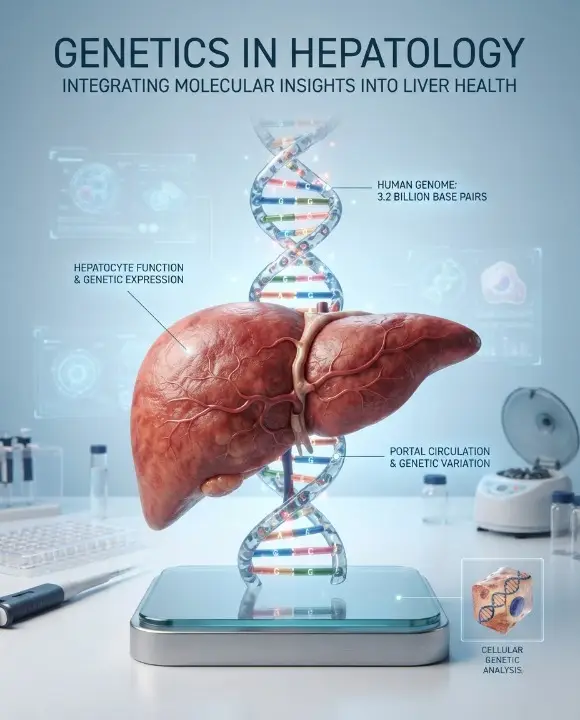
Gilbert syndrome (first described in 1901 by the French physicians Nicolas Gilbert and Pierre Lereboullet) is a genetically determined condition. Modern genetics identifies its cause as a mutation in the promoter region of the UGT1A1 gene.
This mutation results in a deficiency of the enzyme UDP-glucuronosyltransferase (UGT), which is responsible for the conjugation (binding) of bilirubin with glucuronic acid in the liver. As a result, enzyme activity is reduced to approximately 30% of normal, leading to the accumulation of unconjugated (indirect) bilirubin in the bloodstream.
Key clinical markers:
- Bilirubin level: typically ranges from 21 to 51 μmol/L (during exacerbations, it may rise to as high as 140 μmol/L).
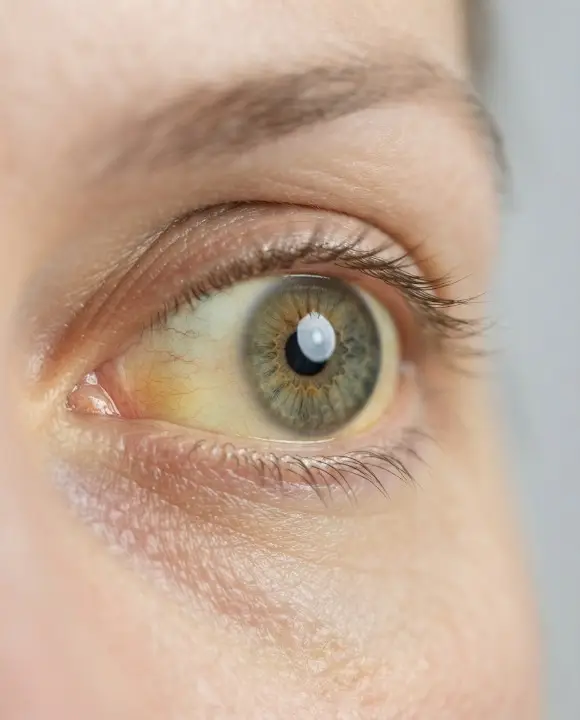
- Jaundice: yellow discoloration of the sclera and skin (including the palms and soles).
- “Liver mask”: characteristic facial hyperpigmentation.
- Xanthelasma: yellowish cholesterol-rich plaques on the eyelids.
Medical conclusion: Gilbert syndrome is not considered a disease in the classical sense but rather a constitutional trait with a benign long-term prognosis.
Clinical Presentation and Symptoms
The condition is often asymptomatic but may become clinically apparent when triggered by external factors.
Key symptoms:
- Jaundice: a characteristic yellowish discoloration of the sclera (the whites of the eyes) and skin.
- Asthenic syndrome: fatigue, irritability, and sleep disturbances.
- Dyspepsia: discomfort in the right upper abdomen, nausea, or a bitter taste in the mouth.
The appearance of these symptoms is always associated with specific triggering factors. A detailed list of factors that can cause bilirubin levels to rise is provided in Table 2 below.
Mechanisms of Toxicity and Latent Course
The clinical manifestations of Gilbert syndrome depend on the concentration of unconjugated bilirubin in the blood plasma. Since unconjugated bilirubin is a fat-soluble toxin, its accumulation may lead to systemic intoxication affecting the central nervous system:
- Neurotoxic effects: increased fatigue, unexplained irritability, headaches, and sleep disturbances (insomnia).
- Functional dyspepsia: a feeling of fullness after eating only a small amount of food, bitter-tasting belching, and alternating constipation and diarrhea.
In many patients, the condition follows a latent (asymptomatic) course. In such cases, Gilbert syndrome is diagnosed incidentally during routine biochemical blood testing performed for unrelated reasons.
Disease Course and Potential Risks
Gilbert syndrome typically follows a fluctuating course. Periods of complete remission alternate with exacerbations that often show seasonal patterns (most commonly in spring and autumn) or occur in response to stress.
Without proper monitoring of bilirubin levels, long-term consequences may include:
- Cholelithiasis (gallstone disease): develops due to changes in the physicochemical properties of bile and bile stasis.
- Inflammatory disorders: the risk of chronic cholangitis and reactive pancreatitis increases.
- Hepatomegaly: during peak exacerbations, the liver may become moderately enlarged, causing a sensation of fullness or pressure in the right upper abdomen.
Diagnosis and Principles of Diagnostic Confirmation
The diagnosis of Gilbert syndrome is based on a combination of clinical evaluation, laboratory findings, and molecular genetic confirmation.
Laboratory and Imaging Methods
- Genetic testing (gold standard): direct determination of the number of TA repeats in the promoter region of the UGT1A1 gene. This is the most accurate method for confirming the diagnosis without the need for invasive procedures or provocation tests.
- Blood biochemistry: detection of isolated hyperbilirubinemia, primarily due to elevated unconjugated (indirect) bilirubin.
- Complete blood count (CBC): approximately 30% of patients have elevated hemoglobin levels (above 160 g/L) and erythrocytosis.
- Abdominal ultrasound: performed to rule out anatomical abnormalities, gallstone disease, and other liver disorders.
Provocation Tests
When genetic testing is unavailable, physicians may use provocation tests to evaluate liver enzyme activity and support the diagnosis.
Table 1. Clinical Diagnostic Tests
| Test | Procedure | Positive Result |
|---|---|---|
| Fasting test | Caloric intake is restricted to 400 kcal/day for 48 hours. | A two- to threefold increase in unconjugated bilirubin levels. |
| Phenobarbital test | Phenobarbital is administered at a dose of 3 mg/kg for 5 days. | A significant decrease in bilirubin levels due to enzyme induction. |
| Nicotinic acid test | Intravenous administration of 50 mg of nicotinic acid. | A rapid increase in bilirubin concentration within 3 hours. |
| Rifampicin test | Administration of 900 mg of rifampicin. | A temporary increase in unconjugated (indirect) bilirubin levels. |
Management and Monitoring of Gilbert Syndrome
Since there is no specific treatment for Gilbert syndrome, the primary goal of management is to minimize episodes of hyperbilirubinemia through lifestyle and dietary modifications.
Avoiding Triggering Factors
The most important step is to eliminate factors that suppress the activity of the enzyme UDP-glucuronosyltransferase and trigger increases in bilirubin levels.
Table 2. Key Triggers of Elevated Bilirubin Levels
| Trigger Category | Examples |
|---|---|
| Dietary | Prolonged fasting (more than 12 hours), low-calorie diets, dehydration. |
| Pharmacological | Use of paracetamol (acetaminophen), sulfonamides, certain antibiotics, and steroids. |
| Physiological | Acute viral infections (common cold, influenza), excessive physical exertion, sleep deprivation. |
| Psychological | Chronic stress, fatigue, acute emotional distress. |
Dietary Recommendations
Dietary management in Gilbert syndrome aims to maintain stable metabolism while avoiding excessive stress on hepatocytes.
-
Meal pattern: Eat small meals 4–5 times a day. Prolonged fasting and inadequate fluid intake should be strictly avoided.
-
Recommended foods: Vegetables, fruits, whole grains (such as oatmeal and buckwheat), lean meat and poultry, and low-fat dairy products.
-
Foods to limit: Spicy and canned foods, rich pastries and desserts, chocolate, and strong alcoholic beverages. It is also advisable to replace black coffee and black tea with green tea or berry fruit drinks (such as cranberry or lingonberry).

Pharmacological Support (Prescribed by a Physician)
During flare-ups, symptomatic drug therapy may be prescribed to improve well-being and promote bilirubin clearance.
Table 3. Pharmacological Support for Gilbert Syndrome
| Drug Class | Therapeutic Purpose | Examples / Notes |
|---|---|---|
| Hepatoprotective agents | Stabilize hepatocyte membranes and protect liver cells. | Milk thistle preparations, essential phospholipids. |
| Digestive enzymes | Support digestion and reduce gastrointestinal workload. | Pancreatin and related enzyme preparations. |
| Enterosorbents | Bind excess bilirubin in the intestine and support detoxification. | Activated charcoal, silicon dioxide–based sorbents. |
| Symptomatic medications | Relieve dyspeptic symptoms such as nausea and vomiting. | Metoclopramide, domperidone. |
| Enzyme inducers | Directly reduce bilirubin levels by stimulating hepatic enzyme activity. | Phenobarbital (should only be used under a physician’s supervision). |
Frequently Asked Questions About Gilbert Syndrome
1. Can I exercise if I have Gilbert syndrome?
Yes. However, high-intensity activities such as CrossFit or marathon running may increase bilirubin levels. Moderate exercise combined with adequate hydration is generally recommended.
2. Is Gilbert syndrome dangerous?
Gilbert syndrome itself is considered a benign condition. However, elevated bilirubin levels may contribute to fatigue, dyspeptic symptoms, and an increased tendency to develop gallstones.
3. Is a strict diet necessary?
Current medical practice no longer recommends overly restrictive diets. The key is to eat regular meals without prolonged fasting—which is one of the main triggers for bilirubin elevation—and to limit alcohol consumption.
References:
-
Strassburg, C. P. “Hyperbilirubinemia syndromes (Gilbert-Meulengracht, Crigler-Najjar, Dubin-Johnson, and Rotor syndromes).” Best Practice & Research Clinical Gastroenterology, 2020.
-
Clinical Guidelines: Management of Benign Hyperbilirubinemia. Journal of Hepatology, 2023.
-
Genetic Aspects of Bilirubin Metabolism: Methodological Guidelines for Gastroenterologists. 2024.
About the Author