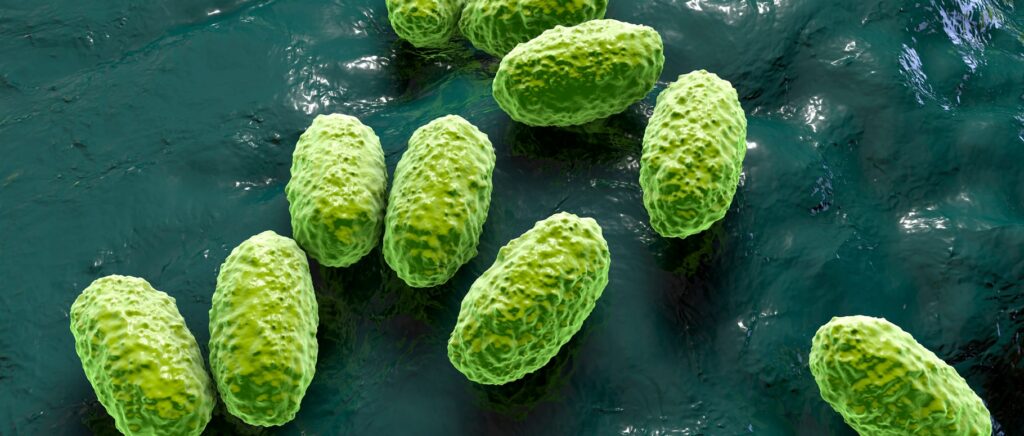

The short version. Serrapeptase and nattokinase are bacterial proteolytic enzymes sold as remedies “for clots, plaque and swelling.” In the test tube they really do break down proteins, including fibrin. In people, the evidence is modest: Japan withdrew serrapeptase as a drug because it did no better than placebo, and a three-year nattokinase trial showed no effect on atherosclerosis. Here is what we know for sure, where the real bleeding risks are, and what Ukrainian rules allow.
Patients bring these bottles to my office all the time. Usually after a thrombosis, or when someone in the family has had a stroke. The logic is always the same: “if the enzyme dissolves fibrin, it will clean out my arteries.” It sounds convincing, but there is a huge gap between a Petri dish and a living person on aspirin.
Let’s go through the facts. No hype and no scare stories.
What serrapeptase and nattokinase are
Both enzymes are proteases, meaning they break down proteins. Both are made by bacteria. That is where the similarity ends.
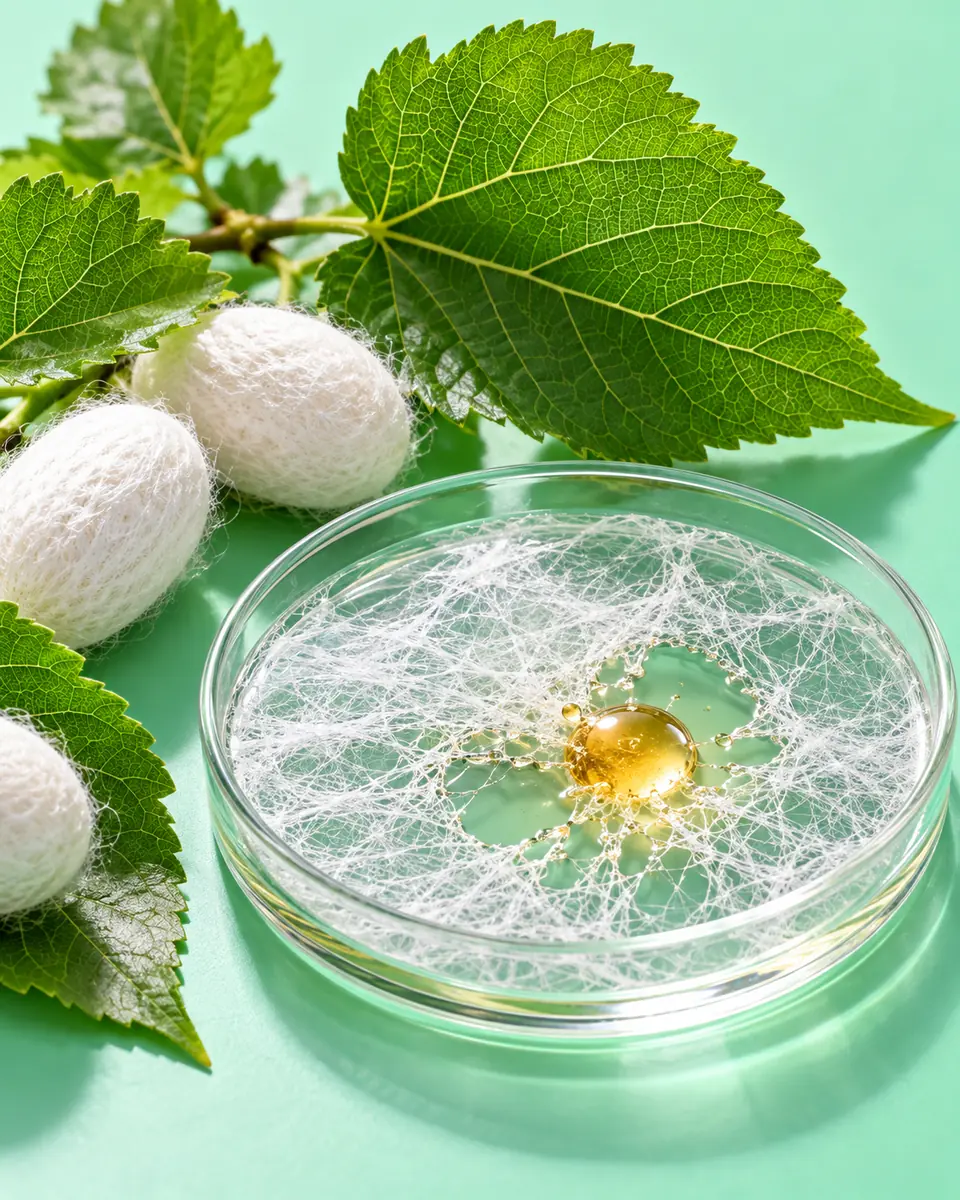
Serrapeptase (serratiopeptidase) is a zinc-containing metalloprotease weighing 45-60 kDa. It was isolated from Serratia marcescens, a bacterium found in the gut of the silkworm. In Japan and a number of European and Asian countries it was prescribed for decades as an anti-inflammatory for swelling after injuries and surgery, sinusitis and bronchitis. Typical doses in studies are 10-60 mg a day, and tablets are enteric-coated because otherwise the stomach would simply digest the enzyme.
Nattokinase is a serine protease from Bacillus subtilis var. natto, the bacterium used to ferment soybeans into the Japanese dish natto. Japanese researcher Hiroyuki Sumi described it in 1987 after noticing that natto dissolved fibrin clots in a Petri dish. Nattokinase activity is measured in fibrinolytic units (FU), most often 2,000 FU per capsule.
Here is a detail sellers keep quiet about. These are large protein molecules. How much reaches the bloodstream in active form is still not fully understood. Some of the effects seen in the lab may simply not happen in the body.
| Parameter | Serrapeptase | Nattokinase |
|---|---|---|
| Source | Serratia marcescens (isolated from the silkworm gut) | Bacillus subtilis var. natto (fermented soy) |
| Enzyme type | Zinc metalloprotease | Serine protease |
| What it does in the lab | Breaks down inflammatory exudate proteins, fibrin, bradykinin | Directly breaks down fibrin, activates fibrinolysis |
| Dose units | mg or activity units (SPU) | Fibrinolytic units (FU), usually 2,000 FU |
| Best human data | Small RCTs of low methodological quality | Single dose shifts clotting markers within normal range; 3-year NAPS RCT showed no effect on atherosclerosis |
| Status as a drug | Withdrawn in Japan in 2011, phased out of the drug register in Singapore in 2011-2012 | Not registered as a medicine in the EU or US |
| Main risk | Rare skin reactions, digestive upset, theoretical bleeding with anticoagulants | Bleeding, especially with aspirin or anticoagulants |
| In Ukraine (MoH Order No. 203) | No separate entry; general “Protease of microbial or plant origin” applies | No separate entry; general “Protease of microbial or plant origin” applies |
Serrapeptase: 40 years of use and weak evidence
In 2013, Indian pharmacologists collected everything published on serrapeptase: 24 papers, including 18 clinical studies and 14 randomized trials. The verdict was harsh. The studies were small, with no more than 150 people per group, short, mostly lacked an active comparator, and had vague criteria and weak statistics. The authors stated plainly that the evidence was not enough to support serrapeptase as a painkiller or health supplement.
The story from Japan, the enzyme’s home country, is even more telling. Takeda sold serrapeptase as a drug for decades. When the regulator asked for efficacy to be proven again to modern standards, double-blind trials showed no statistically significant difference from placebo. In February 2011 the company recalled the product, and generic makers followed. In November that year, Singapore’s regulator HSA announced a gradual phase-out of serrapeptase from its drug register on the same grounds. It remained available there as a dietary supplement.
Does that mean serrapeptase is useless? No, it means there is no convincing evidence for it. For swelling after a tooth extraction or an injury, there are methods with solid evidence: cold, elevation, and NSAIDs when appropriate.
On side effects: it is usually well tolerated, with occasional nausea or stomach discomfort. Reviews describe rare serious reactions, including Stevens-Johnson syndrome. And since it is a protease, the theoretical bleeding risk with anticoagulants has not gone away.

Nattokinase: what it actually does to your blood
There is more data here, and it is more interesting. In 2015, Japanese researchers gave 12 healthy young men a single 2,000 FU dose of nattokinase in a double-blind crossover trial. Within 4-8 hours, D-dimer and fibrin degradation products rose, factor VIII activity dropped, and aPTT was prolonged. So the enzyme or its fragments really do affect clotting. But every change stayed within the normal range.
The key trial was done in the US. NAPS (Nattokinase Atherothrombotic Prevention Study) enrolled 265 people without cardiovascular disease, giving them 2,000 FU a day or placebo, with a median follow-up of 3 years. Researchers measured carotid intima-media thickness and arterial stiffness. The result was null: atherosclerosis progressed the same in both groups, and nattokinase had no effect on blood pressure or lab values either.
So where does the belief that it lowers blood pressure come from? A 2023 meta-analysis pooled 6 small RCTs with 546 participants and found systolic pressure fell by 3.45 mmHg on average and diastolic by 2.32. The lipid results were contradictory: at low doses, total and LDL cholesterol actually went up. When small short studies show an effect and a large three-year one does not, I trust the large one.
My conclusion as a physician is simple. Nattokinase is biologically active, not a dud. That is exactly why it can be dangerous in the wrong situation, while it has no proven benefit for preventing heart attack or stroke.
Bleeding and interactions: the main risk
In 2008, neurologists in Taiwan described a patient who took aspirin for stroke prevention and added nattokinase at 400 mg a day. A week later he had a cerebellar hemorrhage. MRI showed multiple microbleeds, meaning his vessels were already fragile. One case does not prove causation, but the mechanism makes sense.
When the European Commission authorized the nattokinase-containing fermented soybean extract NSK-SD as a novel food in 2017, the conditions were strict: adults only, no more than 100 mg of extract a day, not for pregnant or breastfeeding women, and medical supervision for people on anticoagulants. Tellingly, even while approving it, the regulator thought about bleeding first.
A separate word on natto as food. Fermented soy is rich in vitamin K2, which directly weakens warfarin. People on warfarin are usually advised to avoid natto. Most nattokinase supplements have the K2 removed, but check the label instead of taking it on trust.
| Situation | Why it is risky | What to do |
|---|---|---|
| Taking warfarin, apixaban, rivaroxaban, dabigatran | Combined effect on clotting, bleeding risk | Do not take without agreement from the doctor managing your anticoagulation |
| Aspirin, clopidogrel, ticagrelor | Brain hemorrhage reported with aspirin plus nattokinase | Do not combine on your own |
| Regular NSAIDs (ibuprofen, diclofenac) | NSAIDs themselves raise the risk of GI bleeding | Discuss with your doctor whether you need both |
| Planned surgery, tooth extraction | More bleeding during and after the procedure | Stop in advance, agree on timing with your surgeon |
| Bleeding disorders, recent bleeding, ulcer, past hemorrhagic stroke | High baseline bleeding risk | Do not take |
| Pregnancy, breastfeeding, children | No safety data; explicitly excluded in the EU | Do not take |
| Soy allergy | Nattokinase is made by fermenting soy | Avoid or check the product with your doctor |
| Leg swelling and pain, shortness of breath, sudden weakness in an arm or leg | Possible thrombosis, pulmonary embolism or stroke | Get medical help immediately; no enzymes instead of treatment |
What Ukrainian rules allow
Since 2026, the composition of dietary supplements in Ukraine has been governed by Ministry of Health Order No. 203, which we covered in detail separately. Annex 3 lists permitted substances, and there are plenty of enzymes on it: lactase, papain, lipase, amylases, cellulase. There are no separate entries for “serrapeptase” or “nattokinase.”
There is, however, a general entry for “Protease” with the note “exclusively of microbial or plant origin” and no maximum daily dose. Both enzymes are technically microbial proteases. Whether a particular product fits that entry is for the manufacturer and the regulator to decide, and the manufacturer is responsible for its safety.
The marketing promises are a clear-cut matter, though. Neither serrapeptase nor nattokinase has an approved health claim in the EU register or under Ukrainian rules. So “dissolves clots,” “clears plaque from arteries” or “treats swelling” on a bottle or a seller’s website is a violation. By law, a supplement does not treat or prevent disease. For comparison, bromelain, the pineapple enzyme, is in a different position: it has its own entry on the list.

How I talk to patients about these supplements
If someone on an anticoagulant after a deep vein thrombosis wants to “add something natural,” the answer is short: no. The anticoagulant already does the job, with proven efficacy and a known risk. Adding an enzyme with an unpredictable effect on clotting makes no sense.
If a healthy person on no medication wants to try nattokinase because their “blood pressure is a bit high,” I first ask them to measure it properly, at home, over several days. Then we talk about salt, weight, exercise and sleep, which do far more than 3 mmHg. Only after that, if they still want to, do we discuss the supplement, with a clear understanding that large trials did not confirm a benefit.
As for serrapeptase for sinusitis or after an injury: I do not forbid it to people who have already bought it and are not on anticoagulants. But I tell them honestly not to expect miracles, and that their main treatment still stands.
And the main rule for both enzymes: tell your doctor you are taking them. Especially before surgery, at the dentist, and whenever you are prescribed a new medication.
Frequently asked questions
Does nattokinase dissolve blood clots?
Can I take nattokinase with aspirin or blood thinners?
Does serrapeptase help with swelling and sinusitis?
Does nattokinase lower blood pressure?
Are serrapeptase and nattokinase allowed in dietary supplements in Ukraine?
How long before surgery should I stop nattokinase?
Are natto and nattokinase pills the same thing?
Conclusions
Serrapeptase and nattokinase are neither quackery nor miracles. They are biologically active proteases that break down proteins and fibrin in the lab but have not yet shown clinical benefit in people.
Serrapeptase has a 40-year history of use and very weak evidence, and Japan took it off the drug market because it did no better than placebo. Nattokinase shifts clotting markers and slightly lowers blood pressure in small studies, but the three-year NAPS trial found no effect on atherosclerosis.
The main real risk is bleeding, especially with aspirin, anticoagulants and before surgery. In Ukraine, these enzymes are not named separately on the list, and any promise to “dissolve clots” on a label is illegal. If you are thinking about these supplements, start with a conversation with your doctor, not with an online shopping cart.
📚 References
- Bhagat S, Agarwal M, Roy V. Serratiopeptidase: a systematic review of the existing evidence. Int J Surg. 2013;11(3):209-217. PubMed 23380245
- Jadhav SB, Shah N, Rathi A, et al. Serratiopeptidase: insights into the therapeutic applications. Biotechnol Rep. 2020;28:e00544. PMC7585045
- Sumi H, Hamada H, Tsushima H, Mihara H, Muraki H. A novel fibrinolytic enzyme (nattokinase) in the vegetable cheese Natto. Experientia. 1987;43(10):1110-1111. PubMed 3478223
- Kurosawa Y, Nirengi S, Homma T, et al. A single-dose of oral nattokinase potentiates thrombolysis and anti-coagulation profiles. Sci Rep. 2015;5:11601. doi:10.1038/srep11601
- Hodis HN, Mack WJ, Meiselman HJ, et al. Nattokinase atherothrombotic prevention study: a randomized controlled trial. Clin Hemorheol Microcirc. 2021;78(4):339-353. doi:10.3233/CH-211147
- Li X, Long J, Gao Q, et al. Nattokinase supplementation and cardiovascular risk factors: a systematic review and meta-analysis of randomized controlled trials. Rev Cardiovasc Med. 2023;24(8):234. doi:10.31083/j.rcm2408234
- Chen H, McGowan EM, Ren N, et al. Nattokinase: a promising alternative in prevention and treatment of cardiovascular diseases. Biomark Insights. 2018;13:1177271918785130. PMC6043915
- Chang YY, Liu JS, Lai SL, Wu HS, Lan MY. Cerebellar hemorrhage provoked by combined use of nattokinase and aspirin in a patient with cerebral microbleeds. Intern Med. 2008;47(5):467-469. J-STAGE
- EFSA NDA Panel. Safety of fermented soybean extract NSK-SD® as a novel food pursuant to Regulation (EC) No 258/97. EFSA Journal. 2016;14(7):4541. doi:10.2903/j.efsa.2016.4541
- Commission Implementing Decision (EU) 2017/115 of 20 January 2017 authorising the placing on the market of fermented soybean extract as a novel food ingredient. EUR-Lex
- Health Sciences Authority (Singapore). HSA updates on phasing out of serratiopeptidase as medicinal products. 29 Nov 2011. hsa.gov.sg
- Order of the Ministry of Health of Ukraine No. 203 of 19.02.2026, registered with the Ministry of Justice on 30.03.2026 under No. 417/45811 (in Ukrainian). zakon.rada.gov.ua/laws/show/z0417-26
About the Author