Consequences of PPI Withdrawal Syndrome
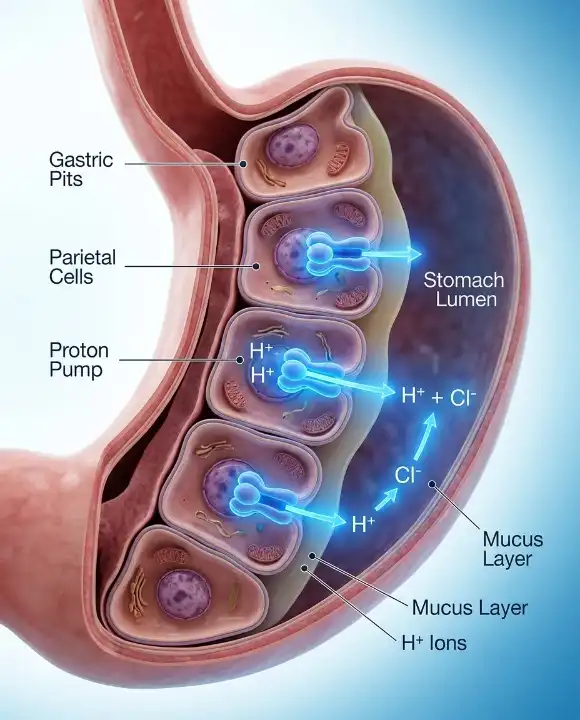
Proton pump inhibitors (PPIs) include omeprazole, lansoprazole, pantoprazole, rabeprazole, dexlansoprazole, and others. Their mechanism of action is based on the irreversible inhibition of hydrochloric acid secretion by the parietal cells of the stomach. The main indications for PPI therapy are gastroesophageal reflux disease (GERD), or reflux esophagitis, gastric and duodenal peptic ulcers, and gastropathies caused by nonsteroidal anti-inflammatory drugs (NSAIDs). In addition, PPIs are included in combination treatment regimens for Helicobacter pylori infection, pancreatitis, Zollinger–Ellison syndrome, bronchial asthma associated with gastric reflux, and other conditions.
If a person has a chronic acid-related disorder, PPIs are often taken for extended periods or even continuously for several years. This is convenient because the medication usually needs to be taken only once or, at most, twice a day. Such a treatment regimen helps relieve heartburn, reduce belching, alleviate chest pain and pain in the shoulder blade area (in GERD, the pain may also radiate to the neck and jaw), and restore appetite.
Until about 10 years ago, it was believed that discontinuing PPIs did not cause a withdrawal syndrome. However, a number of studies have shown otherwise. For example, in Denmark, researchers at Køge University Hospital conducted a randomized study involving 118 completely healthy students in accordance with the principles of evidence-based medicine. Participants were randomly assigned to two groups. The first group received esomeprazole 40 mg daily for 8 weeks, followed by placebo for another 4 weeks. The second group received placebo throughout the entire 12-week study period. Neither the participants nor the investigators knew which tablets each participant received. During the final month of the study, 44% of participants in the PPI group reported heartburn, acid regurgitation, and dyspepsia, compared with only 15% in the placebo group2.
The results of this study demonstrated that even in people without acid-related diseases, abrupt discontinuation of PPIs may temporarily induce symptoms typical of these disorders. Moreover, gastric hydrochloric acid secretion may temporarily exceed the levels observed before PPI therapy was initiated. As a result, patients often experience a marked worsening of their condition and resume long-term PPI use, effectively developing a form of dependence on these medications. In older adults and patients with comorbidities, this may lead to serious adverse outcomes.
Table 1. Risks Associated with Long-Term PPI Therapy
| Organ System | Consequence of Long-Term Use | Mechanism |
|---|---|---|
| Metabolism | Malabsorption (vitamin B12, iron, magnesium) | Reduced gastric acidity impairs the release of micronutrients from food. |
| Microbiota | Small intestinal bacterial overgrowth (SIBO) | Loss of the gastric acid barrier promotes bacterial colonization of the small intestine. |
| Musculoskeletal System | Increased risk of osteoporosis and fractures | Hypochlorhydria reduces calcium absorption. |
| Cardiovascular System | Cardiovascular complications | Reduced nitric oxide (NO) production by the vascular endothelium. |
Adverse Effects
Enzymes known as proton pumps are found not only in the parietal cells of the stomach but also in many other tissues, including the intestinal and gallbladder epithelium, renal tubular cells, the cornea, myocytes, bone cells, immune cells (neutrophils, lymphocytes, macrophages), and intracellular organelles with an acidic environment. Because PPIs may potentially affect all of these structures, they are associated with a broad spectrum of adverse effects.
Malabsorption
Long-term continuous PPI therapy lasting one year or longer impairs the absorption of dietary micronutrients, particularly vitamins C and B12, iron, calcium, and magnesium. This creates conditions that may contribute to the development of various diseases. For example, reduced calcium absorption due to decreased gastric acidity may increase the risk of osteoporosis and bone fractures. Iron and/or vitamin B12 deficiency may lead to anemia. In addition, vitamin B12 deficiency is associated with polyneuropathy, cognitive impairment, depressive disorders, and recurrent stomatitis. Magnesium deficiency most commonly occurs in patients taking PPIs together with diuretics and may manifest as depressed mood, muscle spasms, seizures, and cardiac arrhythmias.
Alterations of the Gut Microbiota
The normal gastrointestinal microbiota is maintained by several factors, one of which is the physiological concentration of hydrochloric acid in the stomach. When gastric acidity remains suppressed for a prolonged period due to PPI therapy, conditions become favorable for colonization of the normally sterile small intestine by fecal and oropharyngeal microorganisms. This condition is known as small intestinal bacterial overgrowth (SIBO) and is characterized by the presence of microorganisms such as Escherichia coli, Klebsiella pneumoniae, and Enterococcus in the small intestine. SIBO commonly manifests as chronic diarrhea (including colitis and ulcerative colitis). In immunocompromised patients, the risk of infection with Clostridium difficile, which causes severe treatment-resistant diarrhea, is increased. In patients with liver cirrhosis, SIBO also increases the risk of peritonitis due to bacterial translocation into ascitic fluid.
Kidney Injury
Long-term PPI therapy may trigger acute interstitial nephritis. Symptoms include weakness, loss of appetite, malaise, headache, dry mouth, nausea, vomiting, fever, night sweats, chills, and other nonspecific manifestations. In some cases, the condition may remain asymptomatic, with renal dysfunction detected only by laboratory testing.
Cardiovascular Risk
Long-term PPI use reduces the production of nitric oxide in the body. A deficiency of this molecule increases vascular tone, contributing to hypertension and thereby increasing cardiovascular risk. In patients taking both PPIs and antithrombotic medications, the frequency of angina attacks may increase. Furthermore, after 120 days of PPI therapy, the risk of myocardial infarction has been reported to increase by 1.58-fold3.
Hypergastrinemia
PPI withdrawal syndrome is closely associated with gastrin activity. One of the physiological functions of gastrin is to stimulate hydrochloric acid secretion when gastric acidity decreases. During prolonged PPI therapy, which suppresses this process, gastrin production rises significantly. In addition, gastrin-producing cells undergo hyperplasia. These mechanisms have been proposed as potential contributors to tumor development. At present, no human studies have confirmed this hypothesis. However, long-acting PPIs have been shown to promote the development of gastrointestinal malignancies in laboratory mice.
Deprescribing Strategy
Recently, healthcare professionals have increasingly pointed out that PPI use is often excessive and may not correspond to the patient’s actual clinical needs. Studies conducted in different countries have shown that 40–65% of patients receiving long-term PPI therapy have no clear indication for its continued use4,5. No such statistics are currently available for Ukraine, but it is likely that many people in the country also continue taking these medications for years at therapeutic rather than maintenance doses without a valid reason.
To reduce the risk of adverse effects while maintaining treatment benefits, an approach known as deprescribing has been proposed. Deprescribing refers to the gradual and supervised reduction of the dose or discontinuation of medications that may cause harm and/or no longer provide meaningful benefit to the patient. Australia and Canada have developed detailed PPI deprescribing protocols describing the appropriate actions for both physicians and patients with acid-related disorders. The evidence supporting PPI deprescribing includes several Cochrane reviews covering numerous clinical studies. In one review involving more than 70,000 patients, the revised treatment strategy reduced PPI use by 20%6. Another study reported a reduction in high-dose PPI use, with 72% of patients benefiting from this therapeutic adjustment7.
In brief, the recommendations suggest reducing the PPI dose by 50%, either by switching from twice-daily to once-daily dosing or by halving the dose taken at each administration (for example, reducing from 40 mg to 20 mg). Other options include taking the medication every other day, every two days, or on demand.
Deprescribing may be considered for adults, including older adults (60 years of age and older), who have been taking PPIs for more than 4–8 weeks to treat:
- gastroesophageal reflux disease (GERD);
- uncomplicated gastric or duodenal peptic ulcer disease after confirmed ulcer healing and complete resolution of clinical symptoms;
- uncomplicated erosive or ulcerative lesions of the upper gastrointestinal tract caused by NSAID use or H. pylori infection.
Patients are rarely informed that their medication should be reduced or discontinued when it is no longer necessary. If physicians do not have enough time to discuss deprescribing, pharmacists can play an important educational role by informing patients about this approach. This encourages patients to consult a gastroenterologist to adjust the dosage and treatment regimen rather than continuing PPIs indefinitely out of fear that symptoms will worsen after discontinuation.
PPI deprescribing recommendations should not be applied to patients with any of the following conditions (including a past medical history): Barrett’s esophagus, grade C or D reflux esophagitis, previous upper gastrointestinal bleeding, a history of complicated gastric or duodenal peptic ulcer disease, Zollinger–Ellison syndrome, or conditions requiring continuous treatment with NSAIDs, antiplatelet agents, anticoagulants, or systemic glucocorticosteroids.
American gastroenterologists surveyed more than 53,000 respondents regarding COVID-19 testing. The study found that positive COVID-19 test results were more common among patients prescribed PPIs. Compared with individuals who did not use these medications, those taking PPIs once daily were more than twice as likely to test positive for COVID-19, while those taking PPIs twice daily were 3.67 times more likely to have a positive test result8. These findings suggest that reduced gastric acidity may weaken the body’s antimicrobial defense mechanisms.
Contraindications to Deprescribing
It is critically important to ensure that patients do not discontinue medication in situations where doing so could be harmful.
IMPORTANT: Who should NOT discontinue PPIs?
Deprescribing should not be performed in patients with:
Barrett’s esophagus.
Grade C or D reflux esophagitis.
A history of peptic ulcer bleeding.
Zollinger–Ellison syndrome.
Frequently Asked Questions About Proton Pump Inhibitors
1. What is rebound acid hypersecretion after PPI withdrawal?
It is a sharp increase in hydrochloric acid secretion after the abrupt discontinuation of PPIs, leading to the recurrence of heartburn symptoms, often in a more pronounced form.
2. How long can PPIs be taken safely?
A standard treatment course usually lasts 4–8 weeks. Continuous use for more than one year requires regular monitoring and a well-established clinical indication.
3. Can I simply stop taking PPIs overnight?
No. Abrupt discontinuation is not recommended because it may lead to hypergastrinemia and rebound acid hypersecretion. A gradual dose reduction under medical supervision (deprescribing) is the preferred approach.
References and Scientific Studies:
-
Lam J., Schneider J., Zhao W., Corley D. Proton pump inhibitor and histamine 2 receptor antagonist use and vitamin B12 deficiency // JAMA. 2013; 310 (22): 2435–2442.
-
Reimer C., Søndergaard B., Hilsted L., Bytzer P. Proton-pump inhibitor therapy induces acid-related symptoms in healthy volunteers after withdrawal of therapy // Gastroenterology. July 2009;137(1):80-87.
-
Shih C.J. et al. Proton pump inhibitor use represents an independent risk factor for myocardial infarction // Int J. Cardiol. 2014. Vol. 177. №1. P. 292–297.
-
Batuwitage B.T., Kingham J.G., Morgan N.E., Bartlett R.L. Inappropriate prescribing of proton pump inhibitors in primary care // Postgrad Med J 2007;83(975):66-8.
-
Schepisi R., Fusco S., Sganga F. et al. Inappropriate use of proton pump inhibitors in elderly patients discharged from acute care hospitals // J Nutr Health Aging 2015;20(6):665–70.
-
Pratt N.L., Kalisch Ellett L.M., Sluggett J.K. et al. Use of proton pump inhibitors among older Australians: national quality improvement programmes have led to sustained practice change // Int J Qual Health Care 2016;29(1):75-82.
-
Roughead E.E., Kalisch Ellett L.M., Ramsay E.N. et al. Bridging evidence-practice gaps: improving use of medicines in elderly Australian veterans // BMC Health Serv Res 2013;13:514.
-
Almario C.V., Chey W.D., Spiegel B.M.R. Increased Risk of COVID-19 Among Users of Proton Pump Inhibitors // Am. J. Gastroenterol. 2020 Oct;115(10):1707-1715.
About the Author