
The short version. Almost everyone gets bloated sometimes, and most of the time the cause is simple: gas from fermenting certain foods or swallowed air. Here is which foods bloat the most, what helps without medication, when enzymes (lactase, alpha-galactosidase) really make sense, and which signs mean bloating is no longer about food but about seeing a doctor.
In short: what helps bloating most is usually a change in how and what you eat. Slower meals, fewer fizzy drinks, easing into beans gradually. Enzymes work in a targeted way: lactase for dairy problems, alpha-galactosidase for beans and cabbage.
People come to the pharmacy with this every day. “After lunch my belly is like a drum,” “by evening my jeans won’t button,” “give me something for gas.” And almost every time, once we start asking what they ate, the puzzle solves itself.
Why you get bloated: the main causes
Fermentation in the gut. Some carbohydrates are not digested in the small intestine. They travel to the large intestine, where bacteria feast on them. The result: hydrogen, carbon dioxide, methane. This is normal for a healthy gut; some people just make more gas, and some have a gut that is more sensitive to stretching.
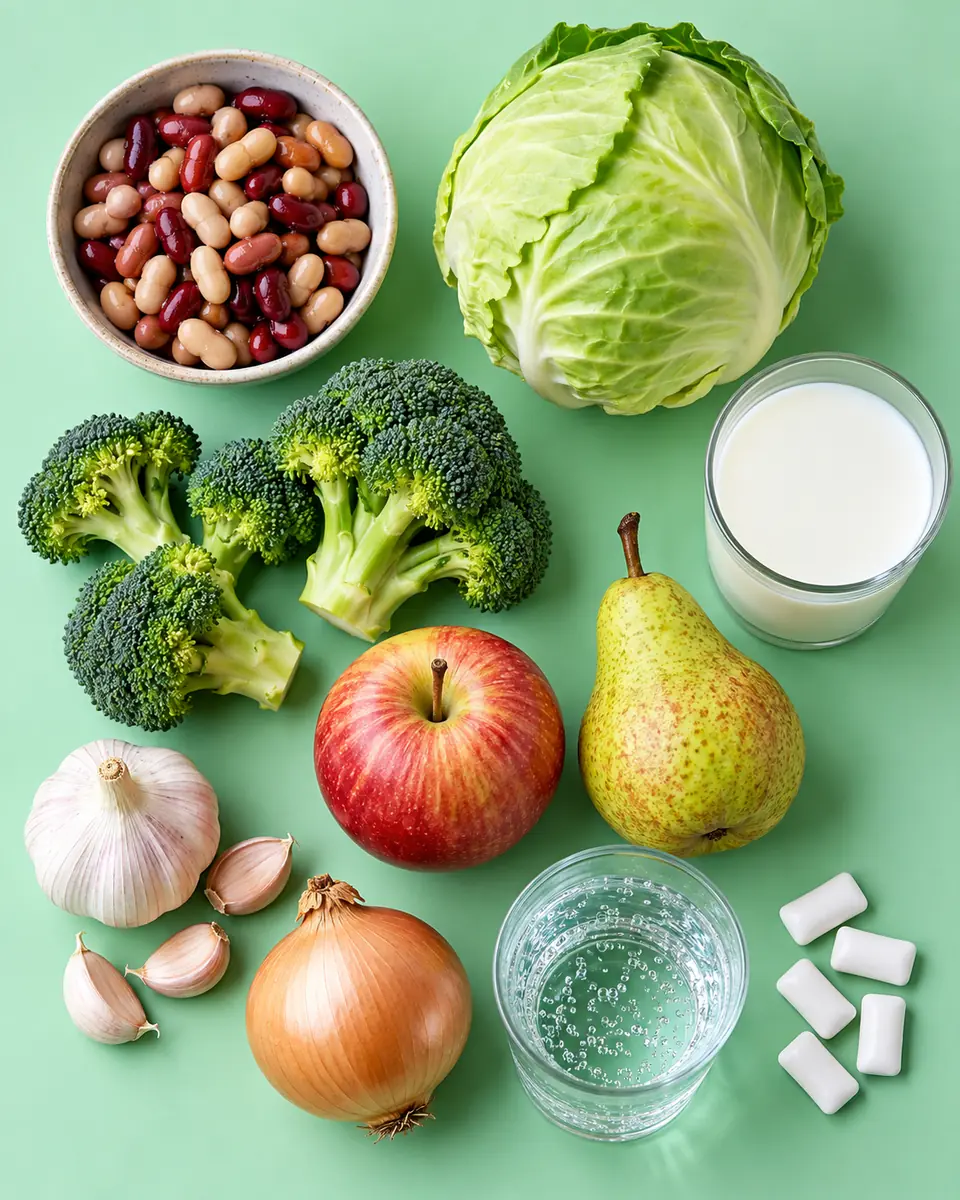
Scientists group these carbohydrates under the name FODMAP: lactose from milk, excess fructose from fruit and honey, fructans from wheat, onions and garlic, galacto-oligosaccharides from beans, and polyols such as sorbitol from sugar-free gum.
Swallowed air. Eating on the go, talking while eating, chewing gum, drinking through a straw or drinking fizzy drinks all add air that later has to find a way out.
Constipation. When things move slowly through the gut, fermentation lasts longer and there is more gas. Often, sorting out bowel movements is enough to make the bloating go away too.
Irritable bowel syndrome and gut sensitivity. Some people do not make more gas than others, but their gut reacts to it more strongly. There is also a reflex where, when you feel bloated, the abdominal muscles relax and the diaphragm drops, so the belly literally pushes forward. It is a reflex, and breathing exercises help with it.
Hormones. Many women bloat a few days before their period. It is a normal response to hormonal shifts.
| Foods | What ferments | What can help |
|---|---|---|
| Beans, peas, chickpeas, lentils | Galacto-oligosaccharides (raffinose, stachyose) | Soak overnight and change the water, small portions, increase gradually, alpha-galactosidase with the first bite |
| Cabbage, broccoli, Brussels sprouts | Raffinose | Cook rather than eat raw, smaller portions, alpha-galactosidase |
| Milk, ice cream, soft cheese | Lactose | Lactose-free products, hard cheeses and yogurt, lactase with the first sip |
| Wheat bread, pasta, onions, garlic | Fructans | Smaller portions; with IBS, a temporary low-FODMAP diet with a doctor or dietitian |
| Apples, pears, watermelon, honey | Excess fructose | One piece of fruit at a time, not a bowlful; berries and citrus are easier to tolerate |
| Sugar-free gum, sweets and syrups | Sorbitol, xylitol, mannitol | Read labels, drop the gum |
| Fizzy drinks, beer, sparkling water | Carbon dioxide | Still water, skip the straw |

What helps bloating without medication
Start simple. It sounds boring, but this is what works in most cases.
Eat more slowly. Twenty minutes for lunch instead of five. Less air, better digestion, and your brain has time to notice you are full.
Take a walk after meals. Light movement helps gas travel through the gut. Lying on the couch right after a big meal is the worst option.
Drop gum and fizzy drinks. At least for a week, to see the difference.
Add fiber gradually. A sudden switch to “clean eating” with a bowl of beans and cabbage every day is almost guaranteed to bloat you. Your gut needs 2-3 weeks to adapt.
Keep a diary. For a week, write down what you ate and when you bloated. The culprit often shows itself: milk in coffee for one person, an apple snack for another.
A low-FODMAP diet, but not on your own and not forever. When Australian researchers compared it with a typical diet in people with irritable bowel syndrome in 2014, bloating, pain and gas dropped noticeably. But it is a temporary plan for a few weeks, with foods reintroduced one at a time, ideally with a dietitian. Staying on it long term is not a good idea, because gut microbiome diversity suffers.
Enzymes for bloating: when they work and when they don’t
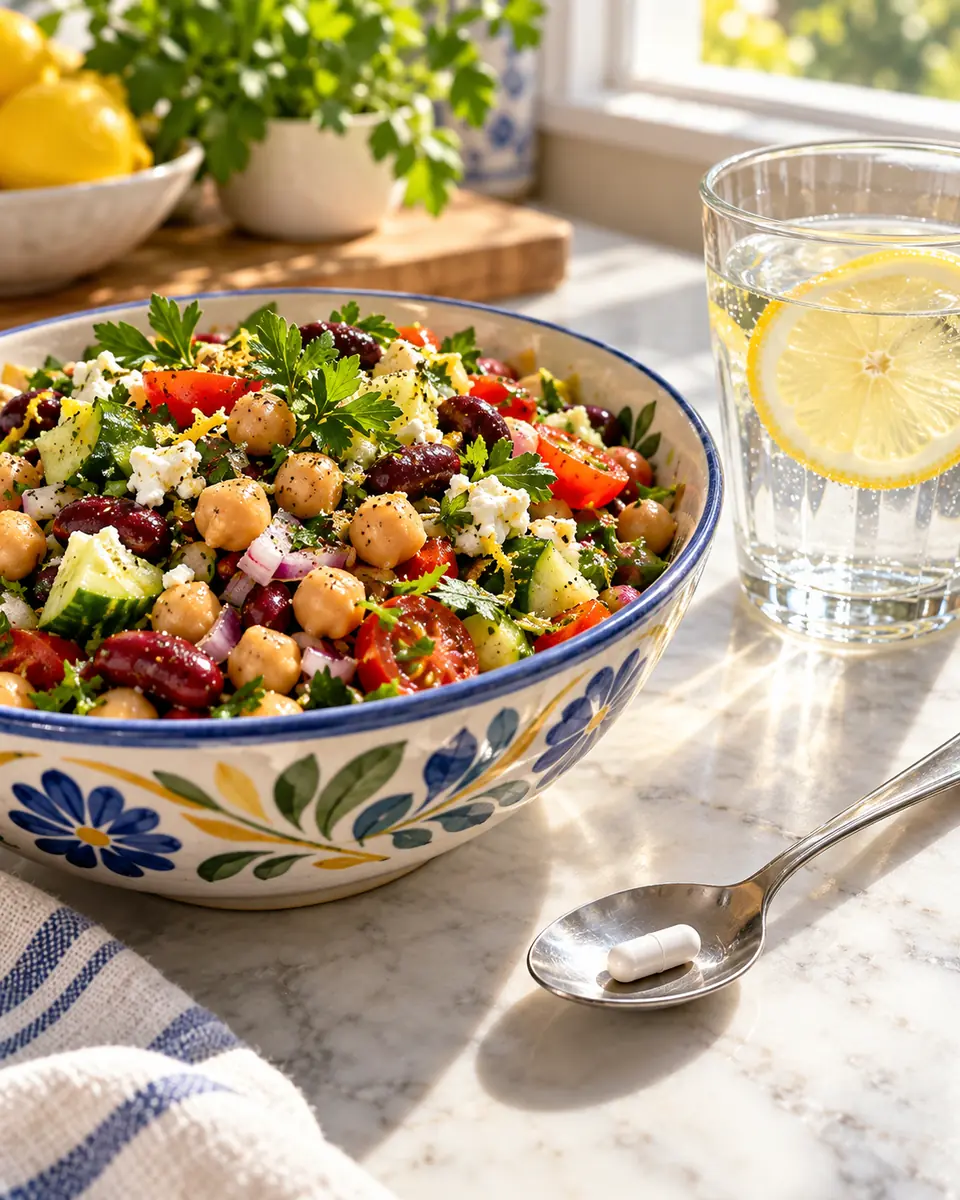
The key rule: the enzyme has to match the food. There is no “enzyme for bloating in general.”
Lactase breaks down milk sugar. If dairy is what bloats you, it really helps, and even the European Food Safety Authority, EFSA, recognizes this. We covered dosing in detail in our article on lactase.
Alpha-galactosidase breaks down the carbohydrates in beans and cabbage before bacteria can get to them. In a 2007 Italian study, healthy volunteers ate 420 g of cooked beans. After 1,200 GalU of the enzyme, breath hydrogen and the severity of flatulence were noticeably lower than with placebo. In a 2013 study of 52 children and teenagers with gas, the enzyme reduced the number of days with severe bloating. The studies are small, but the results are consistent.
Digestive enzyme blends (microbial amylase, protease, lipase). For someone with a healthy pancreas, there is little evidence that they relieve bloating. It is a different story when the pancreas truly does not make enough enzymes: then a doctor prescribes pancreatin medicines at a precise dose, and that is no longer about supplements.
Bromelain and papain break down proteins. There is no convincing data for bloating. More about bromelain in our separate article.
| Enzyme | What it breaks down | When it makes sense | How to take it | Evidence |
|---|---|---|---|---|
| Lactase | Lactose in milk | Bloating from milk, ice cream, soft cheese | With the first sip of dairy | Good; has an approved EFSA claim |
| Alpha-galactosidase | Raffinose and stachyose in beans and cabbage | Bloating from beans, peas, chickpeas, cabbage | With the first bite of the meal | Small but positive RCTs |
| Amylase, protease, lipase (microbial) | Starch, proteins, fats | Heavy, rich meals, holidays | With meals | Weak for healthy people |
| Bromelain, papain | Proteins | Not for bloating | Between meals, if used for other purposes | Almost none for bloating |
| Pancreatin (medicine) | Everything: fats, proteins, carbohydrates | Pancreatic insufficiency, as prescribed | On your doctor’s schedule | Good, but it is a medicine, not a supplement |
A quick word on the rules. Ukraine’s Ministry of Health Order No. 203 allows alpha-galactosidase and lactase in dietary supplements, plus amylase, protease and lipase only of microbial or plant origin. So pork pancreatin cannot be in a supplement; it is only found in medicines. If a label promises to “cure gastritis” or “normalize pancreas function,” that is already a violation.
On probiotics: in 2023, the American Gastroenterological Association stated plainly that it does not recommend them for treating bloating. There is not enough evidence.

What to take for bloating: pharmacy options
This is one of the most common questions, so here is a quick run through what people usually ask for at the counter.
Simethicone. This medicine makes small gas bubbles merge into larger ones so they pass more easily. It is not absorbed and is considered safe, but evidence for a strong effect on bloating is limited. It helps some people and not others.
Activated charcoal. Popular, but the data are mixed. The key catch: it binds not only gas but also medicines, so leave at least 2 hours between charcoal and any tablets.
Peppermint. Peppermint oil capsules have the best data among herbal options: a 2019 meta-analysis found they reduce pain and overall symptoms in irritable bowel syndrome. Mint or fennel tea is fine too and is a pleasant ritual, but do not expect a cup to work like the capsules. Peppermint can make heartburn worse.
If you need pharmacy remedies more than once or twice a week, it is a reason to look for the cause with your doctor.
When bloating needs a doctor
Bloating on its own is rarely dangerous. But some signs mean you should not experiment with enzymes and diets and should see your family doctor or a gastroenterologist instead:
unexplained weight loss; blood in the stool or black, tarry stools; vomiting; fever; anemia on blood tests; symptoms that wake you at night; bloating that starts for the first time after age 50; bowel cancer, celiac disease or inflammatory bowel disease in the family.
A separate note for women. The UK’s NICE advises women, especially over 50, to see a doctor if their belly is bloated persistently or frequently, more than 12 days a month. Most often the cause turns out to be harmless, but a doctor may order a CA-125 test and an ultrasound to rule out ovarian problems.
A doctor may suggest a celiac test, a breath test for lactose or fructose intolerance, or one for bacterial overgrowth in the small intestine. These are simple tests, and they often answer the question “why am I bloated” better than any bottle off the shelf.
Frequently asked questions
Why do I get bloated after eating?
What relieves bloating quickly?
Which foods cause the most bloating?
Do digestive enzymes help with bloating?
Do probiotics help with bloating?
When is bloating dangerous?
Why is my belly flat in the morning but bloated by evening?
Conclusions
Bloating is mostly about food and habits: beans, cabbage, milk, onions, fruit, gum, fizzy drinks, eating on the run. A food diary and slower meals solve most cases.
Enzymes help when they are matched to a specific food: lactase for dairy, alpha-galactosidase for beans and cabbage. All-purpose blends do little for healthy people, and experts do not recommend probiotics for bloating.
Most importantly: if bloating comes with weight loss, blood, vomiting or fever, or starts for the first time after 50, do not treat it yourself. That is a reason to see a doctor.
📚 References
- Moshiree B, Drossman D, Shaukat A. AGA Clinical Practice Update on Evaluation and Management of Belching, Abdominal Bloating, and Distention: Expert Review. Gastroenterology. 2023;165(3):791-800.e3. PubMed 37452811
- Lacy BE, Cangemi D, Vazquez-Roque M. Management of Chronic Abdominal Distension and Bloating. Clin Gastroenterol Hepatol. 2021;19(2):219-231.e1. PubMed 32246999
- Halmos EP, Power VA, Shepherd SJ, Gibson PR, Muir JG. A diet low in FODMAPs reduces symptoms of irritable bowel syndrome. Gastroenterology. 2014;146(1):67-75.e5. PubMed 24076059
- Di Stefano M, et al. The effect of oral alpha-galactosidase on intestinal gas production and gas-related symptoms. Dig Dis Sci. 2007;52(1):78-83. PubMed 17151807
- Di Nardo G, et al. Efficacy and tolerability of α-galactosidase in treating gas-related symptoms in children: a randomized, double-blind, placebo controlled trial. BMC Gastroenterol. 2013;13:142. doi:10.1186/1471-230X-13-142
- Alammar N, Wang L, Saberi B, et al. The impact of peppermint oil on the irritable bowel syndrome: a meta-analysis of the pooled clinical data. BMC Complement Altern Med. 2019;19(1):21. doi:10.1186/s12906-018-2409-0
- EFSA NDA Panel. Scientific Opinion on the substantiation of health claims related to lactase enzyme and breaking down lactose. EFSA Journal. 2009;7(9):1236. doi:10.2903/j.efsa.2009.1236
- NICE. Ovarian cancer: recognition and initial management. Clinical guideline CG122. 2011. nice.org.uk/guidance/cg122
- Order of the Ministry of Health of Ukraine No. 203 of 19.02.2026, registered with the Ministry of Justice on 30.03.2026 under No. 417/45811 (in Ukrainian). zakon.rada.gov.ua/laws/show/z0417-26
About the Author