The new regulatory framework for dietary supplements Ukraine 2026, established by MoH Order No. 203, has officially come into force. The Ministry has updated safety requirements and specific quality indicators, expanded the list of permitted substances, and clarified labeling and advertising rules to harmonize with European Union legislation. For consumers, this ensures greater transparency and control; for market operators and pharmacy chains, it marks the beginning of new operational standards. We explore exactly what has changed and why these innovations are vital for the entire market.

Why there was a need to update the rules
The market for dietary supplements in Ukraine has long ceased to be niche. Vitamins, mineral substances, probiotics, herbal extracts, and other supplements are sold in almost every pharmacy today.
The problem was that for many years the regulatory framework did not keep pace with market development. Some requirements remained outdated, and certain ingredients that had long been used in the EU did not have a clear status in Ukraine.
That is why in 2026, the Ministry of Health approved changes to the requirements for content and labeling regarding dietary supplements, bringing Ukrainian rules closer to European approaches.
What is now considered a dietary supplement
The updated requirements clearly emphasize: dietary supplements do not belong to the category of medicinal products. They are food products intended to supplement a person’s normal diet.
This is an important point because many consumers still perceive dietary supplements as an alternative to medical treatment.
The legislation directly distinguishes between:
- medicinal products;
- food products;
- dietary supplements.
Because of this, specific rules for advertising, labeling, and control are applied to dietary supplements.
What new ingredients have been permitted for use
One of the most noticeable changes was the expansion of the list of permitted substances.
In particular, new forms of vitamins and mineral substances already used on the European market were added to the list.
Table 1. New ingredients officially introduced in the requirements
| Substance | Usage |
|---|---|
| Nicotinamide riboside chloride | A source of vitamin B3, popular in products supporting energy metabolism |
| Calcidiol monohydrate | A source of vitamin D |
| Magnesium L-threonate | A modern form of magnesium |
| Magnesium citrate malate | A source of magnesium with high bioavailability |
| Organic silicon (monomethylsilanetriol) | Used in products for skin, hair, and connective tissue |
| Chromium-enriched yeast | A source of chromium |
The document also features an extensive list of plants, fungi, algae, and other natural components that can be used in supplement production.
New rules regarding the content of vitamins and mineral substances
Previously, the issue of maximum allowable amounts often sparked discussions.
Now the requirements have become more specific.
The Ministry of Health has determined that the maximum content of vitamins and mineral substances must take into account:
- scientific safety assessment;
- nutrient intake from the diet;
- physiological human needs;
- tolerable upper intake levels established by EFSA.
Table 2. Examples of maximum content of specific substances in the recommended daily portion
| Substance | Maximum Amount |
|---|---|
| Vitamin B1 | 100 mg |
| Vitamin B2 | 40 mg |
| Vitamin B12 | 100 mcg |
| Vitamin C | 1000 mg |
| Vitamin K | 200 mcg |
| Pantothenic acid | up to 200 mg depending on the form |
These restrictions are intended to reduce the risk of excessive consumption of individual components.
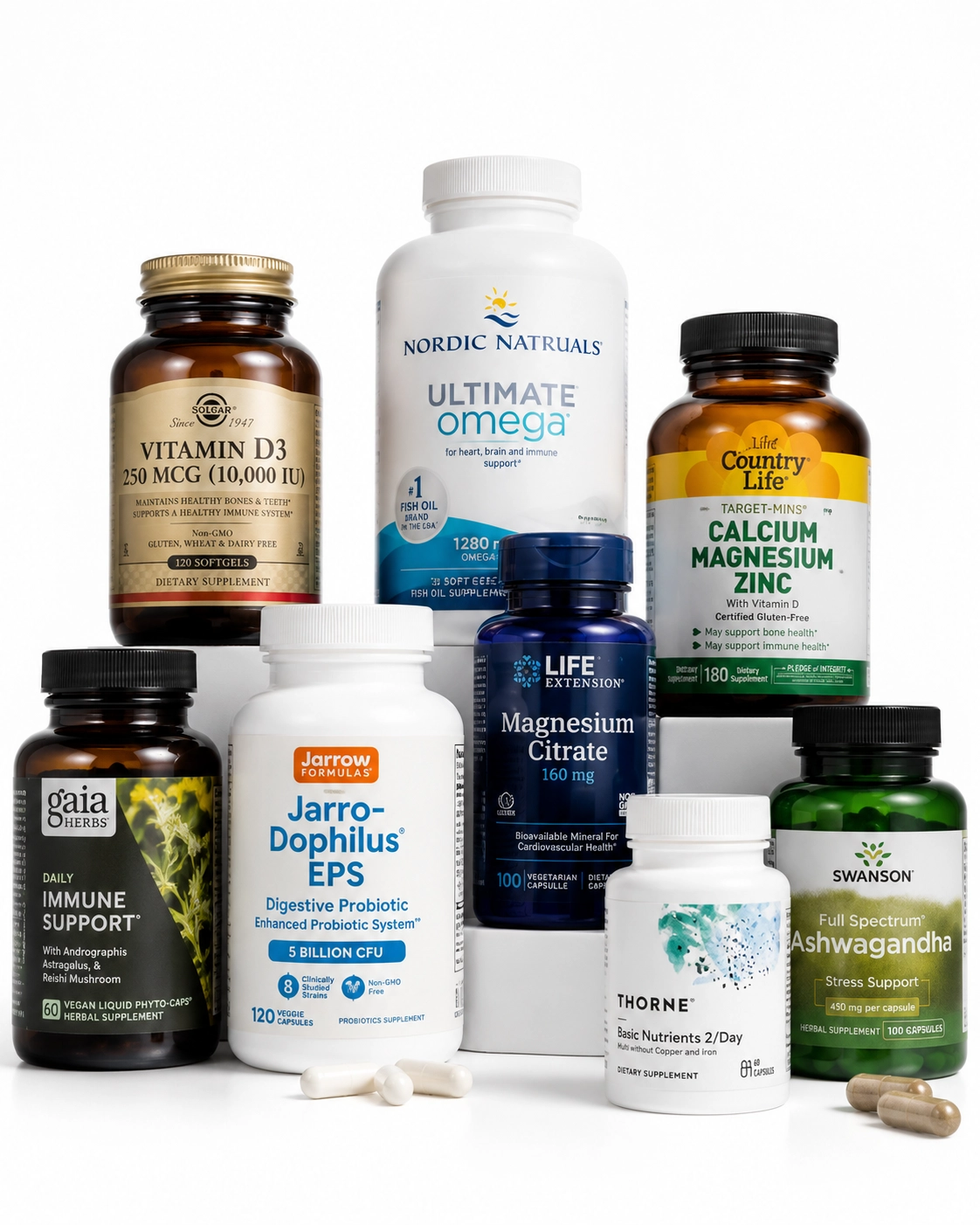
What has changed in labeling
Another important block of innovations concerns information on the packaging.
Now market operators must clearly indicate:
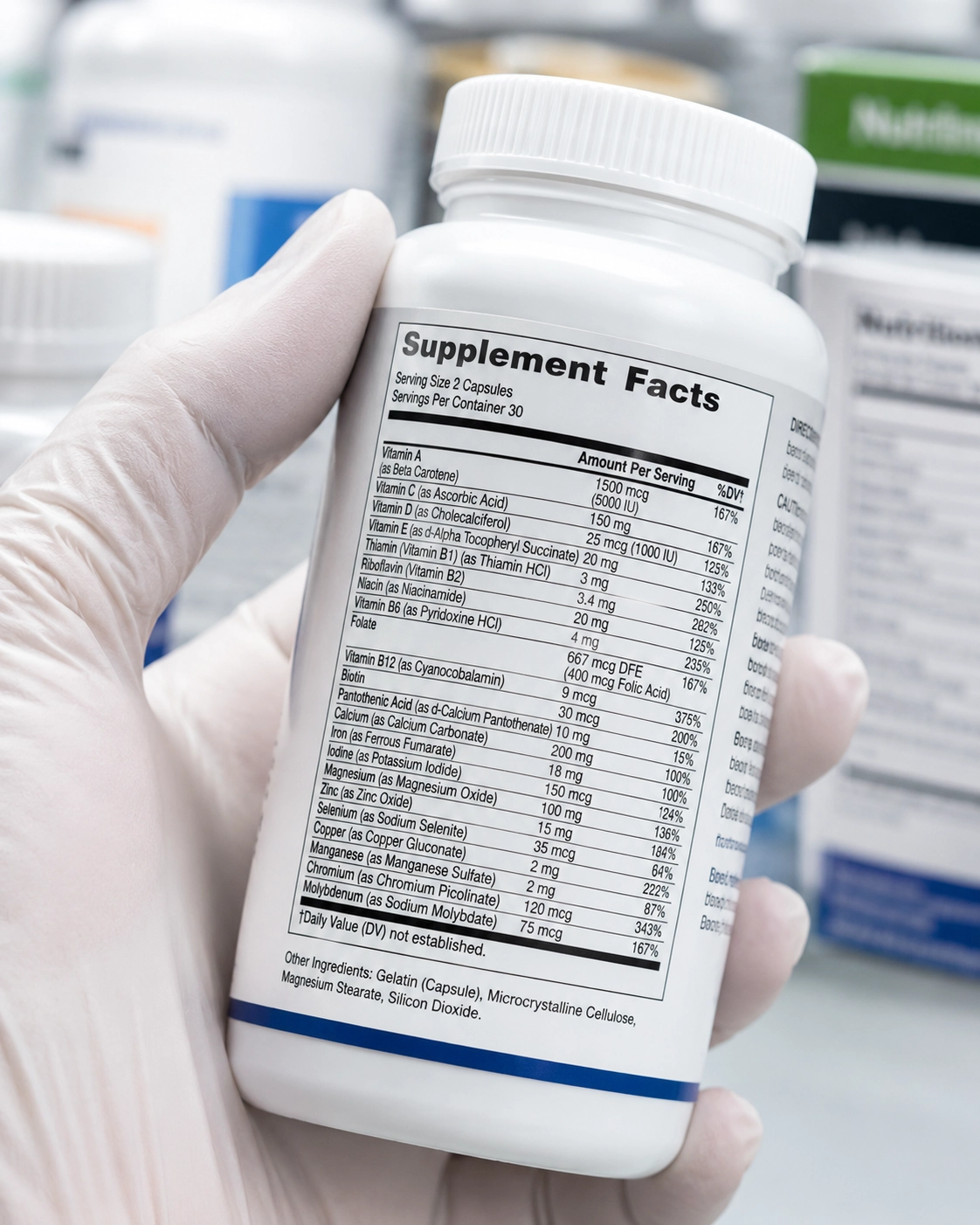
- the amount of active substances;
- the recommended daily portion;
- percentage of daily requirement for vitamins and mineral substances;
- measurement units according to established norms.
For the buyer, this means easier comparison of different products.
Why dietary supplement manufacturers are prohibited from claiming curative properties
This specific norm will become one of the most noticeable for the market.
The Ministry of Health reminded that a dietary supplement cannot be positioned as a means for treating diseases.
Labeling and advertising must not:
- promise a cure;
- claim pain elimination;
- guarantee recovery;
- use patient stories as evidence of curative effect;
- intimidate consumers with health deterioration due to refusal of the product.
For many brands, this will mean a review of advertising materials.
What health claims are allowed
There is no complete ban on communication.
Market operators may use health claims if they meet established requirements and have scientific justification.
For example:
- “vitamin D contributes to the normal function of the immune system”;
- “magnesium contributes to the normal functioning of the nervous system”;
- “vitamin C helps protect cells from oxidative stress”.
However, phrases such as “cures arthrosis”, “removes insomnia”, or “replaces drug therapy” cannot be used.
What this means for pharmacies
Pharmacies will also feel the changes.
Pharmacy specialists will have to pay closer attention to advertising materials and accompanying documentation. Considering that the main volume of supplements on the market is provided by Ukraine’s top five pharmaceutical distributors, they will become the primary partners of pharmacies in ensuring compliance with new labeling standards.
The role of evidence-based information and proper positioning of dietary supplements will grow.
Many market operators are already reviewing packaging and leaflets in accordance with the new requirements.
What will change for the consumer
For the average buyer, the new rules have several obvious advantages:
- more transparency;
- clearer labeling;
- less manipulative advertising;
- better control of the composition;
- gradual alignment of the Ukrainian market with European standards.
This does not mean that all dietary supplements have automatically become more effective. But it will be easier for the buyer to understand exactly what they are buying and what amount of active substances they are receiving.
Questions and Answers
Is a dietary supplement a medicinal product?
No. The legislation directly distinguishes between these categories.
Can dietary supplements be advertised as a cure for a disease?
No. Such claims are prohibited.
Are new forms of magnesium allowed?
Yes. The list includes, in particular, magnesium L-threonate and magnesium citrate malate.
Why did restrictions on the recommended daily amount (portion) appear?
To minimize the risks of excessive consumption of individual nutrients.
Have Ukrainian rules become closer to European ones?
Yes. A significant part of the changes is aimed precisely at harmonization with EU approaches.
Conclusions
2026 has become one of the most important years for the Ukrainian dietary supplement market in the last decade. New rules detail the requirements for composition, content, labeling, and advertising of products. For market operators, these are additional compliance requirements; for pharmacies, new communication standards; and for consumers, more transparency and clearer rules of the game.
The Ukrainian dietary supplement market is gradually moving from marketing promises to clearer and more controlled standards that meet modern European approaches.
References
-
Law of Ukraine “On Basic Principles and Requirements for the Safety and Quality of Food Products” No. 771/97-VR (as amended).
-
Law of Ukraine “On Information for Consumers Regarding Food Products” No. 2639-VIII.
-
Requirements for Dietary Supplements (as amended by MoH Order No. 203 dated 19.02.2026).
-
MoH Order No. 1145 dated 15.05.2020 “On Approval of Requirements for Claims of Nutritional Value of Food Products and Health Claims of Food Products” (as amended by MoH Order No. 203 dated 19.02.2026).
-
European Food Safety Authority (EFSA). Scientific opinion on the tolerable upper intake levels for vitamins and minerals (revised 2024–2025).
About the Author